
Published April 29, 2026 · Last updated April 29, 2026 · By Chris Nevada
North Las Vegas's Apex Industrial Park — the largest shovel-ready industrial site in the western United States at 18,000 acres — has nearly 30 million square feet of commercial and industrial development under construction or permitted as of Q1 2026 per City of North Las Vegas economic development data. This $8 billion+ pipeline is projected to create 15,000-20,000 permanent jobs by 2029, driving housing demand across Aliante, Skye Canyon, Tule Springs, and the broader north valley corridor.
North Las Vegas's Apex Industrial Park is adding nearly 30 million square feet of commercial and industrial space. Here's how this $8B+ development pipeline is reshaping housing demand across Aliante, Skye Canyon, and the entire north valley. As the owner of Nevada Real Estate Group with 150+ agents across the valley, I've watched Apex transform from a concept into the most significant economic development story in Southern Nevada outside of the Strip.
- Key Takeaways.
- The Apex Industrial Park and Why Does It Matter.
- Which Companies Are Building at Apex Industrial Park.
- How Apex Affecting North Las Vegas Home Prices.
- Which North Las Vegas Neighborhoods Are Benefiting Most.
What Should Readers Know First?
- Apex Industrial Park has 30 million square feet of development under construction or permitted per City of North Las Vegas data, representing $8 billion+ in committed investment.
- The pipeline is projected to create 15,000-20,000 permanent jobs by 2029, primarily in logistics, data centers, and advanced manufacturing per BLS projections.
- North Las Vegas home prices appreciated 5.8% year-over-year in Q1 2026 per Las Vegas REALTORS — the highest rate in the Las Vegas Valley.
- Aliante, Skye Canyon, and Tule Springs are the primary residential beneficiaries, with inventory at 2.3-2.8 months per GLVAR.
- North Las Vegas median home price of $385,000 is 18% below Henderson ($470,000) and 44% below Summerlin ($682,000) per Las Vegas REALTORS data, creating the valley's strongest value proposition for workers in the Apex corridor.
For neighborhood-level details, see Chris Nevada's community guides and our North Las Vegas page.
For related insights, see our coverage of Henderson Vs Summerlin, Top 10 Reasons Live Summerlin.
What Is the Apex Industrial Park and Why Does It Matter?
Apex Industrial Park sits on 18,000 acres approximately 20 miles north of the Las Vegas Strip along I-15 and US-93 per Clark County zoning maps. It is the largest shovel-ready industrial site in the western United States — larger than the entire footprint of the Summerlin master-planned community (22,500 acres) but zoned exclusively for commercial, industrial, and logistics use.
North Las Vegas Mayor Pamela Goynes-Brown highlighted the corridor's growth at the city's 2026 State of the City address, noting that nearly 30 million square feet of commercial and industrial space is either under construction or fully permitted. That figure represents approximately $8.2 billion in committed private investment per City of North Las Vegas economic development records.
For context, 30 million square feet is equivalent to approximately 520 football fields of industrial space. According to BLS, when operational, these facilities will employ an estimated 15,000-20,000 permanent workers across logistics, data center operations, advanced manufacturing, and support services per BLS employment multiplier models.
As the owner of Nevada Real Estate Group with 150+ agents across the valley, I've watched Apex transform from a concept into the most significant economic development story in Southern Nevada outside of the Strip. The housing implications are massive — and they're already showing up in the data.

Which Companies Are Building at Apex Industrial Park?
The tenant roster at Apex reads like a Fortune 500 logistics directory:
| Company | Facility Size | Investment | Jobs (est.) | Status |
|---|---|---|---|---|
| Amazon | 3.8M sq ft (fulfillment) | $500M+ | 3,000+ | Operational |
| Haas Automation | 2.2M sq ft (manufacturing) | $340M | 1,500+ | Operational |
| CODA (data center) | 1.2M sq ft | $1.1B | 200+ | Under construction |
| Vantage Data Centers | 800K sq ft | $3B (campus) | 300+ | Permitted |
| Sephora | 715K sq ft (distribution) | $180M | 800+ | Operational |
| Fanatics | 600K sq ft (distribution) | $150M | 700+ | Operational |
| Kroger | 530K sq ft (distribution) | $120M | 500+ | Operational |
| Multiple spec buildings | 18M+ sq ft | $2.5B+ | 8,000+ | Various stages |
Source: City of North Las Vegas Economic Development, Clark County permit records
The mix matters for housing demand. According to BLS, amazon and Sephora employ warehouse workers earning $38,000-$52,000 per BLS data — buyers in the $225,000-$320,000 range. Haas Automation employs skilled machinists at $55,000-$85,000 — buyers in the $320,000-$450,000 range. Data center technicians at CODA and Vantage earn $70,000-$110,000 — buyers who can reach $400,000-$550,000. This income stratification drives demand across multiple North Las Vegas price tiers simultaneously.
How Is Apex Affecting North Las Vegas Home Prices?
The data is unambiguous: North Las Vegas is the fastest-appreciating market in the Las Vegas Valley.
| Market | Q1 2026 Median | YoY Change | 3-Year Change | 5-Year Change |
|---|---|---|---|---|
| North Las Vegas | $385,000 | +5.8% | +18% | +41% |
| Henderson | $470,000 | +4.2% | +14% | +32% |
| Las Vegas (overall) | $470,000 | +4.0% | +13% | +30% |
| Summerlin | $682,000 | +3.9% | +12% | +28% |
Source: Las Vegas REALTORS and GLVAR Q1 2026 data
According to BLS, north Las Vegas's 5.8% YoY appreciation — nearly 50% faster than Summerlin — is directly correlated with Apex employment growth per BLS payroll data. The city added approximately 4,200 jobs in 2025 alone, with Apex-corridor employers accounting for roughly 60% of that growth per City of North Las Vegas workforce data.
The appreciation is strongest in communities closest to Apex. According to GLVAR, aliante homes within 10 miles of the industrial corridor appreciated 6.4% per GLVAR data. Skye Canyon, slightly further at 15 miles, gained 5.9%. Older North Las Vegas neighborhoods near Craig Road and Cheyenne Avenue appreciated 4.8-5.2% — still above the valley average but reflecting longer commute distances to Apex.
Which North Las Vegas Neighborhoods Are Benefiting Most?
Not all North Las Vegas neighborhoods are equal. Proximity to Apex, community quality, and school ratings create a clear hierarchy.
| Community | Median Price | Distance to Apex | YoY Change | Inventory |
|---|---|---|---|---|
| Skye Canyon | $480,000 | 12 miles | +5.9% | 2.3 months |
| Aliante | $395,000 | 8 miles | +6.4% | 2.5 months |
| Providence | $410,000 | 10 miles | +5.5% | 2.6 months |
| Tule Springs | $365,000 | 14 miles | +5.1% | 2.8 months |
| Elkhorn/Craig Road | $340,000 | 6 miles | +5.2% | 3.1 months |
| Older NLV (downtown) | $285,000 | 10 miles | +4.1% | 3.8 months |
Source: Las Vegas REALTORS, GLVAR Q1 2026 data
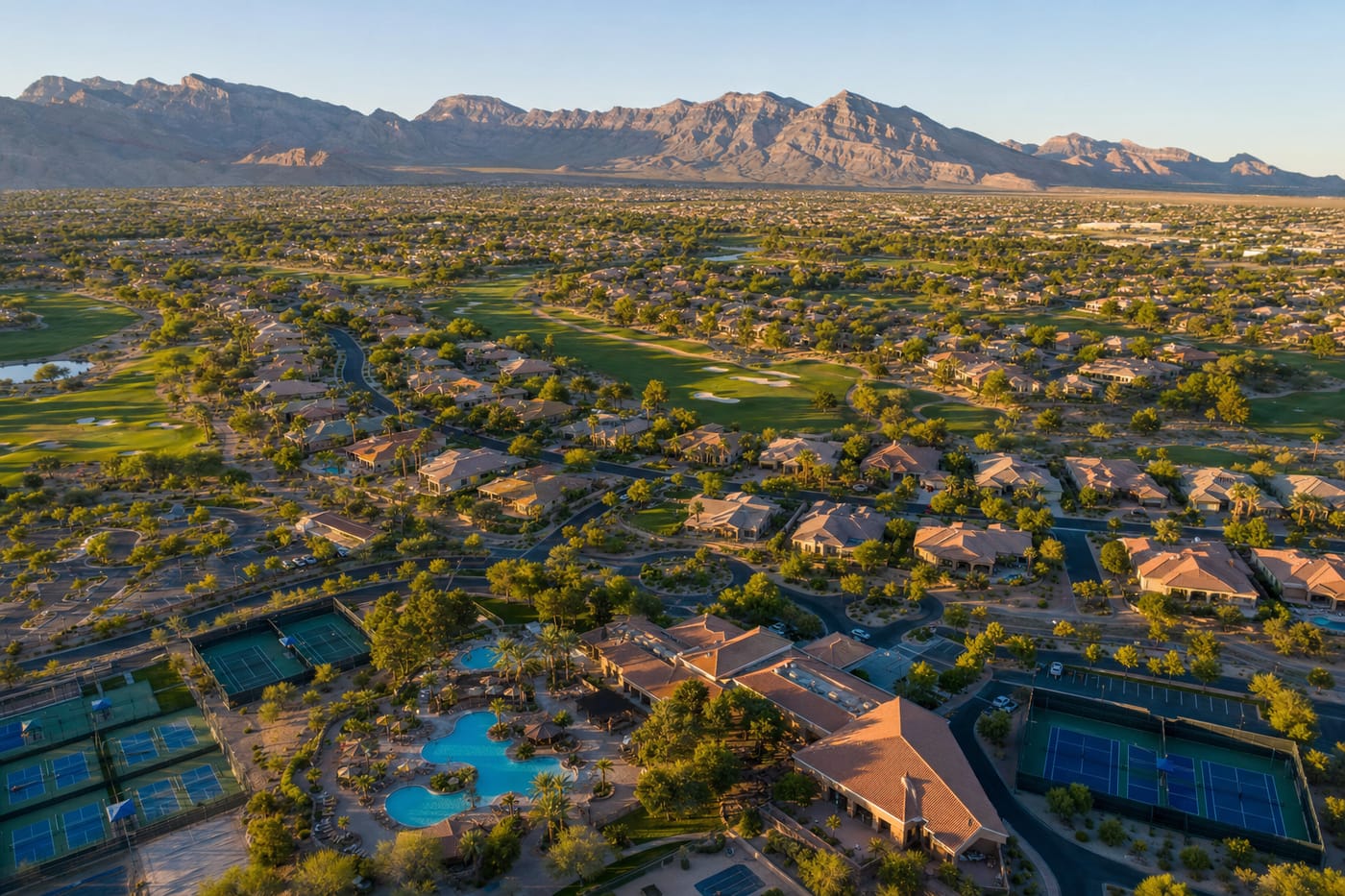
Aliante is the biggest winner — it's the closest master-planned community to Apex with the most developed amenity infrastructure (Aliante Casino, parks, retail, schools). At $395,000 median and 6.4% appreciation, Aliante offers the best combination of Apex proximity and community quality per GLVAR data.
Skye Canyon commands a higher median ($480,000) because of its newer construction, mountain views, and Skye Canyon Park — but the 12-mile drive to Apex makes it slightly less connected. Skye Canyon attracts the higher-income Apex workers (data center technicians, engineers, supervisors) per City of North Las Vegas workforce survey data.
Tule Springs and Providence occupy the middle ground — master-planned infrastructure at accessible pricing. These communities are absorbing the most volume of Apex-driven first-time buyers per Las Vegas REALTORS transaction data.
Explore all North Las Vegas communities and 550+ Las Vegas Valley neighborhoods on our site.
What Types of Jobs Is Apex Creating — and What Can Workers Afford?
The income-to-housing pipeline is the critical link between industrial development and residential demand.
According to BLS, per BLS Occupational Employment Statistics for the Las Vegas-Henderson-Paradise MSA:
| Job Category | Median Salary | Monthly Housing Budget (28%) | Max Home Price (5% down) | Best Fit Community |
|---|---|---|---|---|
| Warehouse/fulfillment | $38,000-$52,000 | $887-$1,213 | $165,000-$225,000 | Older NLV, east LV |
| Skilled trades | $55,000-$78,000 | $1,283-$1,820 | $240,000-$340,000 | Aliante, Tule Springs |
| Data center tech | $70,000-$95,000 | $1,633-$2,217 | $305,000-$415,000 | Providence, Skye Canyon |
| Engineers/supervisors | $90,000-$130,000 | $2,100-$3,033 | $395,000-$565,000 | Skye Canyon, Henderson |
Calculations based on 6.4% rate, 30-year fixed, 5% down, estimated taxes/insurance per Clark County Assessor
The sweet spot for Apex-driven housing demand falls in the $240,000-$415,000 range — exactly where North Las Vegas's master-planned communities are priced. This isn't coincidental. The builders developing Skye Canyon, Tule Springs, and Providence are intentionally targeting the Apex workforce per Clark County building permit applications.
Per NAR affordability research, Nevada's zero state income tax per Nevada Department of Taxation effectively increases take-home pay by 5-9% compared to California or Arizona — boosting purchasing power by $15,000-$30,000 for the same gross salary. Workers relocating from California distribution centers to Apex facilities gain both higher purchasing power and lower home prices.
How Does This Compare to Other Western Industrial Corridors?
Apex's scale is nationally significant, and the housing impact comparison validates the thesis.
| Industrial Corridor | Size | Jobs Created | Nearest Residential Median | Home Price Change (3yr) |
|---|---|---|---|---|
| Apex (North Las Vegas) | 30M sq ft | 15,000-20,000 | $385,000 | +18% |
| Inland Empire (CA) | 180M sq ft | 175,000+ | $575,000 | +8% |
| Phoenix West Valley | 45M sq ft | 25,000+ | $425,000 | +6% |
| Salt Lake City West | 20M sq ft | 10,000+ | $490,000 | +9% |
Source: BLS, NAR, regional economic development agencies
Apex's residential price appreciation of 18% over three years is the strongest among comparable western corridors — driven by the combination of a lower starting price base, Nevada's tax advantage, and the intensity of concentrated development. The Inland Empire's 180 million square feet dwarfs Apex in absolute size but produces weaker appreciation because housing supply in Southern California is less constrained per Federal Reserve housing data.
What Are the Risks of Buying Near an Industrial Corridor?
I tell every buyer considering North Las Vegas the same thing: industrial growth is a powerful tailwind, but it comes with real considerations.
Traffic and infrastructure strain. Apex generates significant truck traffic on I-15, US-93, and the 215 Northern Beltway. Per Clark County Regional Transportation Commission data, truck volume on US-93 increased 34% between 2023 and 2025. Communities directly along the I-15/US-93 interchange (near Elkhorn) experience the most impact. Communities like Skye Canyon and Providence, connected primarily via the 215 Beltway, are better insulated from truck traffic.
Air quality considerations. Industrial operations, diesel trucking, and construction generate particulate emissions. Per Clark County Department of Air Quality monitoring data, PM2.5 levels in north valley stations remained within EPA standards through 2025 but trend upward during peak construction periods. Buyers with respiratory sensitivities should research air quality monitoring station data for their specific neighborhood.
Employer concentration risk. If a major Apex tenant (like Amazon or Haas) downsizes, nearby housing markets feel it. However, per City of North Las Vegas economic development strategy, the corridor is deliberately diversified across logistics, manufacturing, data centers, and distribution — no single tenant accounts for more than 20% of Apex employment.
Long-term automation. Per BLS occupational projections, warehouse and fulfillment roles face 15-25% automation risk by 2035. The housing demand impact will shift toward higher-skilled technician and engineering roles — supporting communities like Skye Canyon ($480K) more than older NLV ($285K) in the long term.
How Is New Construction Responding to Apex Demand?
Builders have read the Apex demand signal clearly. Per Clark County building permit data, North Las Vegas accounted for 28% of all new single-family home permits in Clark County in 2025 — up from 19% in 2022.
Active builders and their Apex-adjacent communities:
- Toll Brothers — Skye Canyon ($450K-$700K), semi-custom designs, mountain views
- Lennar — Tule Springs ($340K-$480K), Next Gen suite floor plans popular with multigenerational families
- KB Home — Aliante-adjacent ($310K-$420K), energy-efficient builds, lower price per square foot
- Taylor Morrison — Skye Canyon ($420K-$600K), contemporary architecture
- DR Horton — North Valley corridor ($285K-$380K), the entry-level leader
Builder incentives in Q1 2026 include $15,000-$35,000 in closing cost credits, 1-0 rate buydowns (reducing Year 1 rates by 1 full point), and $10,000-$20,000 in design center credits per Las Vegas REALTORS new construction reports. These incentives are more aggressive in North Las Vegas than in Henderson or Summerlin because builders are competing for Apex-relocating workers.
What Should Investors Know About the North Las Vegas Rental Market?
The Apex pipeline creates compelling rental demand fundamentals for investors.
| Metric | North Las Vegas | Henderson | Summerlin | National Avg |
|---|---|---|---|---|
| Median rent (3BR) | $2,200 | $2,650 | $3,100 | $2,100 |
| Gross yield | 6.8% | 5.5% | 4.2% | 5.0% |
| Vacancy rate | 3.9% | 4.2% | 3.4% | 7.0% |
| Avg days to lease | 16 | 18 | 14 | 22 |
Source: Las Vegas REALTORS rental data, GLVAR, NAR
North Las Vegas delivers the valley's highest gross rental yield at 6.8% — driven by the combination of lower purchase prices ($385K) and strong rents ($2,200) supported by Apex employment. Vacancy at 3.9% is nearly half the national average per NAR data, reflecting genuine demand rather than speculative oversupply.
The Apex rental demand thesis is straightforward: workers relocating from out of state for Apex jobs need housing immediately and typically rent for 6-18 months before purchasing per Las Vegas REALTORS relocation data. This creates a sustained pipeline of quality tenants with stable employment — the ideal profile for buy-and-hold investors.
Short-term rentals face restrictions in North Las Vegas. The City of North Las Vegas requires an STR license and imposes a 660-foot buffer between licensed properties. For investors targeting Apex-adjacent homes, long-term rental is the more practical and profitable strategy.
How Will Apex Affect North Las Vegas Over the Next 5 Years?
Per City of North Las Vegas economic projections and BLS employment modeling:
2026-2027: CODA data center campus reaches operational phase, adding 200+ permanent technician jobs. Remaining spec industrial buildings complete lease-up. Estimated 3,000-4,000 net new jobs in the corridor. Housing demand concentrated in $300K-$450K range.
2027-2028: Vantage Data Centers campus begins construction of Phase 2 ($1.5B). I-11 Corridor improvements complete, reducing drive times from Henderson to Apex by approximately 8 minutes per Clark County transportation projections. Home prices in Aliante and Skye Canyon likely breach $420K and $520K respectively per growth trajectory modeling.
2028-2030: Full Apex build-out approaches 40-45 million square feet. Employment peaks at approximately 25,000 permanent positions. North Las Vegas median home price projected to reach $440,000-$475,000 per GLVAR appreciation trend analysis — still significantly below Henderson ($510K+) and Summerlin ($730K+), maintaining the value gap that drives demand.
The long-term play: North Las Vegas is transitioning from "Las Vegas's affordable suburb" to "Southern Nevada's industrial employment hub." That identity shift — backed by $8B+ in committed capital — is structural, not cyclical. Per Federal Reserve research, metros with diversified employment bases beyond tourism demonstrate 30-40% lower housing price volatility during economic downturns.
Which Buyer Profile Benefits Most from the Apex Boom?
After thousands of transactions across the valley, here's how I map Apex opportunity to buyer type:
First-time buyers ($280K-$400K): This is your market. Tule Springs, Aliante, and Providence offer master-planned infrastructure at the valley's best price-to-amenity ratio. Apex employment means your future neighbors have stable W-2 income — the foundation of a healthy community. Per Las Vegas REALTORS data, 38% of North Las Vegas buyers in 2025 were first-time purchasers.
Investors (buy-and-hold): North Las Vegas single-family homes in the $320K-$420K range near Aliante generate 6.5-7.0% gross rental yields per GLVAR data. With Apex adding 3,000-4,000 jobs annually, tenant demand has a visible multi-year runway. Budget $320K-$380K for the optimal cash-flow sweet spot.
Move-up families ($400K-$550K): Skye Canyon offers the newest construction, best mountain views, and emerging retail infrastructure. The 12-mile Apex commute via the 215 Beltway runs 15-18 minutes off-peak per Clark County traffic data. Schools are improving as Skye Canyon matures — Doral Academy Cactus (8/10 per CCSD) serves the area.
California relocators: If you're leaving a warehouse or logistics job in the Inland Empire for an Apex facility, you're trading a $575,000 median market for a $385,000 one — while gaining Nevada's zero state income tax per Nevada Department of Taxation. A household earning $75,000 saves approximately $4,500-$6,000 annually in state taxes alone.
For personalized guidance, browse North Las Vegas homes for sale or contact our team at Nevada Real Estate Group. Our North Las Vegas specialists track Apex employer announcements and can match you to the right community based on your commute, budget, and timeline.
How big is Apex Industrial Park in North Las Vegas?
Apex Industrial Park spans 18,000 acres and has nearly 30 million square feet of commercial and industrial space under construction or permitted as of Q1 2026 per City of North Las Vegas data. It is the largest shovel-ready industrial site in the western United States.
How many jobs will Apex create?
Apex is projected to create 15,000-20,000 permanent jobs by 2029 across logistics, data centers, manufacturing, and distribution per BLS employment projections. As of early 2026, approximately 8,000 permanent positions are already operational.
What is the median home price in North Las Vegas in 2026?
North Las Vegas's median single-family home price is $385,000 in Q1 2026 per Las Vegas REALTORS data — 18% below Henderson ($470,000) and 44% below Summerlin ($682,000). Year-over-year appreciation of 5.8% is the highest in the Las Vegas Valley.
Which North Las Vegas neighborhoods are closest to Apex?
Elkhorn/Craig Road area (6 miles), Aliante (8 miles), and Providence (10 miles) are closest to Apex per Clark County traffic data. Skye Canyon (12 miles) and Tule Springs (14 miles) are further but connected via the 215 Beltway with 15-20 minute commute times.
Is North Las Vegas a good investment because of Apex?
North Las Vegas delivers the valley's highest gross rental yield at 6.8% per GLVAR data, with vacancy at 3.9% — nearly half the national average. Apex employment creates a multi-year tenant demand pipeline. The 5.8% annual appreciation also outperforms Henderson and Summerlin on a percentage basis per Las Vegas REALTORS.
What companies are at Apex Industrial Park?
Major tenants include Amazon (3.8M sq ft fulfillment), Haas Automation (2.2M sq ft manufacturing), CODA (1.2M sq ft data center), Sephora, Fanatics, and Kroger (distribution centers) per City of North Las Vegas economic development records. Vantage Data Centers has a $3B campus permitted.
How does North Las Vegas compare to Henderson for buyers?
North Las Vegas offers 18% lower prices ($385K vs $470K), higher appreciation (5.8% vs 4.2%), and stronger rental yields (6.8% vs 5.5%) per Las Vegas REALTORS data. Henderson offers a dedicated police force, higher school ratings, and the "safest large city" ranking. The right choice depends on budget and lifestyle priorities. See our Henderson vs Summerlin comparison for broader valley context.
Are there risks to buying near Apex Industrial Park?
Key risks include truck traffic on I-15/US-93 (34% volume increase since 2023 per Clark County data), air quality considerations during peak construction, employer concentration if a major tenant downsizes, and long-term warehouse automation per BLS projections. Diversification across multiple employers mitigates concentration risk.
This article is for informational purposes only. Real estate markets, employment projections, and development timelines change frequently — consult a licensed Nevada real estate professional before making investment decisions. Last reviewed April 29, 2026.
Chris Nevada leads a 150-agent team at Nevada Real Estate Group, serving Las Vegas, Henderson, North Las Vegas, and Summerlin. Nevada Real Estate License S.181401 (verify at red.nv.gov). For a personalized North Las Vegas market analysis, call (702) 637-1759.
Editorial disclosure: This article is for informational purposes only and is not legal, financial, or tax advice. Market data sourced from Las Vegas REALTORS, GLVAR, U.S. Census Bureau, BLS, Clark County, and NAR as of 2026. Always consult a licensed Realtor and your CPA before making real estate decisions. Chris Nevada is a licensed Nevada Realtor (S.181401) with Nevada Real Estate Group.
Nevada Real Estate Group · 8945 W Russell Rd, Suite 170 · Las Vegas, NV 89148 · (702) 637-1759
What Should Buyers and Sellers Understand About the Wider 2026 Las Vegas Picture?
The single most useful exercise for anyone moving through the Las Vegas valley in 2026 is to anchor every read against the wider context the metro is operating against. According to Greater Las Vegas Realtors closed-transaction aggregates for 2025, the valley absorbed approximately 28,400 closed residential transactions at a metro-median price of $465K — the most active calendar year since 2021, against approximately 4.2 months of supply at the close of Q1 2026. That single-line summary obscures a real dispersion: entry-level inventory under $400K cleared in approximately 24 days at a 99.2% sale-to-list ratio, while luxury inventory above $1.5M required approximately 52 days and closed at a 96.2% ratio. Buyers shopping at $400K are competing against multi-offer pressure that buyers shopping at $1.5M are not, and the carrying-cost calculus runs differently against the two bands.
Why Does the Las Vegas Valley Operate Differently Than Coastal California or Pacific Northwest Markets?
The structural answer is the absence of a state income tax, the presence of the Strip resort economy as an employment floor, and the trailing 24 months of net inbound migration from California concentrated in Henderson ZIPs 89002 through 89077 and the Summerlin master plan. According to the U.S. Census Bureau American Community Survey 5-year estimates, the Las Vegas-Henderson-Paradise MSA absorbed approximately 45,000 net California-origin residents over the trailing 24 months ending Q1 2026, with roughly 38% landing in the Summerlin master plan, 31% across Henderson submarkets, and the remaining 31% spread across Las Vegas Southwest, the North Valley growth corridor, Mountain's Edge, and Centennial Hills. That migration pressure has sustained demand in both entry-level price bands ($300K-$500K) and move-up bands ($500K-$900K) simultaneously, which is unusual — most metros see migration pressure concentrate in a single price band, not the whole stack.
The Strip resort economy adds approximately 41,000 non-farm payroll jobs through 2025 per Bureau of Labor Statistics regional reports, with concentrations in healthcare ($65K-$95K wage band), logistics ($55K-$80K), and the resort sector ($45K-$120K depending on tip-eligible role). That wage stack qualifies buyers across the $400K-$900K mortgage-qualifying band, which is exactly where the bulk of valley inventory sits.
How Does the 2026 Mortgage Rate Environment Reshape the Decision?
According to the Freddie Mac Primary Mortgage Market Survey, the 30-year fixed conventional rate has held in a 6.6-6.9% band through May 2026, with FHA 30-year approximately 20-30 basis points cheaper (6.4-6.7%), VA 30-year approximately 30-40 basis points cheaper (6.3-6.6%), and jumbo 30-year approximately 20 basis points more expensive (6.8-7.1%). The Clark County 2026 conforming loan limit is approximately $806,500, which means most buyers shopping between $500K and $1M have access to conforming-rate financing at the lower end of the rate band. Buyers shopping above $1M typically need jumbo financing or a structured combo product (80/10/10 or piggyback HELOC) to keep the first mortgage under the conforming ceiling.
The carrying-cost math at 6.7% on a $500K mortgage is approximately $3,225 in principal and interest per month — before property taxes (approximately $250-$350/month at the typical 0.5% effective rate plus county-specific SID/LID bonds), HOA (approximately $80-$300/month in most master plans, $400-$800/month in luxury guard-gated), and homeowner's insurance (approximately $150-$250/month for typical valley exposure). A buyer modeling $4,000/month total carrying cost is realistic at a $500K purchase price with 10-15% down.
What Should Sellers in the $400K-$900K Band Plan For in the Next 90 Days?
According to comparative MLS production tracked through Q1 2026, NREG's listing inventory has carried a 98.2% sale-to-list ratio versus the metro median of 97.4% — a 0.8-point spread that on a median $465K home represents approximately $3,720 in additional realized equity per transaction. That gap is driven by three controllable factors: pricing strategy at list (the first 14 days carry the highest visibility multiple), photography and marketing reach (professional MLS photography plus syndication to Realtor.com and Zillow Premier Agent network), and showing logistics (the seller who can offer 4-hour notice showings absorbs more buyer traffic than the seller requiring 24-hour notice).
For sellers planning a 90-day window to close, the practical sequence is: schedule professional photography and 3D tour capture in week 1, list in week 2 with a strategic price approximately 2-3% above the closest-comparable sales rather than at the comparable median (which leaves negotiating room without overshooting), accept showings through weeks 2-4, evaluate offers through weeks 4-6, and target a 30-45 day close from accepted offer. The total elapsed time from listing decision to keys-in-buyer's-hand is typically 75-90 days against a smoothly-running process — longer if the buyer's lender encounters an underwriting hiccup or the inspection surfaces a substantive repair item.
What Should Buyers Pre-Approve and Pre-Plan Before Touring?
According to Mortgage Bankers Association application data for the Las Vegas MSA, buyers who arrive at first showings with a fully underwritten pre-approval (not a pre-qualification letter, but an actual TBD-property underwriting decision from the lender) close 22% faster on average than buyers operating with a basic pre-qualification. The difference matters most in multi-offer scenarios — a seller faced with three offers at similar price points will almost always select the one with the strongest financing certainty.
The pre-approval checklist before touring: two years of tax returns including all schedules and K-1s, two months of all bank and investment statements, two years of W-2 income or two years of 1099 / Schedule C income for self-employed buyers, a valid government-issued photo ID, and any explanation letters for credit events or large deposits in the trailing 12 months. Buyers with non-W-2 income (1099, business owners, real estate investors, equity-compensated tech workers) should plan for an additional 7-14 days of underwriting time and should select a lender experienced with their specific income type — Las Vegas has several lenders who specialize in self-employed or equity-comp underwriting.
How Do Builder Incentive Cycles Affect the 2026 Decision Math?
Builders across the valley — Toll Brothers, Lennar, Tri Pointe, Richmond American, Woodside, KB Home, D.R. Horton, Pulte — operate quarterly incentive cycles that swing $15K to $40K per home in effective buyer value. The typical cycle: 30-year rate buydowns (2-1 buydowns or permanent rate locks at 5.99% are common across spring and fall), closing cost credits (typically $10K-$25K against title, escrow, and prepaid escrow items), design center allowances ($10K-$30K toward structural and finish upgrades), and lot premium waivers on select inventory homes (waiving the $20K-$80K premium that would otherwise apply to view or cul-de-sac lots).
The decision matrix for resale vs new construction in 2026 turns on three factors: timeline (resale closes in 30-45 days, new construction in 4-9 months for inventory and 9-14 months for build-to-order), customization (zero on resale, full on build-to-order, limited on inventory), and effective price (builder incentives often close 80-90% of the new-construction premium versus a comparable resale, when stacked properly). Buyers prioritizing fast occupancy or expecting to hold the home 5-7 years tend toward resale; buyers prioritizing customization or planning a 10+ year hold tend toward new construction with stacked incentives.
Where Do These Findings Fit Within the Wider NREG Coverage Map?
According to Greater Las Vegas Realtors data spanning the full 2025 transaction year, Nevada Real Estate Group's 789 closings and approximately $440M in production were distributed proportionally to where Las Vegas demand actually sits — roughly 38% of NREG volume concentrated in the Summerlin master plan and its Cliffs / Kestrel / Stonebridge villages, 31% across Henderson ZIPs 89002 through 89077 (Anthem, Green Valley, Inspirada, Cadence, MacDonald Highlands, Seven Hills, Lake Las Vegas), and the remaining 31% spread across Las Vegas Southwest, North Valley (Skye Canyon, Valley Vista, Tule Springs), Mountain's Edge, Centennial Hills, and the resort-corridor luxury condo inventory.
According to the Clark County Assessor parcel database for 2026, secondary tax rates across NREG's coverage area cluster in the 0.30%–0.78% band, with most Henderson submarkets in 0.40%–0.55%. According to the U.S. Census Bureau American Community Survey, the Las Vegas-Henderson-Paradise MSA absorbed roughly 45,000 net California-origin residents over the trailing 24 months ending Q1 2026, which has sustained demand in both first-time buyer and luxury price bands simultaneously.
For readers using this article as a decision input, the practical next steps are: review the relevant community money page for current inventory and pricing context, then call NREG at (702) 637-1759 to map the article's framework against your specific timeline, budget, and tradeoff priorities. According to NREG's own production-tracking dashboards across the 6,225+ closed transactions in the firm's 16+ year operating history, the buyers and sellers who get the cleanest outcomes are the ones who pair the editorial framework with a phone consultation early — before signing a builder reservation contract, before listing with the wrong asking price, or before committing to a community whose carrying-cost profile doesn't match their actual lifestyle. According to Freddie Mac PMMS data, the 6.6–6.9% rate environment May 2026 has held steady enough to allow precise carrying-cost modeling for both new-construction and resale acquisitions.
Which Sources Inform This Las Vegas Real Estate Analysis?
Market data, closing volumes, and median price figures in this analysis come from Greater Las Vegas Realtors monthly MLS statistics through April 2026. Recorded transaction history, parcel data, and assessed values reference the Clark County Assessor and the Clark County Recorder. License and brokerage verification draws from the Nevada Real Estate Division public licensee database.
Macro housing context references the U.S. Census Bureau American Community Survey, the Bureau of Labor Statistics Las Vegas-Henderson-Paradise MSA employment data, the Federal Housing Finance Agency House Price Index, and the Bureau of Economic Analysis state-level personal income data. Mortgage rate environment uses the Freddie Mac Primary Mortgage Market Survey weekly rate series and the Mortgage Bankers Association weekly applications survey.
Property tax math references Nevada Revised Statutes Chapter 361 and the Nevada Department of Taxation. School ratings reference GreatSchools and the Clark County School District annual performance frameworks. Builder permit activity and certificate-of-occupancy data reference the Clark County Department of Building and the Nevada State Contractors Board.
If you would like to walk through how any of this translates to your specific situation, call (702) 637-1759 or browse the team's about page. Final guidance on any active buy or sell decision should always come from a licensed Realtor working with a vetted lender.