
Published June 2, 2026 · Updated June 2, 2026 · By Chris Nevada, Nevada Real Estate Group · NV License S.181401
"New construction" sounds like one thing. In Las Vegas it's actually three very different purchases — a production (tract) home you configure from a builder's menu, a spec (quick move-in) home that's already built and waiting, or a custom home you design from a bare lot. Each path has a different price, a different timeline, a different financing structure, and a different level of control, and choosing the wrong one for your situation is how buyers end up overpaying or waiting a year for a home they could have moved into in 30 days.
At Nevada Real Estate Group, I've represented buyers across all three paths — part of the 6,225+ Las Vegas-metro closings our team has handled over 16+ years. This guide breaks down spec vs custom vs production the way I walk clients through it: what each one actually is, what it costs in 2026, how long it takes, how you finance it, and who each path is really for.
Production homes are builder floorplans you configure from a menu — the cheapest, fastest path. Spec homes (quick move-in) are already-built production homes you buy as-is, often with incentives, and close in weeks. Custom homes are designed from scratch on your own lot — the most control and the most expensive, taking 14–24+ months. Most Las Vegas buyers should compare production and spec; custom suits a small, high-budget slice.
- Production homes in Las Vegas typically run $400K–$1.5M depending on the master-plan and builder.
- Spec (quick move-in) homes close in 0–60 days and often carry the best 2026 incentives — rate buydowns and closing credits.
- Custom homes start around $1.5M and climb past $20M, costing roughly $400–$800+ per square foot plus the lot.
- Custom requires a construction-to-permanent loan; spec and production close on a standard mortgage.
- Always bring your own agent — the on-site builder rep works for the builder, not for you.
For the full picture of builders and master-plans, see our new construction hub. This guide is about choosing among the three buying paths.
What Are the Three Ways to Buy New Construction in Las Vegas?
Every new home in the valley is sold through one of three models. A production home (also called a tract or "to-be-built" home) is one of a builder's standardized floorplans that you order on a chosen lot, selecting structural options and finishes from a menu before construction starts. A spec home — short for "speculative," and marketed as a "quick move-in" or "inventory" home — is a production home the builder already started or finished on its own bet, with the finishes pre-selected; you buy what's there. A custom home is designed from a blank lot with your own architect and a licensed custom builder, with no menu and no template.
The simplest way to think about it: production is build-to-order from a catalog, spec is buy-it-as-built, and custom is design-from-scratch. According to the National Association of Home Builders, production builders account for the large majority of new single-family homes nationally, and Las Vegas — one of the country's most active new-construction markets — follows that pattern, with custom homes concentrated in a handful of luxury hillside enclaves.
How Do Spec, Custom, and Production Homes Compare?
Here's the whole picture in one view before we go deeper on each:
| Factor | Production (to-be-built) | Spec (quick move-in) | Custom |
|---|---|---|---|
| Typical price | $400K–$1.5M | $400K–$1.5M | $1.5M–$20M+ |
| Timeline | 6–10 months | 0–60 days | 14–24+ months |
| Design control | Menu options | None (as-built) | Total |
| Financing | Standard mortgage | Standard mortgage | Construction-to-permanent loan |
| Incentives | Moderate | Strongest | None |
| Best for | Buyers who want some choice + new | Buyers who need to move fast | High-budget, design-driven buyers |
Source: Las Vegas REALTORS MLS data, builder pricing, and Nevada Real Estate Group transaction experience, 2026.
What Is a Production Home and Who Builds Them in Las Vegas?
A production home is the backbone of Las Vegas new construction. You choose a community, a floorplan, and a lot, then visit the builder's design center to select options — flooring, cabinets, countertops, and a limited set of structural choices like a casita, a loft, or an extended garage. The builder then constructs your home alongside dozens of others using the same plans, which is exactly why it's affordable: standardized plans and bulk purchasing keep costs down.
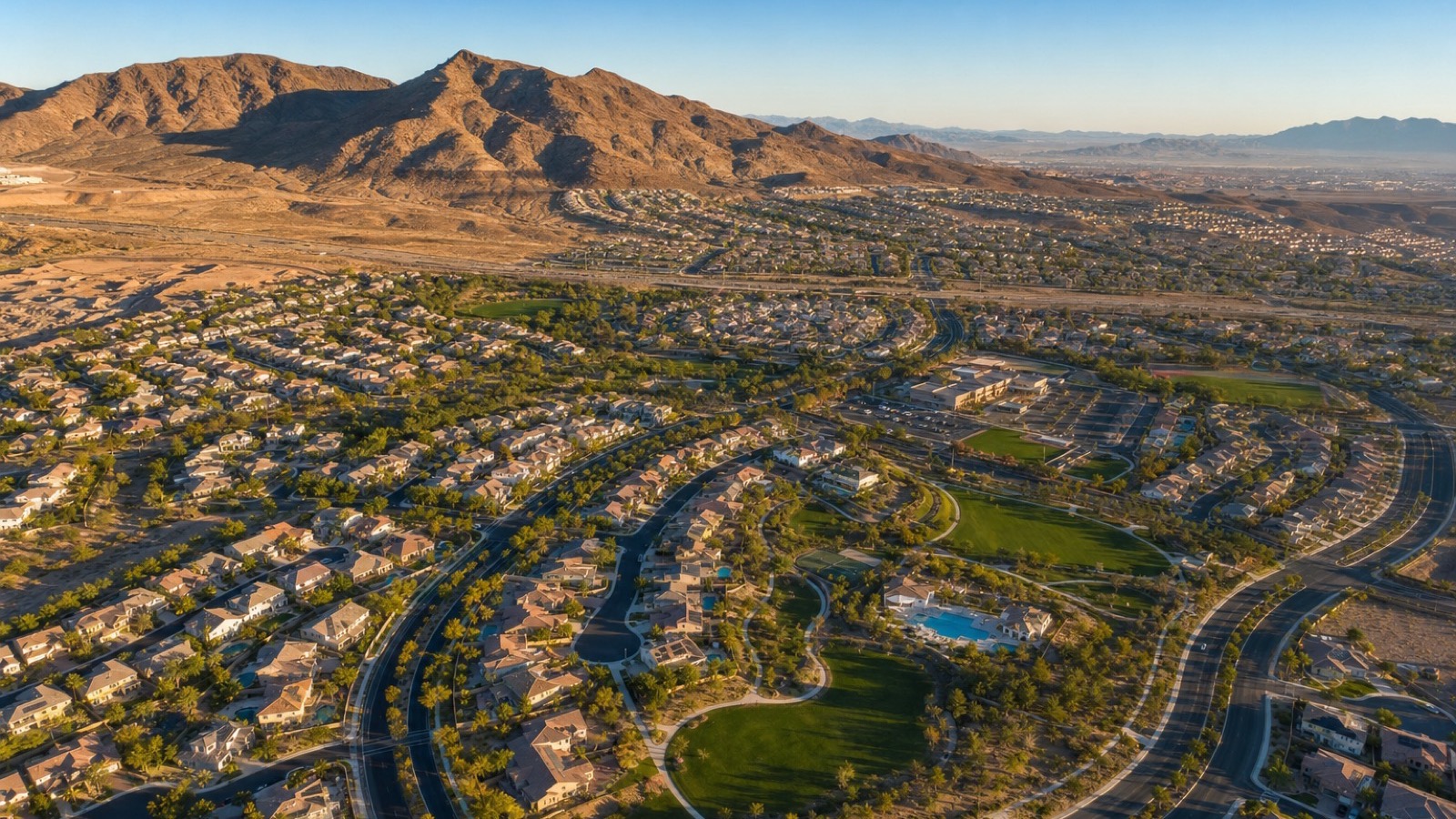
The valley's production builders include Lennar, KB Home, D.R. Horton, Pulte and Del Webb, Richmond American, Tri Pointe, Century Communities, and Toll Brothers at the semi-custom end. They build across the major master-plans — Summerlin, Cadence and Inspirada in Henderson, Skye Canyon, Valley Vista, and the Tule Springs communities in the northwest. According to the Howard Hughes Corporation, Summerlin alone offers new homes from more than a dozen builders at any given time, spanning entry-level to luxury production tiers.
Pricing is broad. Entry-level production homes in outer master-plans start around $400,000, mid-market homes in Summerlin and Cadence run $600,000 to $1,000,000, and luxury production from Toll Brothers or in premium villages reaches $1,500,000 and beyond. The trade-off for that range is control: you get the builder's menu, not a blank canvas. For help negotiating the contract, our guide to builder contract clauses worth negotiating is the place to start.
What Is a Spec Home (Quick Move-In) and When Is It the Smart Buy?
A spec home is a production home the builder chose to build without a buyer attached — on speculation that someone will want it. Builders always keep a handful of these "quick move-in" or "inventory" homes going so they have product to sell to buyers who can't wait six to ten months for a to-be-built home. The finishes are already chosen by the builder's design team, so you can't customize, but the home is either move-in ready or weeks from completion.
Here's why spec homes are often the smartest 2026 buy: they carry the strongest incentives. A builder who has cash tied up in a finished, unsold home is highly motivated, so spec homes are where you find the aggressive rate buydowns, closing-cost credits, and price reductions. According to Freddie Mac, 30-year fixed rates have stayed elevated through 2026, which has pushed builders to lean even harder on financing incentives to move standing inventory — frequently $10,000 to $50,000 in combined credits and buydown value on a spec home. Our breakdown of builder closing-cost credits shows how to capture them.
The catch is simple: you take the home as built. If you love the finishes, a spec home is a fast, well-priced way into new construction. If you have strong design opinions, you'll feel boxed in. For relocating buyers on a deadline, the speed alone often wins.
What Is a Custom Home and What Does It Cost in Las Vegas?
A custom home is a different universe. You buy a lot — typically in a luxury hillside enclave like The Ridges, MacDonald Highlands, Ascaya, or The Summit Club — then hire an architect to design the home and a licensed custom builder to construct it. There's no floorplan menu and no template; every wall, window, and finish is a decision you make. The result is a one-of-a-kind home, and the price reflects it.
Custom homes in Las Vegas start around $1,500,000 and routinely exceed $10,000,000 to $20,000,000 in the trophy enclaves. As a rule of thumb, custom construction runs roughly $400 to $800 per square foot for the build alone — and well past $1,000 per square foot for ultra-luxury — on top of the lot, which can itself cost $500,000 to several million dollars in a community like Ascaya or The Summit Club. The valley's established custom builders include Blue Heron, Christopher Homes, Sun West Custom Homes, and Merlin Custom Home Builders. According to the Nevada State Contractors Board, every custom builder must hold an active Nevada contractor's license, and verifying that license is the first diligence step I run for any custom client.
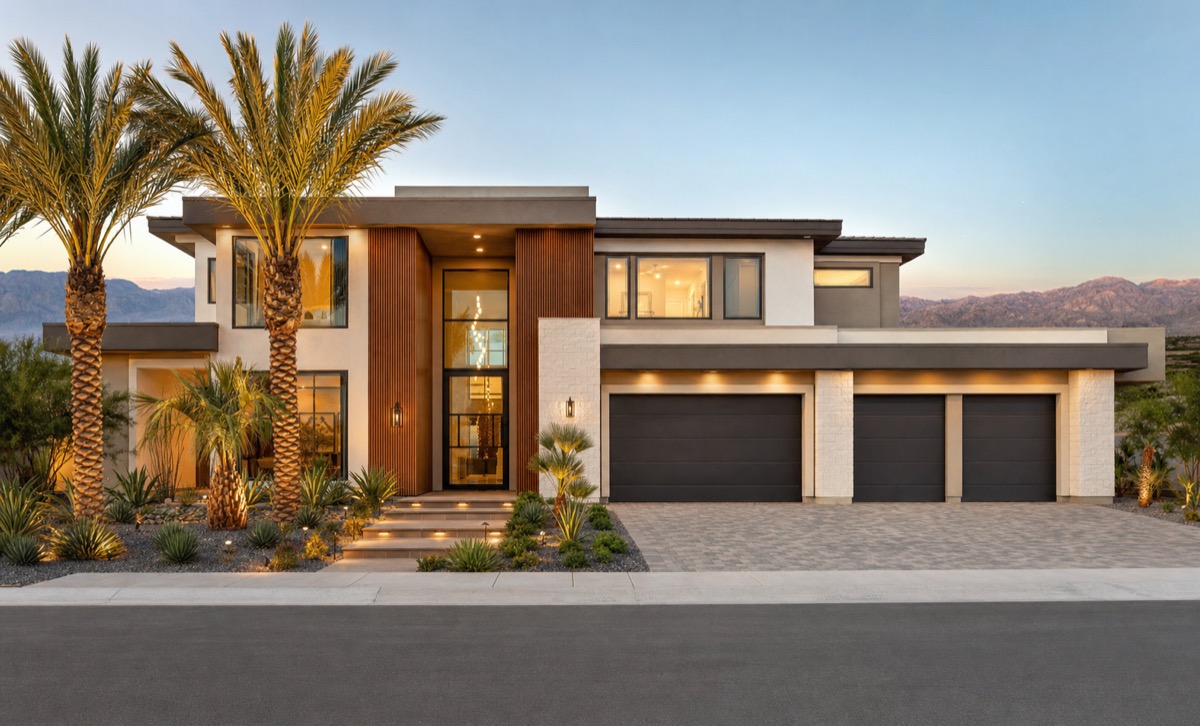
Custom is the right call when budget is not the primary constraint and the home itself — its design, its lot, its views — is the point. For most buyers, it isn't the path; for the design-driven luxury buyer, nothing else delivers. Browse the high-end market on our luxury communities hub.
How Long Does Each New-Build Path Take?
Timeline is where the three paths diverge most sharply, and it's the factor relocating buyers underestimate constantly.
| Stage | Production | Spec | Custom |
|---|---|---|---|
| Design / selections | 2–6 weeks | None | 4–9 months |
| Permitting | Builder-handled | Done | 2–4 months |
| Construction | 5–8 months | 0–8 weeks | 10–16 months |
| Total to move-in | 6–10 months | 0–60 days | 14–24+ months |
Source: builder build-cycle data, Clark County Department of Building & Fire Prevention permitting, and Nevada Real Estate Group transaction experience, 2026.
A spec home can hand you keys in under 30 days because the work is already done. A production home is a six-to-ten-month commitment from contract signing. A custom home is a year and a half to two years once you account for design, permitting through Clark County, and the build itself. If you're selling a home in another state or starting a job on a date certain, the timeline difference is not a detail — it's the decision.
How Much Does Each Option Cost in 2026?
Price overlaps more than people expect between production and spec (they're the same floorplans, after all), while custom sits in its own tier.
| Segment | Production | Spec | Custom |
|---|---|---|---|
| Entry-level | $400K–$550K | $400K–$550K | N/A |
| Mid-market | $550K–$900K | $550K–$900K | $1.5M–$3M |
| Luxury | $900K–$1.5M+ | $900K–$1.5M+ | $3M–$20M+ |
| Build cost / sqft | Bundled in price | Bundled in price | $400–$800+/sqft + lot |
Source: Las Vegas REALTORS MLS data, builder price sheets, and Nevada Real Estate Group transaction experience, 2026.
According to Las Vegas REALTORS, the valley's overall median resale price sits in the mid-$400,000s in 2026, which means entry-level production and spec homes price close to the broader market — you're paying near-median for a brand-new home with a warranty. The premium over resale is real but modest at the entry level and widens as you move up. Custom is a separate calculation entirely: the lot and the per-square-foot build cost are independent line items, and overruns are common, which is why I budget custom clients a 10% to 20% contingency above the architect's estimate.
How Does Financing Differ for Spec vs Custom vs Production?
This is the most overlooked difference, and it surprises buyers. Spec and production homes are financed with a standard mortgage — conventional, FHA, VA, or jumbo — that funds at closing, exactly like a resale purchase. For a to-be-built production home, you sign the contract and put down an earnest-money deposit, then lock your loan as completion approaches. For a spec home, it's a normal close on a finished property.
A custom home is different: it usually requires a construction-to-permanent loan. According to the Consumer Financial Protection Bureau, construction loans typically disburse in stages as the build hits milestones and charge interest only on the drawn balance during construction, then convert to a permanent mortgage at completion. These loans demand larger down payments — often 20% to 30% — detailed builder budgets, and lender-approved draw schedules. Production and spec buyers skip all of that. Whatever path you choose, getting pre-approved first tells you which homes are realistic before you fall in love with one.
How Much Control Do You Get Over Design and Finishes?
Control is the trade you make for speed and price. Here's the honest spectrum:
| Element | Production | Spec | Custom |
|---|---|---|---|
| Floorplan | Builder menu | Fixed (as built) | Designed from scratch |
| Lot selection | Available lots | Fixed | You choose / own the lot |
| Finishes | Design-center options | Pre-selected | Unlimited |
| Structural changes | Limited options | None | Anything code allows |
| Upgrade cost risk | High at design center | None | High (you own all decisions) |
Source: builder design-center menus and Nevada Real Estate Group transaction experience, 2026.
The hidden cost in production homes lives at the design center, where upgrades add up fast — it's common to add $30,000 to $100,000+ in options to a base price. Our guide to keeping your design-center budget in check walks through which upgrades hold value and which to skip. Spec homes sidestep that entirely (the choices are made), and custom homes hand you every decision — which is the appeal and the burden at once.
What Are the Risks of Each New-Build Path?
Every path carries risk; they're just different risks. With a production home, the main exposures are rate movement during the six-to-ten-month build (you may not lock until late) and design-center overspending. With a spec home, risk is lowest — the home exists, the price is set, and you can inspect it before closing — though you give up customization and may inherit finish choices you'd not have made. With a custom home, risk is highest: cost overruns, timeline slippage, builder disputes, and the gap between the architect's vision and the final appraisal are all real.
According to the Nevada State Contractors Board, the most common custom-build problems trace back to inadequate contracts and unlicensed or undercapitalized contractors — which is why a written, milestone-based contract with a licensed, bonded builder is non-negotiable. Across the new-construction deals our team has handled, the buyers who get hurt are almost always the ones who waived their own representation and leaned on the builder's rep. Don't.
Where in Las Vegas Do You Find Each Type?
Geography sorts the three paths. Production and spec homes are everywhere new development is happening: Summerlin's newer villages, Cadence and Inspirada in Henderson, Skye Canyon and Valley Vista in the northwest, and the fast-growing far-northwest around Tule Springs. Custom homes cluster in the guard-gated luxury hillside communities — The Ridges and Reverence in Summerlin, MacDonald Highlands and Ascaya in Henderson, and The Summit Club.
According to the U.S. Census Bureau, the Las Vegas metro remains one of the fastest-growing large metros in the country, and that growth is overwhelmingly production and spec product on the valley's edges, where developable land remains. Custom land is scarce and premium-priced precisely because the buildable luxury lots are nearly all inside a small number of established enclaves. Compare communities side by side on our community directory, and for the city's most active new-build corridor, see our Henderson guide.
How Do New Builds Compare on Resale and Appreciation?
New construction carries a small premium over comparable resale, and the question buyers ask is whether it holds. Generally, yes — a brand-new home with a builder warranty, current code, and modern efficiency commands a premium and resells well, but the new-home premium itself tends to compress as the home ages into the resale market. Spec and production homes, because they're standardized, have abundant comparables and predictable resale behavior. Custom homes are the wild card: a beautifully designed custom on a great lot can outperform, but a hyper-personalized custom can also be hard to resell if the next buyer doesn't share the original owner's taste.
According to Las Vegas REALTORS data, the valley's new and resale markets have moved largely in tandem through 2026, with new construction holding its premium in supply-constrained master-plans. The practical takeaway I give clients: buy production or spec for predictable resale, and buy custom only if you intend to hold long enough that the new-home premium is irrelevant to your return.
Should You Use Your Own Agent on a New Build?
Yes — every time, and it costs you nothing. The friendly representative at the builder's sales office is a builder employee whose job is to maximize the builder's price and protect the builder's interests. They do not represent you. In Nevada, you have the right to your own buyer's agent, and the builder pays the cooperating commission out of an already-budgeted marketing allocation — so bringing your own representation does not raise your price.
The catch most buyers don't know: you generally must have your agent register with you on your first visit to the community, before you tour or sign anything. If you walk in alone and later try to add representation, some builders will refuse to recognize your agent. Across our new-construction closings, having an agent in the room has meant catching unfavorable contract clauses, negotiating incentives the on-site rep never volunteered, and managing the inspection on a home the builder would rather you not inspect. Call (702) 637-1759 before your first builder visit and we'll register and represent you at no cost to you.
Which New-Build Path Is Right for You?
A quick decision guide based on what we see with buyers:
- You need to move in under 60 days: spec (quick move-in) — it's the only path that's fast.
- You want a new home with some choice and a moderate budget: production — order your plan and finishes.
- You want the best 2026 incentives: spec — standing inventory carries the strongest credits and buydowns.
- You have a $1.5M+ budget and strong design vision: custom — total control, longest timeline.
- You're relocating from out of state on a deadline: spec first, production second.
The best move is to compare a spec home and a to-be-built production home in the same community — same builder, same neighborhood — so you can weigh speed and incentives against choice. We pull builder inventory, current incentive sheets, and recent closed comps, register your representation before your first visit, and manage the contract and inspection start to finish. Start on our new construction hub or call (702) 637-1759.
Frequently Asked Questions
What is the difference between a spec home and a production home?
A production home is built to your order from a builder's floorplan menu after you sign a contract, taking six to ten months. A spec (speculative or "quick move-in") home is the same kind of home the builder already built without a buyer, with finishes pre-selected — so you buy it as-is and can close in weeks. Same floorplans, different timing and customization.
Are spec homes cheaper than custom homes in Las Vegas?
Far cheaper. Spec homes run roughly $400,000 to $1,500,000 — the same range as production homes — while custom homes start around $1,500,000 and exceed $20,000,000 in the luxury enclaves. Custom build costs alone run $400 to $800+ per square foot plus the lot, which production and spec buyers never pay separately.
How long does it take to build a custom home in Las Vegas?
Plan on 14 to 24+ months from contract to move-in. That includes four to nine months of architectural design and selections, two to four months of permitting through Clark County, and ten to sixteen months of construction. Production homes take six to ten months; spec homes are already built and can close in under 60 days.
Do I need a special loan for new construction?
Only for custom. Production and spec homes use a standard mortgage (conventional, FHA, VA, or jumbo) that funds at closing. Custom homes typically require a construction-to-permanent loan that disburses in stages, charges interest only on drawn funds during the build, and usually requires a 20% to 30% down payment before converting to a permanent mortgage.
Can I negotiate the price on a new construction home?
Builders rarely cut the base price (it sets comps for the community), but they negotiate heavily on incentives — rate buydowns, closing-cost credits, design-center allowances, and lot premiums — especially on spec inventory, where $10,000 to $50,000 in combined value is common in 2026. A buyer's agent who knows the builder's current incentive sheet captures far more than a buyer negotiating alone.
Should I bring my own agent to a new home builder?
Yes, and it's free to you — the builder pays the commission from its marketing budget, so your price doesn't change. The on-site rep works for the builder. Critically, you usually must have your agent register on your first visit; walk in alone and some builders won't recognize representation later. Your agent negotiates incentives, reviews the contract, and manages inspections.
Which is the best new-build option for a fast relocation?
A spec (quick move-in) home, hands down. It's already built, so you can inspect it and close in under 60 days — the only new-construction path that fits a tight relocation timeline. Production homes take six to ten months and custom homes far longer, which rarely works when you're starting a job or selling a home elsewhere on a fixed date.
Which Sources Inform This New-Construction Guide?
This guide combines Nevada Real Estate Group's experience across 6,225+ Las Vegas-metro closings with primary market and public sources. Pricing and resale context come from Las Vegas REALTORS MLS data; new-home market structure from the National Association of Home Builders; mortgage-rate context from Freddie Mac; construction-loan mechanics from the Consumer Financial Protection Bureau; contractor licensing and custom-build risk from the Nevada State Contractors Board; permitting timelines from the Clark County Department of Building & Fire Prevention; master-plan data from the Howard Hughes Corporation; and growth and demographic context from the U.S. Census Bureau. Builder-process detail draws on our guides to builder contract clauses, builder closing-cost credits, and design-center budgeting. Prices, incentives, and rates change — verify current figures before acting.
Information deemed reliable but not guaranteed. This article is educational and is not financial advice — builder pricing, incentives, loan terms, and construction costs change over time and vary by community. Confirm current details with a qualified professional before buying. Nevada Real Estate Group · (702) 637-1759 · NV License S.181401.