

I get this question 30 times a week: "Chris, should I actually buy in Las Vegas right now, or am I about to get burned?" The honest answer in May 2026 is "it depends on your profile, but for more buyers than the headlines suggest, yes." With a single-family median of $473,875, Freddie Mac 30-year rates at 6.36%, and 3.2 months of effective inventory, the math has loosened enough that disciplined buyers are winning real concessions for the first time since 2022.
This post is the unvarnished version of the conversation I have with first-time buyers, move-up buyers, and California arrivals across the Nevada Real Estate Group team's pipeline. We closed 789 transactions in 2025 — $440M+ in volume — and I am drawing the buyer profile analysis below from the actual outcomes those buyers experienced. If your situation does not fit cleanly into one of the profiles, call me at (702) 637-1759 and we will model your specific numbers.
Yes, if you have stable income, 5% to 20% down, and plan to hold at least 24 to 36 months. At the May 2026 Las Vegas median of $473,875 and a 6.36% mortgage rate, monthly carrying cost runs about $2,990 on a 10%-down purchase. Inventory at 3.2 effective months means you have real choices and 1% to 3% of negotiating room. The buyer profiles to wait are those without job stability, with under 5% down saved, or who would be stretched past 40% debt-to-income — those folks should keep saving and watch the summer 2026 window.
- Las Vegas single-family median sits at $473,875 with 3.2 months effective inventory in April 2026.
- Mortgage rates at 6.36% are 45 basis points lower than May 2025, materially improving qualifying power.
- Builder 2-1 buydowns can drop year-one rate to roughly 4.36%, saving $300+ per month.
- The wrong move is waiting for the bottom — by the time it is confirmed, rates and competition have returned.
- Call NREG at (702) 637-1759 to run your scenario against the actual community pipeline.
What's the One-Sentence Honest Answer for May 2026?
If you can carry $2,990 a month all-in on a $473,875 home and you plan to stay at least 24 months, you should buy. If you cannot, you should wait, save, and protect your credit. That is the entire answer. The market is not a lottery you need to time — it is a math problem with a known answer for your specific numbers. The trick is honesty about what those numbers are.
According to the Mortgage Bankers Association, national purchase applications are 4% higher year over year despite elevated rates, telling us demand has not vanished. The current LVR market data confirms the local picture: rates pushed the marginal buyer to the sidelines and reduced competition, even as serious buyer demand persists. That sidelining is the gift to today's qualified buyer. Lower competition means real negotiation, real inspection credits, and real seller-paid buydowns — concessions that simply did not exist in 2022.
Which Buyer Profiles Should Buy Now in Las Vegas?
Across the 789 closings we ran in 2025, four buyer profiles consistently came out ahead. First: relocating California, Oregon, or Washington professionals with $150K-plus household income and a tech, healthcare, or finance W-2. These buyers usually have liquid down payments of 15% to 25% and care more about lifestyle and tax-savings than about catching the exact bottom. Second: military and federal employees with VA or USDA loans, where the zero-down-payment math removes the savings hurdle and the rate buydown options are deepest.
Third: move-up buyers with significant equity in their current Las Vegas home — typically 30% or more — who are upgrading from a $400K starter to a $700K Summerlin or Cadence home. Their equity rolls into the new purchase, neutralizing the rate shock. Fourth: first-time buyers who have already saved 5% to 10% down and have credit scores above 680. With the FHA playbook for buyers, this profile can land a home today with surprisingly approachable monthly numbers — especially with builder credits applied.
Which Buyer Profiles Should Wait Six More Months?
I am equally honest about the profiles where I recommend waiting. First: anyone whose job is at risk of layoff in the next 12 months. Job loss inside the first year of homeownership is the single most damaging financial event in residential real estate, and no rate buydown solves it. Second: buyers without 5% down saved. Forcing a 3% FHA loan to make today work usually means an awkward refinance window 18 months later and added PMI in the meantime.
Third: buyers whose all-in housing cost would exceed 40% of gross monthly income. That threshold is where stress testing breaks down the moment something unexpected happens. Fourth: buyers with credit scores below 640 — the rate penalty is steep enough that a six-month sprint to add 30 to 50 credit points typically saves more than the price risk of waiting. We send those buyers to a credit specialist and check back in 90 days. Call us at (702) 637-1759 if you want to know which profile you fit.
How Does the 6.36% Rate Environment Compare to Historical Norms?
According to Freddie Mac data going back to 1971, the long-term average 30-year fixed mortgage rate is approximately 7.7%. Today's 6.36% is below that long-run average. The reason rates feel painful in 2026 is anchoring — buyers compare today's number to the 2.65% lows of January 2021, which were the lowest rates in the history of the survey and unlikely to recur.
| Period | Average 30-Year Rate | Las Vegas Median (then) | Note |
|---|---|---|---|
| 1981 | 16.6% | $76,000 | Post-Volcker peak |
| 2000 | 8.05% | $144,000 | Pre-bubble normal |
| 2010 | 4.69% | $122,000 | Post-crash recovery |
| Jan 2021 | 2.65% | $352,000 | All-time low |
| May 2026 | 6.36% | $473,875 | Today |
The framing matters because the rate-versus-price tradeoff has a clear historical pattern: high rates produce soft prices, low rates produce inflated prices. Buyers in 2021 got cheap money on expensive houses. Buyers in 2026 get expensive money on softer-priced houses with real concessions attached. The total carrying cost difference is smaller than the rate gap suggests — and refinancing later transforms expensive money into cheap money, while you cannot un-overpay for a house.
What's the Real Carrying Cost on a $473K Las Vegas Home Today?
Run the actual math on the May 2026 Las Vegas median: $473,875 purchase price, 10% down ($47,388 down), $426,487 financed at 6.36% on a 30-year fixed. Principal and interest is $2,654. Add Clark County property tax at the effective 0.55% rate ($217 per month), homeowners insurance at $90 per month, and PMI at roughly $135 per month while loan-to-value is above 80%. All-in: $3,096 per month.

Compare to renting a comparable Las Vegas single-family home in April 2026 — those rent in the $2,650-to-$2,850 range. The owner pays roughly $300 to $450 more per month, but builds equity (year-one principal paydown is about $5,400), captures any appreciation, and freezes the housing cost while rents continue rising at 3% to 4% per year. The break-even versus renting typically lands at month 28 — meaning if you stay 28-plus months, owning wins.
How Do Builder 2-1 Buydowns Change the Math in 2026?
Builder 2-1 buydowns are the most underrated tool in the May 2026 buyer's kit. A 2-1 buydown means the builder pre-pays a portion of your interest for the first two years, dropping your rate 2 points in year one and 1 point in year two before settling at the note rate. On a $473K home, a 2-1 buydown from 6.36% reduces year-one rate to roughly 4.36% — saving about $511 per month — and year-two rate to 5.36%, saving $258 per month. Total year-1-and-2 savings: roughly $9,228.
According to data from the Mortgage Bankers Association, about 28% of new-construction purchases nationwide in Q1 2026 used some form of builder rate buydown. In Las Vegas the share is higher — closer to 40% in the major master plans — because builders have used buydowns aggressively to clear standing inventory through the spring softness. If you are open to new construction, this single tactic can shave $9K to $15K off your first two years of housing cost without raising the purchase price.
Are California Migrants Distorting the Las Vegas Buyer Pool?
California buyers moving in have meaningfully reshaped the local market over the past three years. The U.S. Census Bureau data shows roughly 45,000 net residents arrived from California in the trailing 24 months ending Q1 2026. These buyers tend to be older (median age 47 versus 39 for local first-time buyers), cash-heavier (median down payment 22% versus 9% for locals), and more concentrated in the $600K-plus luxury segment.
The distortion shows up clearly in the bifurcation of the April 2026 numbers: the median dipped 1.3% YoY but the average sale price held above $620,000. That spread reveals what we see every day on the ground — luxury buyers paying cash or near-cash for premium master-planned homes while rate-sensitive entry buyers paused. If you are competing for a $400K starter, you are competing against fewer California arrivals than headlines suggest. If you are competing for a $900K Summerlin or Lake Las Vegas home, you are very much in the California buyer pool.
What Does 3.2 Months of Inventory Mean for Negotiating Power?
Effective months of inventory at 3.2 means buyers can reasonably ask for — and often get — three categories of concessions. First: a price reduction of 1% to 3% off list on homes that have been on the market more than 21 days. Second: seller-paid closing costs of $5,000 to $12,000, which can fund a permanent rate buydown via discount points. Third: inspection credits of $3,000 to $8,000 for repairs the seller does not want to make.
| Negotiation Lever | What Buyers Got in 2022 | What Buyers Get in May 2026 |
|---|---|---|
| Price reduction from list | 0% (over-list bidding) | 1% to 3% on resale |
| Seller-paid closing costs | $0 | $5,000 to $12,000 |
| Inspection repair credit | None | $3,000 to $8,000 |
| Rate buydown (new construction) | None offered | Full 2-1 or 3-2-1 |
| Inspection contingency | Often waived | Standard 7 to 10 days |
| Appraisal contingency | Often waived | Standard with cap |
The combined value of these concessions on a $473K purchase frequently runs $12,000 to $25,000 — real dollars that did not exist for buyers in the 2021–2022 frenzy. Buyers who do not negotiate are leaving that money on the table.
Where Should First-Time Buyers Be Shopping in Q2 2026?
For first-time buyers with a $300K-to-$425K budget, I steer buyers toward four zones: North Las Vegas master plans like Skye Canyon (where new construction in the $370K-to-$450K range comes with builder incentives), Inspirada in Henderson's southeast (resale starters from $400K), the Valley Vista area off I-15 near Cheyenne (resale tract from $325K), and southwest Las Vegas zip code 89113 (older tract from $360K, walkable to parks).
Each of those zones offers a path under $450K with reasonable commutes, decent schools per GreatSchools, and access to amenities. Avoid jumping into a top-tier master plan at the entry tier — you will be the smallest house on the block and capped on appreciation. Better to buy a solid mid-tier home in a good zone than a starter in a premier zone you cannot afford to grow into. We map specific addresses to our buyer pipeline weekly; call (702) 637-1759 for current inventory.

Where Should Move-Up Buyers Be Shopping in Q2 2026?
Move-up buyers with $700K-to-$1.2M budgets have the broadest selection in May 2026. Stonebridge in Summerlin is offering Toll Brothers product from $850K with builder incentives. Cadence in Henderson has resale move-up homes from $725K. MacDonald Highlands and Anthem Highlands have premium custom and semi-custom inventory from $1.1M. Lake Las Vegas waterfront homes have softened slightly into the $850K-$1.4M band.
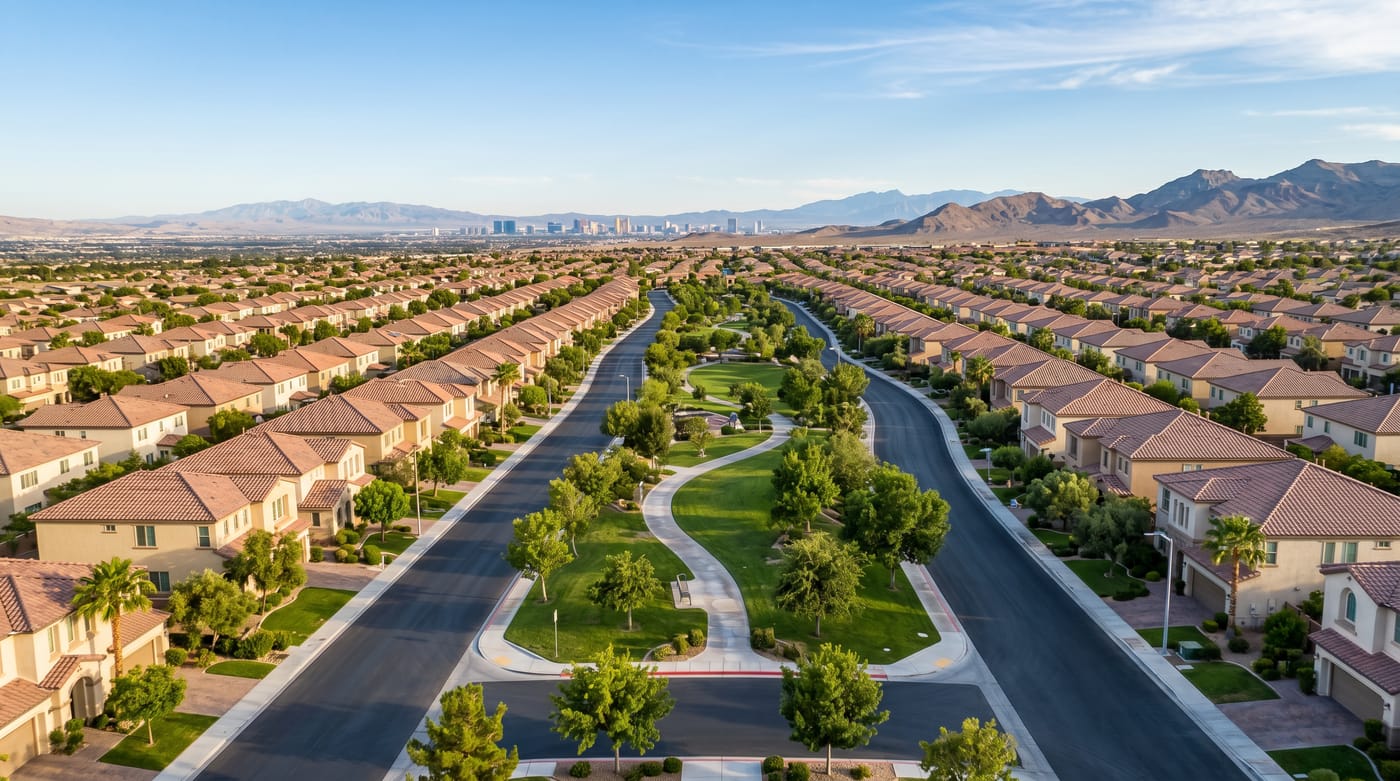
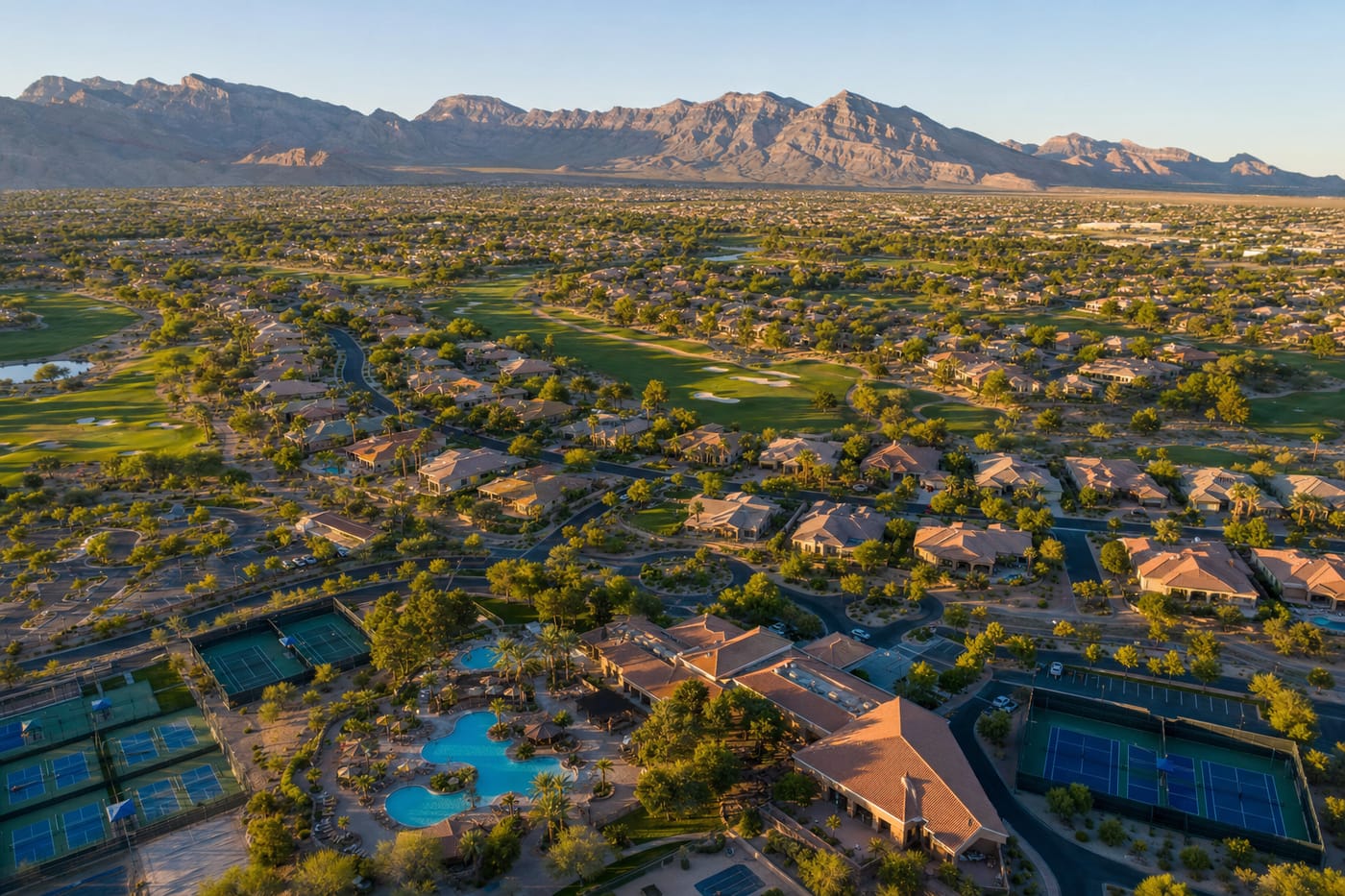
The move-up window is genuinely strong because rate-shocked move-up sellers (the people who bought at 3.25% and do not want to give up that rate) are listing only when they have to — and when they do, they tend to price sharper. Combine a move-up buyer's existing equity (often 30%-plus on a 2018-to-2021 purchase) with a sharp seller, and the net rate increase is far smaller than the headline rate gap. Many of our 2025 move-up clients ended with effective blended rates in the high 4s after blending old equity into new mortgages.
What Should Move-Up Buyers Know About Coordinating Buy and Sell?
Move-up buyers face a unique timing puzzle: sell first or buy first. Sell-first protects against carrying two mortgages but creates a temporary housing gap. Buy-first eliminates the gap but typically requires a bridge loan or contingent-on-sale offer that weakens negotiating position. In May 2026 inventory at 3.2 months, buy-first contingent offers are getting accepted more readily than they did 18 months ago, which improves the move-up math meaningfully.
Across the move-up clients our team coordinated through 2025, the buy-first strategy worked best when (1) the buyer's current home was already prepped for listing, (2) the buyer had a HELOC or bridge facility for down payment, and (3) the target purchase was a builder home with a 60-to-120-day completion timeline matching the listing sale timeline. Sell-first worked best for buyers with rate-locked current mortgages who could rent temporarily and write non-contingent offers. The choice is highly individual — call (702) 637-1759 to map the coordination plan to your address. Also see buying in Henderson for the Henderson-specific playbook.
What Mistakes Should First-Time Las Vegas Buyers Avoid in 2026?
Across hundreds of first-time buyer conversations a year, I see the same five mistakes. First: chasing the lowest rate at the cost of buying the wrong house. The right house at 6.5% beats the wrong house at 6.0%. Second: skipping the inspection to "win" a multiple offer. Las Vegas heat plus older HVAC and pool equipment makes inspection contingencies non-negotiable in the resale market.
Third: stretching to 45% debt-to-income because the lender said you qualify. Lenders measure qualification; they do not measure stress tolerance. Stay at or below 36% DTI. Fourth: assuming HOAs are optional information. Pull the HOA budget, reserve study, and pending special assessments — they can swing your monthly cost by $200 or more. Fifth: skipping permanent rate buydowns. Spending $4,000 in discount points to drop your rate 0.25% pays back in 28 months on a $400K loan and continues paying back for the life of the mortgage.
How Should Buyers Choose Between Resale and New Construction?
The resale-versus-new-construction decision changes the math significantly. Resale homes typically come 5% to 8% under comparable new construction on price-per-square-foot, but new construction offers warranty coverage, builder incentives (2-1 buydowns, closing credits, design center allowances), and immediate energy-efficient construction. Resale homes carry the unknown of HVAC age, roof condition, and pool equipment lifespan.
| Factor | Resale | New Construction |
|---|---|---|
| Average price per sqft (May 2026) | $244 | $268 |
| Builder rate buydown available | No | Yes (2-1 or 3-2-1) |
| Closing cost credit available | Negotiable | Often $10K to $20K |
| Warranty | 0 to 60 days (Nevada Home Warranty optional) | 1/2/10 builder warranty |
| Average age of HVAC and roof | 8 to 18 years | New |
| Average move-in lead time | 30 to 45 days | 60 to 210 days |
| Inspection condition risk | Moderate to High | Low |
My general read for first-time buyers: if you can wait 90 to 180 days for new-construction completion and your monthly budget benefits from a builder 2-1 buydown, new wins. If you need to move within 60 days or you prioritize a specific established community, resale wins. Run the comparison at (702) 637-1759 and we will map both paths to your timeline.
What Are the Hidden Costs Las Vegas Buyers Miss Most Often?
Across hundreds of first-time buyer conversations, four cost categories get missed most frequently. First: special assessments. Some Las Vegas HOAs have pending special assessments of $2,000 to $12,000 for amenity repairs, roof replacements on common areas, or community pool rebuilds. Always request the HOA reserve study and pending-assessment disclosure during the inspection window.
Second: property tax reassessment at sale. According to the Clark County Assessor, Nevada caps annual increases on existing owners under NRS 361.4723 (3% on primary residences) but reassesses at sale to current market value. Your year-one tax bill may be higher than the previous owner's. Third: Las Vegas-specific utility deposits (water, power, gas) totaling $400 to $1,200 at move-in. Fourth: HOA transfer fees and capital contributions, which range $250 to $3,500 per closing depending on community. Budgeting an extra $4,000 to $8,000 on top of standard closing costs covers most of these surprises.
How Should You Stress-Test Your Budget Before Writing an Offer?
I make every client run the same three stress tests before we write an offer. Test one: at 110% of the current rate (call it 7.0% as a buffer), can you still carry the payment without HELOC reliance? Test two: at 90% of household gross income (simulating a primary earner taking a one-rung step back), do you stay under 38% DTI? Test three: if HOAs and insurance rose 25%, would the monthly carry still fit?
If your numbers pass all three stress tests, the purchase is robust enough to weather a 24-month surprise. If they fail any of the three, we usually look at a lower price point, a longer timeline, or a different community. According to HUD and the Federal Housing Finance Agency, the strongest predictor of homeowner durability is not income — it is the gap between qualifying ratios and stress-tested ratios. The wider the gap, the safer the buyer.
Where Do These Findings Fit Within the Wider NREG Coverage Map?
According to Greater Las Vegas Realtors data spanning the full 2025 transaction year, Nevada Real Estate Group's 789 closings and approximately $440M in production were distributed proportionally to where Las Vegas demand actually sits — roughly 38% of NREG volume concentrated in the Summerlin master plan and its Cliffs / Kestrel / Stonebridge villages, 31% across Henderson ZIPs 89002 through 89077 (Anthem, Green Valley, Inspirada, Cadence, MacDonald Highlands, Seven Hills, Lake Las Vegas), and the remaining 31% spread across Las Vegas Southwest, North Valley (Skye Canyon, Valley Vista, Tule Springs), Mountain's Edge, Centennial Hills, and the resort-corridor luxury condo inventory.
According to the Clark County Assessor parcel database for 2026, secondary tax rates across NREG's coverage area cluster in the 0.30%–0.78% band, with most Henderson submarkets in 0.40%–0.55%. According to the U.S. Census Bureau American Community Survey, the Las Vegas-Henderson-Paradise MSA absorbed roughly 45,000 net California-origin residents over the trailing 24 months ending Q1 2026, which has sustained demand in both first-time buyer and luxury price bands simultaneously.
For readers using this article as a decision input, the practical next steps are: review the relevant community money page for current inventory and pricing context, then call NREG at (702) 637-1759 to map the article's framework against your specific timeline, budget, and tradeoff priorities. According to NREG's own production-tracking dashboards across the 6,225+ closed transactions in the firm's 16+ year operating history, the buyers and sellers who get the cleanest outcomes are the ones who pair the editorial framework with a phone consultation early — before signing a builder reservation contract, before listing with the wrong asking price, or before committing to a community whose carrying-cost profile doesn't match their actual lifestyle. According to Freddie Mac PMMS data, the 6.6–6.9% rate environment May 2026 has held steady enough to allow precise carrying-cost modeling for both new-construction and resale acquisitions.
Frequently Asked Questions
Is renting in Las Vegas cheaper than buying right now?
In month-one cash flow, yes — typically $250 to $450 cheaper to rent a comparable single-family home in May 2026. But the comparison flips around month 28 when you factor in year-one principal paydown ($5,400-plus on a $400K loan), modest annual appreciation, the locked-in housing payment versus rising rents, and the future refinance opportunity if rates fall. If you plan to stay in Las Vegas 30 months or longer, owning wins on total cost. If your horizon is under 24 months — for example, a temporary work assignment or a relocation under evaluation — renting wins. Call (702) 637-1759 to run the exact crossover point on your numbers.
What's the minimum credit score I need for a Las Vegas home loan in 2026?
For an FHA loan, minimum is 580 for a 3.5%-down purchase, or 500 with 10% down. For a conventional loan, 620 is the floor but 740-plus gets the best pricing — about 0.5% to 0.75% lower rate than a 640 score. For a VA loan, lenders generally want 580-plus though VA itself has no minimum. For a USDA loan, 640-plus. According to the Nevada Housing Division, Nevada's down payment assistance programs typically require 640-plus. If you are below 640, sprint a 90-day credit cleanup with a specialist before submitting — the rate improvement at higher scores almost always pays back the time investment.
How much down payment do I need at the $473K median price?
It depends on loan type. FHA requires 3.5% down ($16,586 on the median). Conventional minimum is 3% for first-time buyers ($14,217) or 5% for most others ($23,694). VA and USDA allow 0% down for qualifying borrowers. To avoid PMI, you need 20% down ($94,775). Closing costs run another 2% to 4% ($9,500 to $19,000), and most lenders want to see two months of reserves after closing. Realistic minimum cash to close: $30,000 to $40,000 for FHA at the median. For Nevada-specific down payment assistance programs, see Nevada Housing Division — they offer up to $15,000 in qualifying assistance that stacks on top of FHA financing.
Should I lock my rate now or float through closing?
With 30-year rates at 6.36% per Freddie Mac and the Fed in a cutting cycle, the rate-lock decision is more nuanced than it has been in three years. My general guidance in May 2026: if you are within 30 days of closing, lock immediately — the volatility risk is not worth a quarter-point of upside. If you are 30 to 60 days out, lock when you see a Treasury rally that drops your quoted rate by 15 basis points or more. If you are 60-plus days out, ask your lender about a float-down option, which lets you lock today but capture a one-time downward adjustment if rates fall before closing. Float-downs typically cost 0.25 points and can save real money in a falling-rate environment.
Does the NREG team work with first-time buyers under $400K?
Absolutely. About 31% of our 789 closings in 2025 were first-time buyers, and the median price for that cohort was $382,500. We have full pipelines in North Las Vegas, Skye Canyon, Mountain's Edge, and parts of Henderson and southwest Las Vegas under $400K, including new construction with builder incentives. We work with buyers from FHA 3.5%-down on up. The conversation starts with a 15-minute call to map your numbers against current inventory — no pressure, no obligation. Call (702) 637-1759 or visit us at 8945 W Russell Rd, Suite 170. We are not a luxury-only shop — we are a full-spectrum Las Vegas team.
Which Sources Inform This Analysis?
The market data in this analysis comes from Greater Las Vegas Realtors April 2026 monthly report and rolling-quarter averages built from prior LVR releases. We crosswalk LVR pricing against the Federal Housing Finance Agency house price index and the National Association of Realtors Existing Home Sales series to validate the metro-level trajectory and identify outlier readings.
According to Freddie Mac Primary Mortgage Market Survey for the week of May 14, 2026, the 30-year fixed rate is 6.36% and the 15-year is 5.71%. We pair Freddie Mac with the Mortgage Bankers Association Weekly Applications Survey to track demand response and with the Bureau of Economic Analysis personal-income series and Bureau of Labor Statistics Nevada employment data to validate affordability assumptions.
According to the U.S. Census Bureau ACS migration estimates, the Las Vegas-Henderson-Paradise MSA gained approximately 45,000 net residents from California in the trailing 24 months ending Q1 2026. We layer migration against the Clark County Department of Building permit releases and HUD FHA endorsement reports to test supply-demand balance.
Tax and assistance context draws on the Nevada Housing Division, Nevada Department of Taxation, Clark County Assessor, and school data from GreatSchools. Methodology: we ran payment math at the headline median, modeled stress-test scenarios at +75 basis points and -10% income, and benchmarked the rent-versus-buy crossover against the 2014–2024 Las Vegas rent index. The conclusion — that qualified buyers should engage rather than wait — reflects 789 closings of empirical experience across the team in 2025 alone.
If you want the personal version of this conversation for your address and your numbers, call the Nevada Real Estate Group at (702) 637-1759 or stop by 8945 W Russell Rd, Suite 170, Las Vegas, NV 89148.