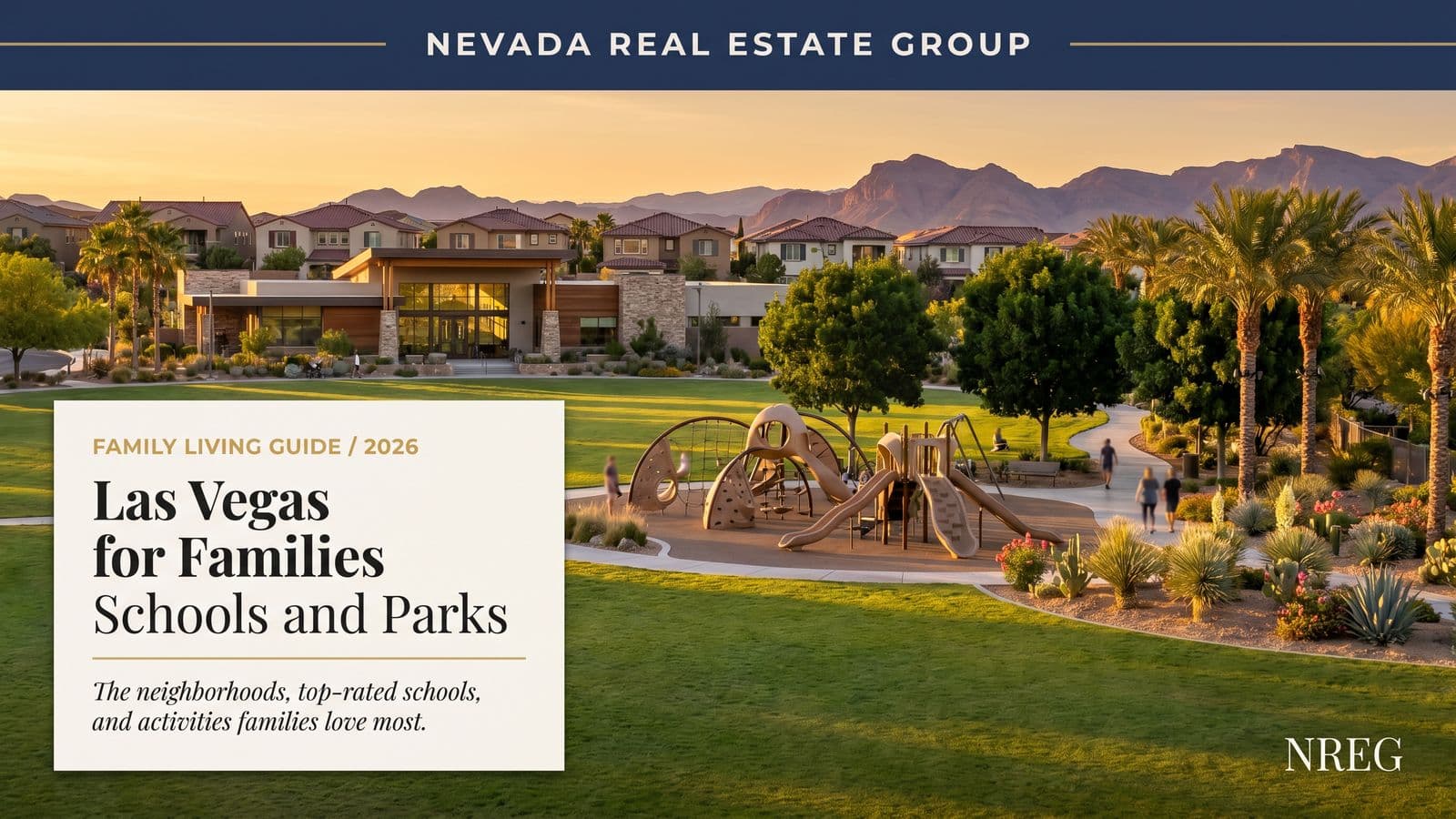

Published May 30, 2026 · Updated May 30, 2026 · By Chris Nevada, Nevada Real Estate Group · NV License S.181401
"Should we buy in Las Vegas or Summerlin?" comes up almost as often as the Henderson question — but it's built on a misunderstanding worth clearing up first: Summerlin is Las Vegas. It's a 22,500-acre master-planned community on the western edge of the city, not a separate town. So this isn't a city-versus-city decision the way comparing Las Vegas and Henderson is. It's a value question: is Summerlin's premium — roughly 50% more per home than the valley average — worth what it buys, or does the rest of Las Vegas give you more for your money?
Across the 6,225+ Las Vegas-metro closings Nevada Real Estate Group has represented over 16+ years — including 789 in 2025 — we've put plenty of buyers into Summerlin and talked plenty of others out of it in favor of a value neighborhood that fit them better. The honest answer depends entirely on what you're optimizing for. Here's the framework we actually use.
Summerlin is a master-planned community within the city of Las Vegas, so taxes (no state income tax, 3% primary cap) and the school district (CCSD) are identical to the rest of the valley. The real difference is price and what it buys: Summerlin's median runs roughly $700,000–$800,000 versus about $460,000 for the broader city of Las Vegas — a roughly 50% premium that buys top-rated schools, Red Rock Canyon access, 200+ miles of trails, Downtown Summerlin, and the valley's strongest resale. If those matter and you can afford it, Summerlin is worth it; if you want maximum home, space, or lower HOA, value neighborhoods like Centennial Hills, Mountains Edge, or Southern Highlands win.
- Summerlin is part of the city of Las Vegas — same county, same taxes, same school district. The only differences are price, amenities, and schools by zone.
- Summerlin's median runs roughly $700,000–$800,000 vs about $460,000 for the broader city — a roughly 50% premium.
- The premium buys: top CCSD schools (Palo Verde, Sig Rogich), Red Rock access, 200+ miles of trails, Downtown Summerlin, and the valley's strongest resale/appreciation.
- Best value alternatives: Centennial Hills, Mountains Edge, Skye Canyon, Spring Valley, and Southern Highlands deliver more home per dollar.
- Summerlin carries HOA dues (master assessment + village, $50–$1,200+/mo); many non-Summerlin neighborhoods have low or no HOA.
What Does "Las Vegas vs Summerlin" Actually Mean?
Start by clearing up the geography, because it reframes the whole decision. Summerlin is a master-planned community inside the city of Las Vegas. According to Howard Hughes, the master plan's developer, Summerlin spans 22,500 acres against Red Rock Canyon on the valley's western rim, opened in 1990, and is now home to over 100,000 residents across dozens of villages. It is not a separate municipality like Henderson or North Las Vegas.
That means the things people assume differ actually don't: according to the Nevada Department of Taxation, Summerlin pays the exact same Nevada taxes as everywhere else in the valley (no state income tax, the 3% primary-residence property-tax cap), and according to CCSD, it's served by the same Clark County School District. So "Las Vegas vs Summerlin" is really "Summerlin vs the rest of the Las Vegas valley" — a question of whether the master-plan premium is worth paying versus buying more home, more space, or a different location elsewhere in Las Vegas. In our experience, once buyers understand it's a value trade-off and not a tax or district decision, the conversation gets a lot clearer.
Here's the head-to-head at a glance:
| Factor | Summerlin | Rest of Las Vegas valley |
|---|---|---|
| Median price | About $700,000–$800,000 | About $460,000 |
| Property taxes | Nevada — no income tax, 3% cap | Identical |
| School district | CCSD — top-rated zones | CCSD — varies by zone |
| HOA dues | $115–$1,500+/month | $0–$300/month |
| Signature amenities | Red Rock, 200+ mi trails, Downtown Summerlin | Fewer master-plan amenities |
| Resale strength | Strongest in the valley | Solid, area-dependent |
| Home per dollar | Less square footage | More square footage |
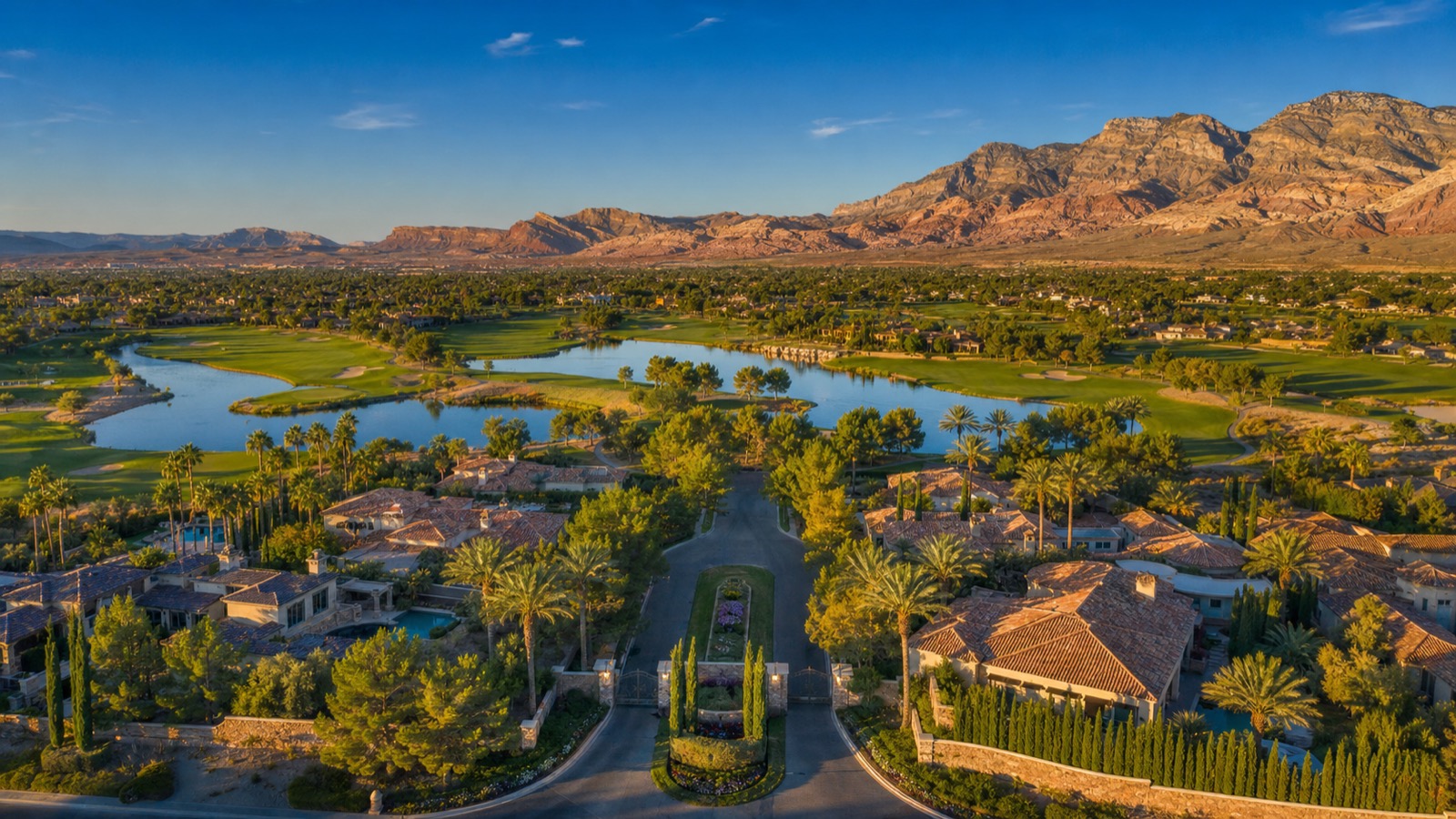
How Much More Does Summerlin Cost Than the Rest of Las Vegas?
This is the heart of the decision. According to Las Vegas REALTORS monthly statistics, the city of Las Vegas single-family median runs around $460,000 in 2026, while Summerlin's median sits well above it — roughly $700,000 to $800,000 depending on the village and month. That's a premium in the neighborhood of 50%, and it widens fast at the top: Summerlin's ultra-luxury villages (The Ridges, The Summit Club) reach $5M–$30M+, a tier the rest of the valley largely can't match outside a few pockets.
Here's how the price ladder compares:
| Tier | Summerlin | Rest of city of Las Vegas |
|---|---|---|
| Entry | $450,000–$600,000 (older villages) | $280,000–$450,000 (east, north, central) |
| Mid-market family | $650,000–$1,000,000 | $450,000–$700,000 (Centennial Hills, SW) |
| Move-up | $1,000,000–$2,500,000 | $700,000–$1,500,000 (Southern Highlands, Queensridge) |
| Luxury / ultra | $2,500,000–$30,000,000+ (Ridges, Summit Club) | $1,500,000–$10,000,000 (Southern Highlands, scattered) |
| Median | About $700,000–$800,000 | About $460,000 |
The practical read: a $700,000 budget buys a solid mid-market Summerlin home or a genuinely large, upgraded home in Centennial Hills, Mountains Edge, or Southern Highlands. The question is whether you'd rather have the Summerlin address and amenities, or the extra 600–1,000 square feet and lower carrying cost elsewhere. We run this exact comparison with buyers on tour day — same budget, Summerlin home vs. value-neighborhood home, side by side.
To put the premium in price-per-square-foot terms: Summerlin commonly trades at $280–$400 per square foot depending on the village and the home's age, while comparable newer homes in Centennial Hills, Mountains Edge, and Skye Canyon often run $230–$300 per square foot. On a 2,800-square-foot home, that spread alone can mean $140,000–$280,000 in additional cost — real money that either buys the Summerlin brand, schools, and trail access or, redirected elsewhere, buys a pool, a larger lot, a casita, or simply a smaller mortgage. Neither choice is wrong; they're just different priorities. In our experience, seeing the per-foot math written out is usually the moment a buyer realizes which one they actually value — and it's far more useful than a blanket "Summerlin is better" or "Summerlin is overpriced."
What Do You Actually Get for the Summerlin Premium?
The premium isn't arbitrary — Summerlin delivers a specific, dense bundle that's hard to replicate:
- Top-rated schools. Summerlin contains some of CCSD's highest-rated zoned schools — Palo Verde High and Sig Rogich Middle among them. Per GreatSchools ratings, the Summerlin clusters rank at the top of the valley.
- Red Rock Canyon + 200+ miles of trails. The western-rim location means cooler evenings, cleaner air, and immediate access to Red Rock and an unmatched trail network woven through the master plan.
- Downtown Summerlin. A walkable retail, dining, and entertainment core — plus the Las Vegas Ballpark and the Vegas Golden Knights' practice facility — that no other valley neighborhood matches.
- Master-plan consistency + amenities. Manicured parks, community centers, and architectural standards funded by HOA dues, with guard-gated villages (The Ridges, Queensridge) at the top.
- Resale strength. As covered below, Summerlin's supply constraints and brand have driven the valley's most reliable appreciation and resale liquidity.
Our complete Summerlin master-plan guide details every village; the short version is that you're paying for a curated, amenity-dense, top-school environment with the strongest brand in Nevada real estate.
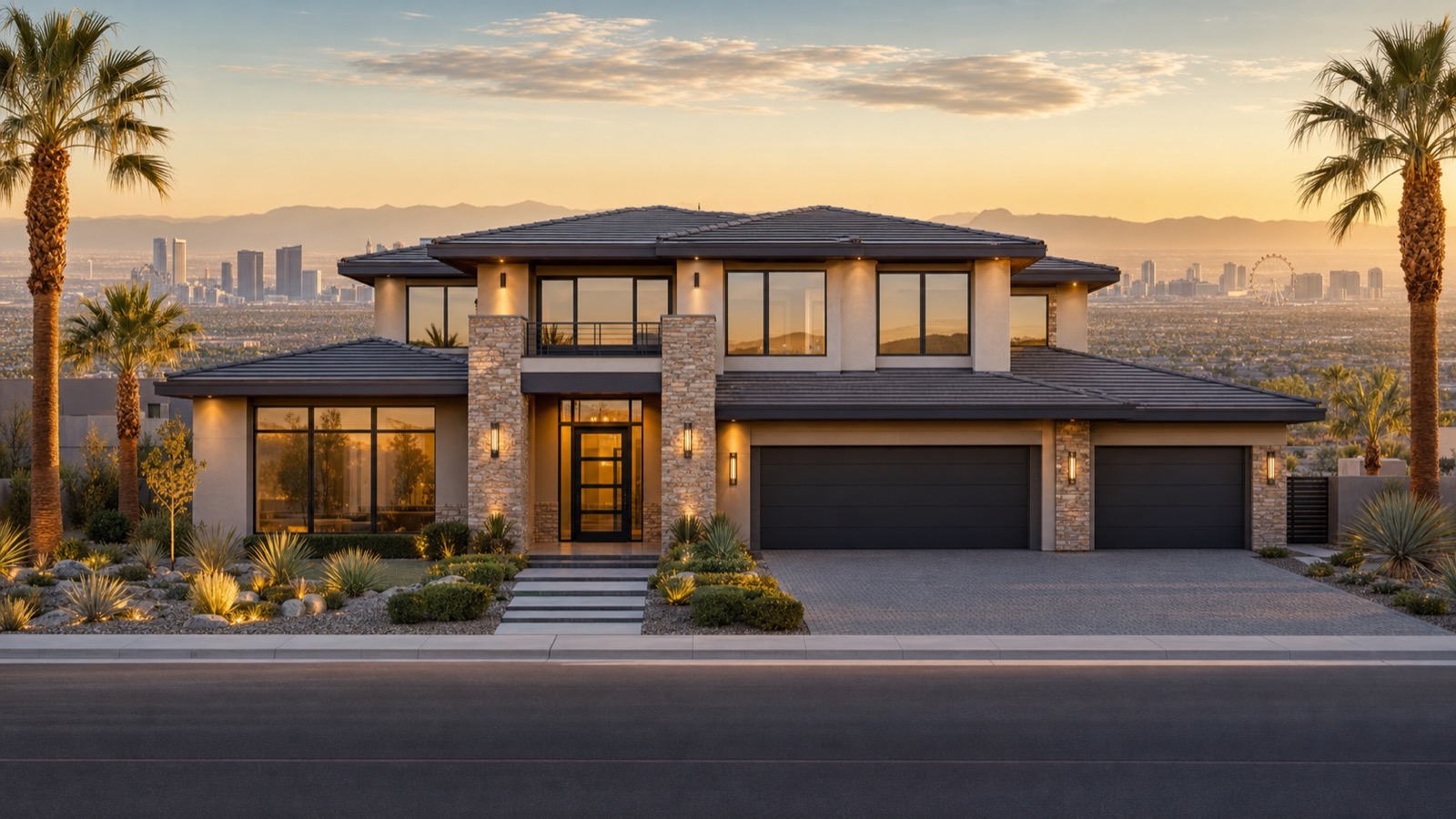
Where Can You Get More Home for the Money Outside Summerlin?
If your priority is square footage, a newer home, or a lower carrying cost, the rest of the valley delivers. The strongest value-and-quality alternatives we steer budget-conscious buyers toward:
- Centennial Hills (northwest): family homes in the $400,000–$700,000 range with newer construction and good schools — the most common "Summerlin alternative for less" we recommend.
- Mountains Edge (southwest): a 3,500-acre master plan of its own, single-story-heavy, $400,000–$1.2M, with parks and trails at a lower entry than Summerlin.
- Southern Highlands (south): golf-course master plan with guard-gated luxury from $500,000 to $10M+ — Summerlin-tier prestige at the high end, more value at the entry.
- Spring Valley (central): established, mature-tree neighborhoods, $350,000–$900,000, closer to the Strip and airport.
- Skye Canyon (far northwest): newer master plan, $400,000–$700,000, with modern product and a recreation focus.
Across our representations, buyers who choose these areas over Summerlin almost always cite the same reasons: more house, lower or no HOA, or a specific location advantage (closer to a job, the Strip, or family). None of them sacrifice the Nevada tax benefits — those are identical valley-wide.
How Do Summerlin Schools Compare to the Rest of the Valley?
Schools are one of Summerlin's clearest edges, but the nuance matters. Both Summerlin and the rest of the city are CCSD, assigned by address. According to GreatSchools ratings, the difference is the distribution of quality: Summerlin's zoned schools — Palo Verde High, Sig Rogich Middle, and their feeder elementaries — sit at the very top of CCSD's ratings, and the master plan was designed around them. Elsewhere in the city, school quality varies more by zone: the northwest (Centennial Hills) and southwest have strong schools, while parts of the central and east valley rate lower.
So if top-rated zoned schools are non-negotiable and you don't want to study attendance maps, Summerlin is the lowest-homework choice. But Southern Highlands, Centennial Hills, and Skye Canyon also offer strong CCSD zones at lower prices — so Summerlin isn't the only path to good schools, just the most concentrated one. As always, verify the specific home's attendance zone before writing an offer.
What About HOA Fees — Summerlin vs Non-HOA Las Vegas?
This is a recurring cost that tilts the math. Summerlin carries a two-layer structure: the Summerlin Community Association master assessment (roughly $50–$65 per month) plus a village sub-association fee that varies, and guard-gated villages like The Ridges and Queensridge layer on $200–$1,200+ per month for staffed entry and premium amenities. Total Summerlin HOA commonly runs $115–$1,500+ monthly depending on the village.
By contrast, many non-Summerlin Las Vegas neighborhoods — especially older central and established areas — have low or no HOA ($0–$150/month), and even the value master plans (Mountains Edge, Centennial Hills) tend to run lighter than Summerlin's layered structure. Over a 10-year hold, the HOA difference alone can total tens of thousands of dollars. The dues fund the amenities, so the question isn't whether they're "high" — it's whether you'll use the trails, parks, and Downtown Summerlin enough to justify them.
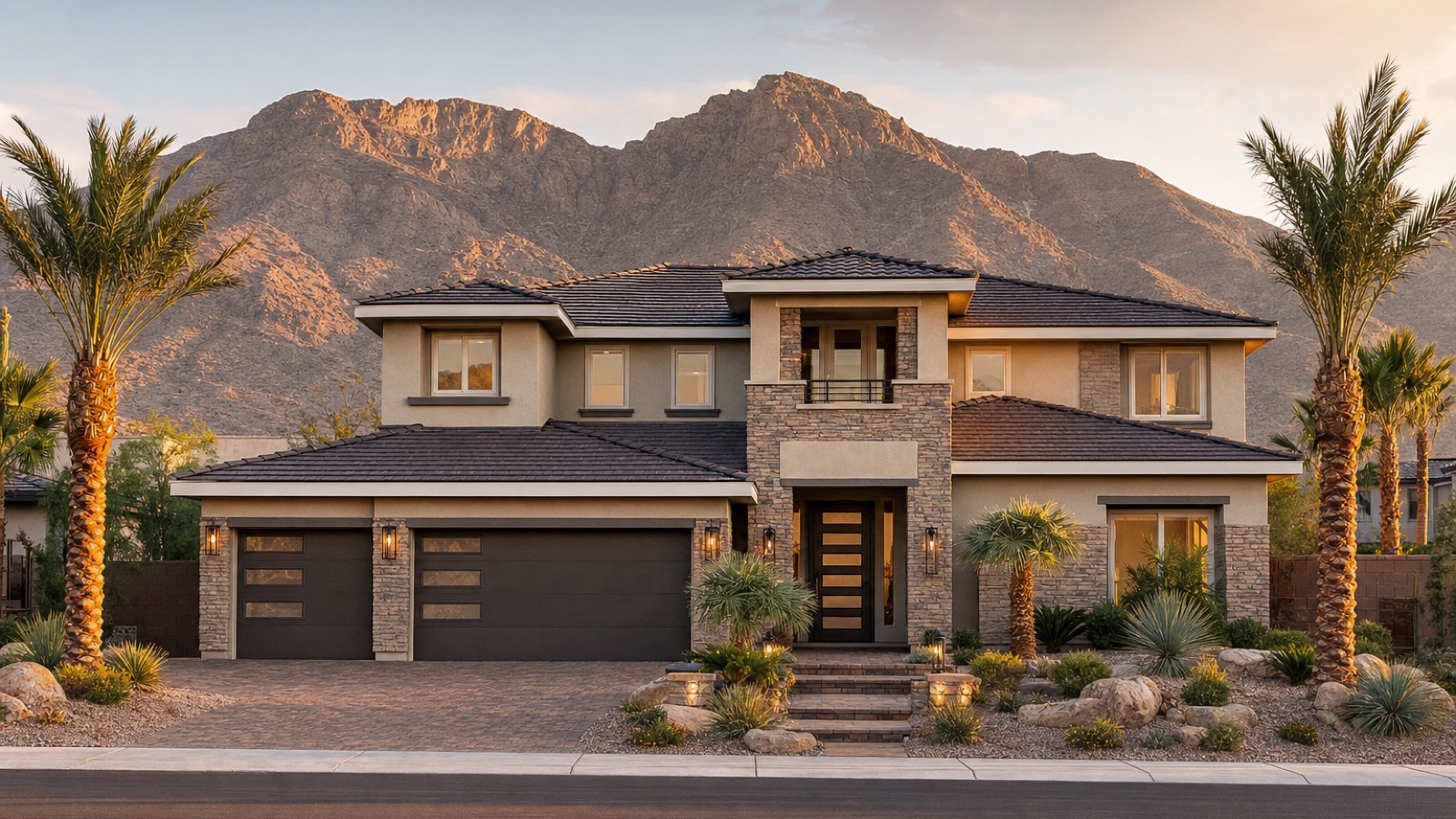
How Does Resale and Appreciation Compare?
This is where Summerlin earns part of its premium back. According to Las Vegas REALTORS data, Summerlin has consistently posted some of the valley's strongest appreciation and shortest days-on-market, driven by permanent supply constraints (Red Rock and BLM land cap its western growth), the Howard Hughes brand, and sustained demand from California in-migration. In practical terms, a Summerlin home tends to resell faster and hold value better through market cycles than a comparable home in a less supply-constrained part of the valley.
That resale strength is a real, quantifiable part of the value proposition — it partially offsets the higher entry price and HOA over a long hold. The rest of the valley appreciates too (the whole metro has grown), but Summerlin's combination of brand, schools, and scarcity gives it an edge in liquidity and downside protection. For investors and long-hold owners, that matters; for a short-term buyer, the premium is harder to recover.
According to the U.S. Census Bureau, the Las Vegas metro has absorbed steady population growth and in-migration — much of it from higher-cost California markets — and that demand concentrates in supply-constrained, brand-name communities like Summerlin. The result is a structural floor under Summerlin values that the more elastic, still-building edges of the valley don't share to the same degree. It's the clearest economic argument for the premium: you aren't only buying amenities, you're buying scarcity in a metro that keeps adding residents faster than the western rim can add homes.
Which Buyer Should Choose Summerlin — and Which Shouldn't?
There's no universal answer — there's a clear answer by buyer type:
| If you prioritize… | Lean toward | Why |
|---|---|---|
| Top-rated zoned schools, no homework | Summerlin | Palo Verde / Sig Rogich at the top of CCSD |
| Maximum home / square footage per dollar | Rest of valley | Centennial Hills, Mountains Edge give 600–1,000+ more sqft |
| Red Rock + trails + Downtown Summerlin | Summerlin | Amenity density nothing else matches |
| Low or no HOA | Rest of valley | Established/older areas run $0–$150/mo |
| Strongest resale + appreciation | Summerlin | Supply-constrained, brand, school-driven demand |
| Closer to Strip / airport / downtown jobs | Rest of valley | Spring Valley, central, SW are closer in |
| Golf-course luxury at a lower entry | Southern Highlands | Guard-gated prestige without the Ridges premium |
| Newer construction at a value price | Skye Canyon / Mountains Edge | Modern product, lighter HOA, lower entry |
What Are the Best Non-Summerlin Alternatives by Priority?
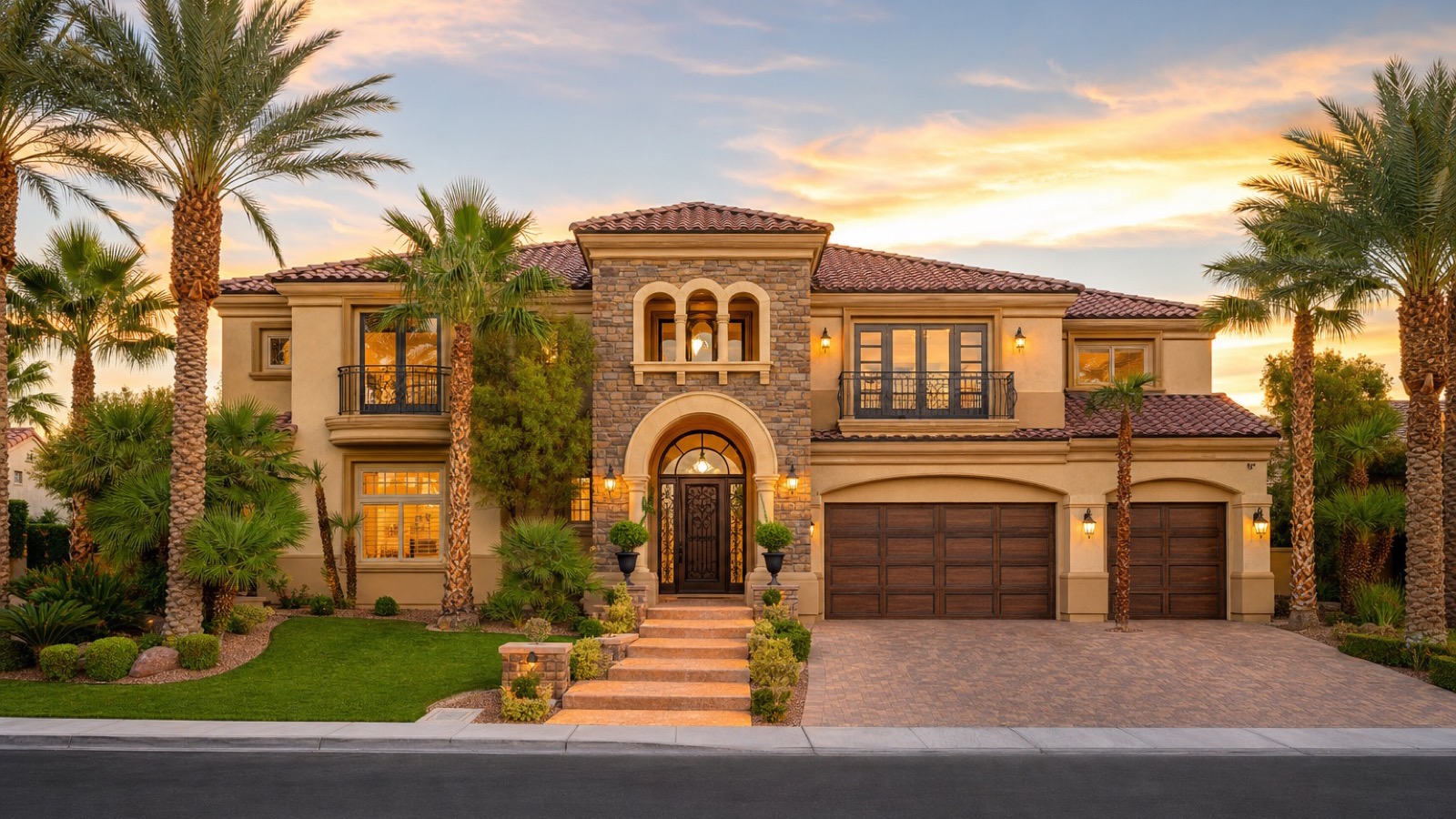
To make it concrete, here's how we match the most common "instead of Summerlin" goals to specific areas: for value + schools, Centennial Hills; for newer + single-story, Mountains Edge or Skye Canyon; for golf + guard-gated prestige at a lower entry, Southern Highlands; for proximity to the Strip and central jobs, Spring Valley; for luxury that rivals The Ridges, MacDonald Highlands in Henderson. Each delivers most of what draws buyers to Summerlin — good schools, master-planned quality, or luxury — without the full premium. The trade is always the same: you give up some combination of amenity density, top-school concentration, or resale brand to gain home size, lower carrying cost, or a location advantage.
How Does Summerlin Compare to Henderson and Other Master Plans?
If you're weighing Summerlin against another premium option rather than against value, the closest competitor is Henderson's master plans. Summerlin and Henderson trade blows at the luxury top (The Ridges vs MacDonald Highlands and Ascaya) and on family living (Summerlin villages vs Green Valley, Anthem, Inspirada), with Henderson edging ahead on city-wide safety and Summerlin on amenity density and Red Rock access. Our Summerlin vs Henderson breakdown covers that head-to-head in depth. Within Summerlin itself, the village choice matters as much as the Summerlin-vs-elsewhere question — our best Summerlin neighborhoods guide ranks them.
So Is Summerlin Worth the Premium in 2026?
For the right buyer, yes. Summerlin is worth its roughly 50% premium if you value top-rated schools, Red Rock and trail access, Downtown Summerlin, master-planned consistency, and the valley's strongest resale — and your budget absorbs the higher price and HOA comfortably. It's the lowest-homework choice for a family that wants premium schools and amenities without vetting the valley neighborhood by neighborhood.
It's not worth it if your priority is maximum home and space per dollar, a lower carrying cost, proximity to the Strip or central jobs, or a specific non-Summerlin community — in which case Centennial Hills, Mountains Edge, Southern Highlands, Skye Canyon, or Spring Valley will serve you better, with the identical Nevada tax advantages. The single best move is to tour both within one day on the same budget and feel the trade-off directly. Our team builds exactly that comparison so you decide on substance, not the brand name.
Frequently Asked Questions
Is Summerlin part of Las Vegas or a separate city?
Summerlin is a master-planned community within the city of Las Vegas — not a separate city like Henderson or North Las Vegas. It sits on the western rim of the valley against Red Rock Canyon. Because it's part of Las Vegas, it shares the same Clark County taxes and the same Clark County School District; the differences are price, amenities, and which schools you're zoned for.
How much more expensive is Summerlin than the rest of Las Vegas?
Summerlin's single-family median runs roughly $700,000–$800,000 versus about $460,000 for the broader city of Las Vegas — a premium of roughly 50%, and it widens at the luxury top, where Summerlin's Ridges and Summit Club reach $5M–$30M+. The same budget buys a mid-market Summerlin home or a larger home in a value neighborhood like Centennial Hills or Mountains Edge.
Do Summerlin and the rest of Las Vegas have different taxes?
No — they're identical. Summerlin is in Clark County, Nevada, so it has the same no-state-income-tax structure and the same 3% primary-residence property-tax cap as everywhere else in the valley. Anyone implying Summerlin has a tax advantage (or disadvantage) over the rest of Las Vegas is mistaken.
Are Summerlin schools better than the rest of Las Vegas?
Summerlin contains some of CCSD's highest-rated zoned schools (Palo Verde High, Sig Rogich Middle), and its school quality is more uniformly high than the citywide average. But strong CCSD schools also exist in Centennial Hills, Southern Highlands, and Skye Canyon at lower prices — so Summerlin is the most concentrated path to top schools, not the only one. Always verify the specific home's attendance zone.
What's the cheapest way to live in or near Summerlin?
The older Summerlin villages (parts of The Trails, The Crossing, and established central Summerlin) start around $450,000–$600,000. If that's still over budget, the closest "Summerlin-adjacent for less" options are Centennial Hills to the north and the Summerlin-bordering parts of the northwest, which deliver newer family homes in the $400,000–$700,000 range with good schools and far lighter HOA.
Does Summerlin have higher HOA fees than other Las Vegas areas?
Generally yes. Summerlin layers a community master assessment (about $50–$65/month) on top of a village sub-association fee, and guard-gated villages add $200–$1,200+/month. Total commonly runs $115–$1,500+/month. Many non-Summerlin neighborhoods — especially established central areas — have low or no HOA ($0–$150/month). Over a long hold, that difference adds up to real money.
Does Summerlin hold its value better than the rest of Las Vegas?
Historically yes. Summerlin's permanent supply constraints (Red Rock and federal land cap its growth), the Howard Hughes brand, top schools, and steady California in-migration have driven some of the valley's strongest appreciation, shortest days-on-market, and best resale liquidity. That resale strength partially offsets the higher entry price over a long hold — a real consideration for investors and long-term owners.
Should a first-time buyer choose Summerlin or somewhere else in Las Vegas?
For most first-time buyers on a budget, somewhere else in Las Vegas usually makes more sense — Centennial Hills, Mountains Edge, or Skye Canyon deliver newer homes, good schools, and lighter HOA at $400,000–$600,000, versus Summerlin's $450,000+ entry that climbs fast. First-timers who specifically prioritize top schools and can stretch to the Summerlin entry tier are the exception. Tour both before deciding.
Which Sources Inform This Las Vegas vs Summerlin Comparison?
This comparison combines federal, state, and local data with Nevada Real Estate Group's transaction experience across 6,225+ Las Vegas-metro closings. Pricing comes from Las Vegas REALTORS monthly statistics; master-plan details from Howard Hughes / Summerlin. Tax and assessment guidance reflects the Nevada Department of Taxation, Nevada Revised Statutes Chapter 361, and the Clark County Assessor. School data is from the Clark County School District and GreatSchools; demographic and economic context from the U.S. Census Bureau and the Bureau of Labor Statistics; and livability framing from AARP. All figures reflect 2026 conditions; verify current pricing, HOA dues, and school zoning before making decisions.
Information deemed reliable but not guaranteed. This article is educational and not financial, tax, or relocation advice — consult a qualified professional for your situation. Nevada Real Estate Group · (702) 637-1759 · NV License S.181401.