

Published May 31, 2026 · Updated May 31, 2026 · By Chris Nevada, Nevada Real Estate Group · NV License S.181401
"Can I just buy a house here and Airbnb it?" is one of the most common questions investors ask us — and the honest answer is: it depends entirely on which jurisdiction the house sits in, and in some of them the door is currently closed. Since Nevada's 2021 short-term rental law, the Las Vegas valley has become a patchwork of four very different rule sets, with strict caps, distance rules, owner-occupancy requirements, and enforcement that reaches $10,000 a day. Buying the wrong property for an STR plan is an expensive mistake we help investors avoid.
This guide is the verified 2026 breakdown — the rules in unincorporated Clark County, the City of Las Vegas, Henderson, and North Las Vegas, plus taxes, penalties, and what to confirm before you buy. It is educational, not legal advice; STR law here is complex, actively litigated, and changes often, so always verify with the jurisdiction and an attorney before buying or operating.
Short-term rentals are legal in the Las Vegas valley but heavily regulated, and the rules depend on which jurisdiction your property sits in. Unincorporated Clark County caps licenses at 1% and its application window is closed; the City of Las Vegas allows owner-occupied STRs only; Henderson and North Las Vegas license them with their own fees and a 13% lodging tax. Operating unlicensed risks fines up to $10,000 a day. Verify locally before buying.
- Four jurisdictions, four rule sets: unincorporated Clark County, City of Las Vegas, Henderson, and North Las Vegas all differ.
- Clark County caps STR licenses at 1% of housing stock, requires 2,500 feet from any resort, and its application window is closed.
- The City of Las Vegas allows owner-occupied short-term rentals only, capped at three bedrooms.
- Transient lodging tax runs about 13%, and you need a Nevada state business license regardless of city.
- Operating without a license risks penalties from $500 to $10,000 per day — verify before you buy.
Are Short-Term Rentals Even Legal in Las Vegas?
Yes — but legality came with heavy regulation. According to the Nevada Independent's explainer, Nevada's 2021 law Assembly Bill 363 required Clark County (population over 700,000) and its larger cities — Las Vegas, Henderson, and North Las Vegas — to adopt ordinances licensing and regulating short-term rentals and platforms like Airbnb and Vrbo. Before AB363, STRs were technically banned in unincorporated Clark County, so the law actually created a legal pathway where none existed.
The catch is that AB363 left the details to each local government, and they wrote very different rules. So "Las Vegas short-term rental rules" isn't one thing — it's four overlapping regimes, and the line between them can run down the middle of a street. Before you fall for a property's STR income potential, you have to know which government controls it, because that single fact determines whether an STR is even possible. This is the compliance side of the equation; for where the numbers actually work, see our guide to the top Las Vegas STR zones for investors.
Why Do the Rules Depend on Which City You're In?
Because the Las Vegas valley is governed by multiple jurisdictions that look continuous on a map but aren't. Much of what people call "Las Vegas" — including the Strip itself — is actually unincorporated Clark County, not the City of Las Vegas. Henderson and North Las Vegas are separate incorporated cities with their own councils and codes. A home in Summerlin, Henderson, and North Las Vegas can sit ten minutes apart and fall under three entirely different STR rule books.
Here's the high-level comparison before we go jurisdiction by jurisdiction:
| Jurisdiction | Owner-occupied? | Separation | Lodging tax | License status |
|---|---|---|---|---|
| Unincorporated Clark County | Lottery (mixed) | 660 ft + 2,500 ft from resorts | ~13% | Closed / capped at 1% |
| City of Las Vegas | Yes — required | 660 ft + 2,500 ft from resorts | ~13% | Open via CUV process |
| Henderson | Not strictly required | 1,000 ft | 13% | Open, registration + certification |
| North Las Vegas | Not strictly required | Per CUP | 13% | Open via Conditional Use Permit |
The takeaway is immediate: an investor strategy that works in Henderson may be impossible across the line in unincorporated Clark County. Let's break down each.
What Are Clark County's Short-Term Rental Rules?
Unincorporated Clark County has the strictest and most supply-constrained regime — and it's where the Strip and many tourist-adjacent neighborhoods actually sit. According to Clark County, the Board of County Commissioners approved its ordinance on June 21, 2022, and the rules include:
- A cap of 1% of the county's housing stock on the number of STR licenses — a hard ceiling that keeps supply tight.
- At least 660 feet between licensed short-term rentals, so they can't cluster in a neighborhood.
- No STR within 2,500 feet of a resort hotel — which excludes much of the resort corridor.
- A designated local representative available 24/7, minimum liability insurance, and a state business license.
- Licenses awarded by lottery — and critically, the application window closed (applications were due by August 21, 2023).
That last point is the one investors miss: as of 2026 you generally cannot simply apply for a new unincorporated Clark County STR license — the window is closed and the program is capped, with ongoing legal challenges over its enforcement and restrictiveness. Buying an unincorporated-county home today expecting to launch a new STR is, in most cases, not viable without an existing license. Always confirm a property's specific license status with the county before relying on STR income.
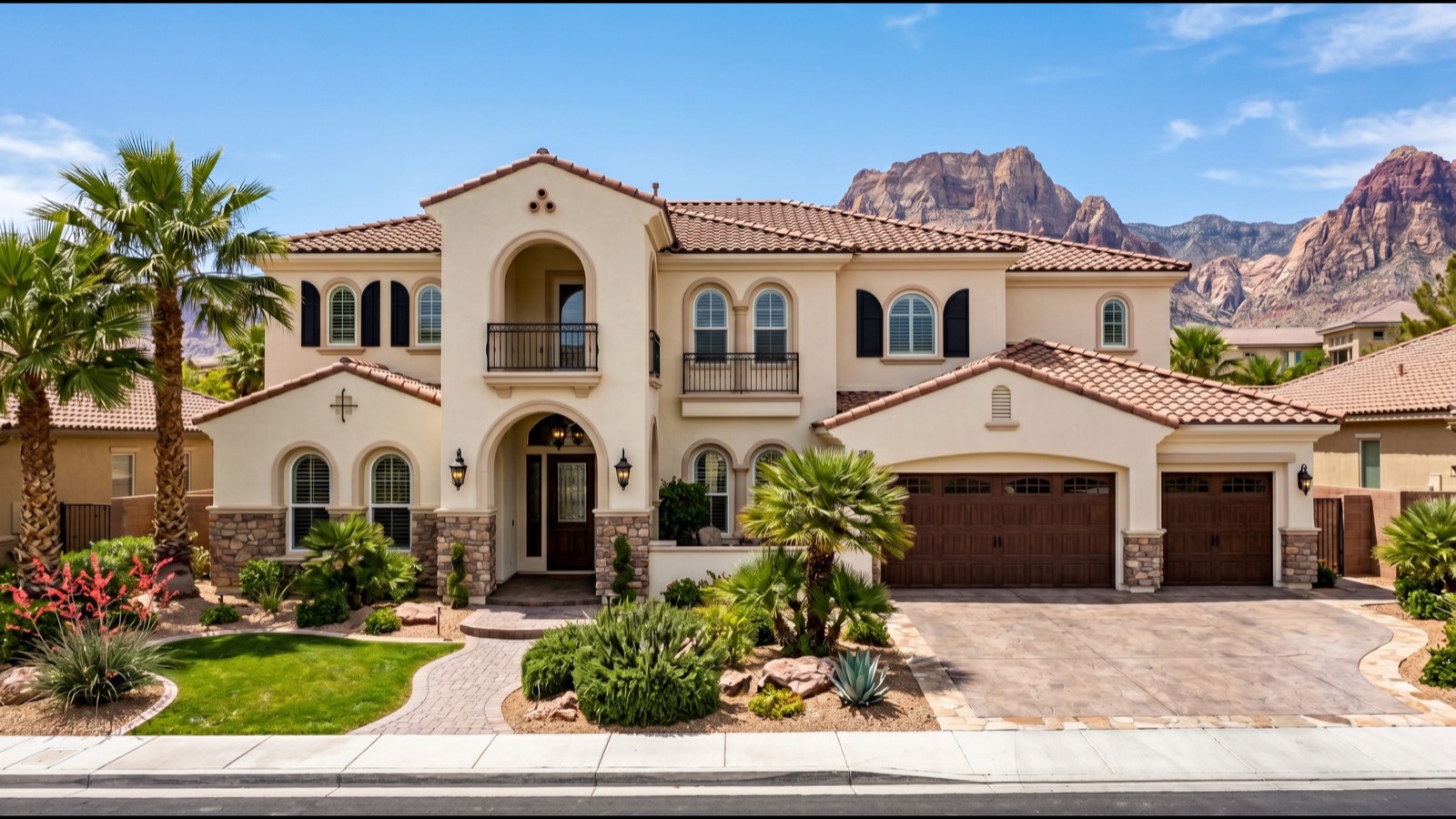
What Are the City of Las Vegas Rules?
The City of Las Vegas — a distinct jurisdiction from the county — allows short-term rentals but with a defining restriction. According to the City of Las Vegas, STRs in the city are owner-occupied only: the property must be your primary residence, and you (the owner) must be on-site during each day of a rental. That single rule rules out the classic absentee-investor model — you can't buy a city home purely to operate it as a hands-off Airbnb.
Other City of Las Vegas requirements:
- No more than three bedrooms available, including the owner's bedroom.
- At least 660 feet from other licensed STRs and 2,500 feet from resort hotels and casinos.
- A Conditional Use Verification (CUV) application through the city portal, plus a business license, STR permit, transient occupancy tax registration, and zoning and safety compliance.
- A justification letter, site plan, and floor plan as part of the application.
For owner-occupants who want to rent rooms or their home when they travel, the city path works. For pure investors, it generally doesn't — which pushes that capital toward Henderson or the (now-closed) county lottery.
What Are Henderson's Short-Term Rental Rules?
Henderson runs its own program, and it's often the most workable for non-owner-occupant investors among the valley's jurisdictions. According to the City of Henderson, the framework includes:
- An annual registration fee of roughly $820 to $848, renewed yearly from the approval date.
- A required city-approved certification program for operators.
- New STRs must be at least 1,000 feet from other licensed STRs.
- A minimum 2-night stay and a maximum 30-day stay per booking.
- A combined transient lodging tax of 13% of monthly rental revenue, remitted monthly — and the owner is liable for that tax whether or not it's actually collected from the guest.
Henderson's rules are strict but navigable, and the city doesn't impose the City of Las Vegas's owner-occupancy mandate, which is why a lot of investor interest concentrates in Henderson neighborhoods that allow STRs. As always, HOA rules can override all of this — many Henderson master plans ban STRs entirely regardless of city licensing.

What Are North Las Vegas's Short-Term Rental Rules?
North Las Vegas licenses STRs through a different mechanism. According to city requirements, operating an STR in North Las Vegas requires a Conditional Use Permit (CUP) and a business license, with an annual business license fee around $900. Notable restrictions:
- Multifamily buildings are limited to 10% short-term-rental units, and apartment buildings are prohibited from STR use.
- The transient lodging tax is 13%, like the rest of the valley.
- Standard safety, insurance, and local-contact requirements apply.
North Las Vegas has been one of the faster-growing parts of the valley, and its newer-construction neighborhoods draw investor attention — but the CUP process means approval isn't automatic, and zoning and neighbor input can factor in. Treat the CUP as a real hurdle, not a formality.

How Much Tax Do You Pay on a Las Vegas Short-Term Rental?
Short-term rentals are taxed like hotels, not like long-term rentals. According to the Nevada Department of Taxation, STRs owe transient lodging tax — roughly 13% of gross rental revenue across the valley jurisdictions — remitted monthly to the local government. On top of that, you need a Nevada state business license (about $200 annually) plus the local STR license or registration fee.
A quick illustration of how the costs stack: a Henderson STR grossing $60,000 a year would owe around $7,800 in transient lodging tax (13%), plus the $848 annual registration, the $200 state business license, insurance, and the certification program — before management, cleaning, supplies, and the mortgage. The lodging tax alone is a meaningful line item that long-term-rental investors don't face, and it's one reason the STR-versus-long-term math is closer than it looks. We dig into that trade-off in our Las Vegas rental market guide for investors.
What Happens If You Operate Without a License?
Enforcement is aggressive and expensive, so this isn't a "ask forgiveness" situation. According to Clark County, fines for operating an unlicensed short-term rental reach up to $10,000 per day, and the county had issued hundreds of citations in recent enforcement sweeps. Separately, the Nevada Department of Taxation can assess penalties from $500 to $5,000 per violation for lodging-tax non-compliance.
| Item | Amount |
|---|---|
| Nevada state business license | About $200/year |
| Henderson registration | About $820–$848/year |
| North Las Vegas business license | About $900/year |
| Transient lodging tax | ~13% of gross revenue |
| Lodging-tax penalty | $500–$5,000 per violation |
| Unlicensed-operation fine (Clark County) | Up to $10,000 per day |
Platforms also share data with regulators, so unlicensed listings are easy to find. Between the daily fines and the back taxes, the downside of cutting corners dwarfs the licensing cost. If a deal only pencils by operating without a license, it doesn't pencil.
Can You Still Get an STR License in 2026?
This is the question that reshapes most investor plans. In unincorporated Clark County, the answer is generally no for new licenses — the application window closed in 2023, the program is capped at 1% of housing, and it remains tied up in litigation, so new entrants are largely shut out unless they acquire a property with an existing, transferable license (confirm transferability with the county). In the City of Las Vegas, licenses are available but only for owner-occupied homes. In Henderson and North Las Vegas, licensing remains open to investors through registration or a CUP, subject to the distance caps and approvals.
The practical map for a 2026 investor: Henderson and North Las Vegas are where most non-owner-occupant STR strategies are still viable, the City of Las Vegas works for owner-occupants, and unincorporated Clark County is effectively closed to newcomers. That's a very different landscape than the wide-open early Airbnb days, and it rewards buyers who confirm the rules before writing an offer.
Does a Short-Term Rental Actually Pencil as an Investment?
Even where STRs are legal, the returns aren't automatic. Between the 13% lodging tax, licensing and certification costs, higher insurance, professional cleaning and management (often 20%+ of revenue), furnishing, and the seasonality of Las Vegas tourism, an STR's net can land closer to a well-run long-term rental than the gross nightly rates suggest. Las Vegas does have real STR demand — driven by 40-plus million annual visitors, conventions, and major events — but that demand is uneven, and the supply caps cut both ways: they limit your ability to enter, but they also protect existing operators from oversupply.
Put rough numbers to it: a $450,000 Henderson home set up as an STR might gross $55,000 a year at solid occupancy. Strip out the 13% lodging tax (about $7,150), management at 20% (about $11,000), cleaning and supplies, higher insurance, furnishing amortized over time, and the licensing and certification costs, and the net can fall toward what that same $450,000 home would clear as a long-term rental — leased at perhaps $2,600 a month with far less work, no lodging tax, and no nightly turnover. The STR can still win on the right property in the right zone, but the gap is narrower than the gross nightly rate implies, and a single regulatory change can erase it.
The honest framing we give investors: run the STR numbers and the long-term-rental numbers on the same property, factor in the real compliance costs, and don't assume the STR wins. Our guides to cash-flowing rental properties and the top STR zones walk through the math. The right answer is property-specific — and it starts with confirming the property can even be licensed.
What Should You Verify Before Buying an STR Property?
Before you buy a home for short-term rental, confirm every item on this list — ideally in writing:
| Verify | Why it matters |
|---|---|
| Which jurisdiction governs the address | County vs city determines the entire rule set |
| License availability or transferability | Clark County's window is closed; you may need an existing license |
| Distance to resorts and other STRs | 2,500-ft resort buffer and 660–1,000-ft separation can disqualify |
| Owner-occupancy requirement | City of Las Vegas requires it; investors can't operate hands-off there |
| HOA rules | Many master plans ban STRs outright regardless of city licensing |
| Zoning and bedroom limits | City of Las Vegas caps at three bedrooms; CUPs aren't guaranteed |
The HOA line deserves emphasis: even where a city allows STRs, a homeowners association can forbid them, and many of the valley's most desirable master plans do — including much of Summerlin and the guard-gated communities where investors are often most tempted to buy. A property can be perfectly legal for STR under city code and still off-limits under its HOA's CC&Rs, with fines and forced compliance if you ignore them. We check the jurisdiction, the license status, and the CC&Rs together for investor clients before they commit — because any one of the three can quietly kill an STR plan after closing.
Which Areas Allow Short-Term Rentals — and Which Don't?
There's no simple "STR-allowed" map, because eligibility depends on the overlapping layers of jurisdiction, distance buffers, license availability, and HOA rules. But some patterns hold: the resort corridor and Strip-adjacent areas are largely excluded by the 2,500-foot buffer; HOA-governed master plans frequently prohibit STRs in their CC&Rs; and Henderson and North Las Vegas neighborhoods without STR-banning HOAs are where most viable investor opportunities sit today.

The only reliable way to know is to check a specific address against all four layers — which is exactly the diligence we run for investor clients before they make an offer. If you're shopping the Las Vegas market for an STR, start with the address and work outward through jurisdiction, license status, buffers, and HOA, rather than starting with a pro-forma that assumes the income is available. Browse communities with that lens, and treat any listing's "great Airbnb potential" claim as something to verify, not trust.
Frequently Asked Questions
Is Airbnb legal in Las Vegas in 2026?
Yes, but heavily regulated and jurisdiction-specific. Nevada's 2021 law (AB363) required Clark County and its cities to license and regulate short-term rentals. Whether you can operate depends on which jurisdiction your property is in — unincorporated Clark County (license window closed, capped), City of Las Vegas (owner-occupied only), Henderson, or North Las Vegas — plus distance rules and your HOA. Always confirm for the specific address.
Can I get a new short-term rental license in unincorporated Clark County?
Generally not for a brand-new license. The county's application window closed in August 2023, the program is capped at 1% of housing stock, and it's been tied up in litigation. New entrants are largely shut out unless they acquire a property with an existing license — and you'd need to confirm transferability with the county. Don't assume a county home can be newly licensed as an STR.
How much tax do I pay on a Las Vegas short-term rental?
Short-term rentals owe transient lodging tax of roughly 13% of gross rental revenue, remitted monthly to the local jurisdiction, plus a Nevada state business license (about $200/year) and the local STR registration or license fee. The owner is liable for the lodging tax whether or not it's collected from the guest, so build it into your pricing.
Does the City of Las Vegas allow investor-owned Airbnbs?
No — the City of Las Vegas requires short-term rentals to be owner-occupied, meaning the property must be your primary residence and you must be on-site during each rental. It also caps the rental at three bedrooms. That rules out the hands-off, absentee-investor model within city limits; pure investors typically look to Henderson or North Las Vegas instead.
What are the penalties for operating an illegal STR in Las Vegas?
Steep. Clark County fines for unlicensed operation can reach up to $10,000 per day, and the Nevada Department of Taxation can assess $500 to $5,000 per violation for lodging-tax non-compliance, plus back taxes. Platforms share listing data with regulators, so unlicensed rentals are easy to identify. The penalties far exceed the cost of licensing.
Can my HOA stop me from running a short-term rental?
Yes. Even where a city permits STRs, a homeowners association can prohibit them through its CC&Rs, and many Las Vegas-area master plans do exactly that. A property can be fully legal for STR under municipal code and still banned by its HOA. Always read the CC&Rs before buying a home for short-term rental — it's one of the most common deal-killers we catch for clients.
Is a short-term rental a better investment than a long-term rental in Las Vegas?
Not always. After the 13% lodging tax, licensing, higher insurance, furnishing, cleaning, management (often 20%+ of revenue), and Las Vegas's seasonal demand, an STR's net can land near a well-run long-term rental's — sometimes below it. Run both sets of numbers on the same property and weigh the added compliance and management work. The right answer is property-specific.
Which Sources Inform This Las Vegas STR Guide?
This guide draws on primary government sources and Nevada Real Estate Group's experience advising investor clients across 6,225+ Las Vegas-metro closings — and it is educational, not legal, tax, or investment advice. The state framework comes from Nevada's Assembly Bill 363 as explained by the Nevada Independent; jurisdiction rules from Clark County, the City of Las Vegas, and the City of Henderson; and tax details from the Nevada Department of Taxation. STR law in the valley is complex, jurisdiction-specific, and actively litigated — verify current rules with the governing jurisdiction and a qualified attorney before buying or operating.
Information deemed reliable but not guaranteed. This article is educational and is not legal, tax, or investment advice. Short-term rental rules in the Las Vegas valley vary by jurisdiction, change frequently, and are subject to ongoing litigation; HOA restrictions may also apply. Confirm current requirements with the governing city or county and consult a qualified attorney and CPA before purchasing or operating a short-term rental. Nevada Real Estate Group · (702) 637-1759 · NV License S.181401.