

Published June 2, 2026 · Updated June 2, 2026 · By Chris Nevada, Nevada Real Estate Group · NV License S.181401
If you're relocating to the Southwest, Las Vegas and Phoenix are almost always the two finalists — and for good reason. Both are big, fast-growing desert metros with sunshine, no snow, abundant new construction, and home prices well below California's. On the surface they look like twins. But once you dig into the numbers that actually affect your wallet — taxes, cost of living, climate, and job market — the two cities diverge in ways that decide it for most buyers, especially high earners.
At Nevada Real Estate Group, a large share of the 6,225+ closings our team has handled over 16+ years have been relocations, and "Vegas or Phoenix?" comes up constantly. I'll give you the honest, side-by-side comparison I give those clients — where each city wins, where they're a wash, and the single tax difference that swings the decision for a lot of people.
Las Vegas and Phoenix have similar home prices, climate, and growth, but Nevada has no state income tax while Arizona charges a 2.5% flat tax — so high earners keep more in Las Vegas. Phoenix is the larger, more economically diversified metro; Las Vegas is slightly milder in summer and offers no income tax plus a 3% property-tax cap. For tax-sensitive relocators, Las Vegas usually wins; for a broader job market, Phoenix.
- Nevada has no state income tax; Arizona levies a 2.5% flat income tax — the biggest financial difference between the two.
- Median home prices are close in 2026 — both metros sit in the mid-$400,000s, far below California.
- Phoenix is the larger, more diversified economy (semiconductors, finance); Las Vegas leans tourism, logistics, and tech.
- Both are hot desert climates, but Phoenix runs hotter with more extreme-heat days each summer.
- Nevada's 3% annual property-tax cap on primary homes adds long-term predictability Arizona doesn't fully match.
If you're leaning toward the valley, our moving to Las Vegas guide covers the relocation logistics; this guide is about choosing between the two cities first.
How Do Las Vegas and Phoenix Compare at a Glance?
Before the deep dive, here's the whole comparison in one view:
| Metric | Las Vegas (Clark County) | Phoenix (Maricopa County) |
|---|---|---|
| State income tax | None | 2.5% flat |
| Median home price | Mid-$400Ks | Mid-$400Ks |
| Metro population | ~2.3 million | ~5 million |
| Property tax (effective) | ~0.5%–0.6% | ~0.45%–0.6% |
| Summer climate | Hot; slightly milder | Hotter; more 110°F+ days |
| Economy | Tourism, logistics, tech | More diversified |
Source: U.S. Census Bureau, Tax Foundation, Las Vegas REALTORS, and Nevada Real Estate Group analysis, 2026.
Is Housing Cheaper in Las Vegas or Phoenix?
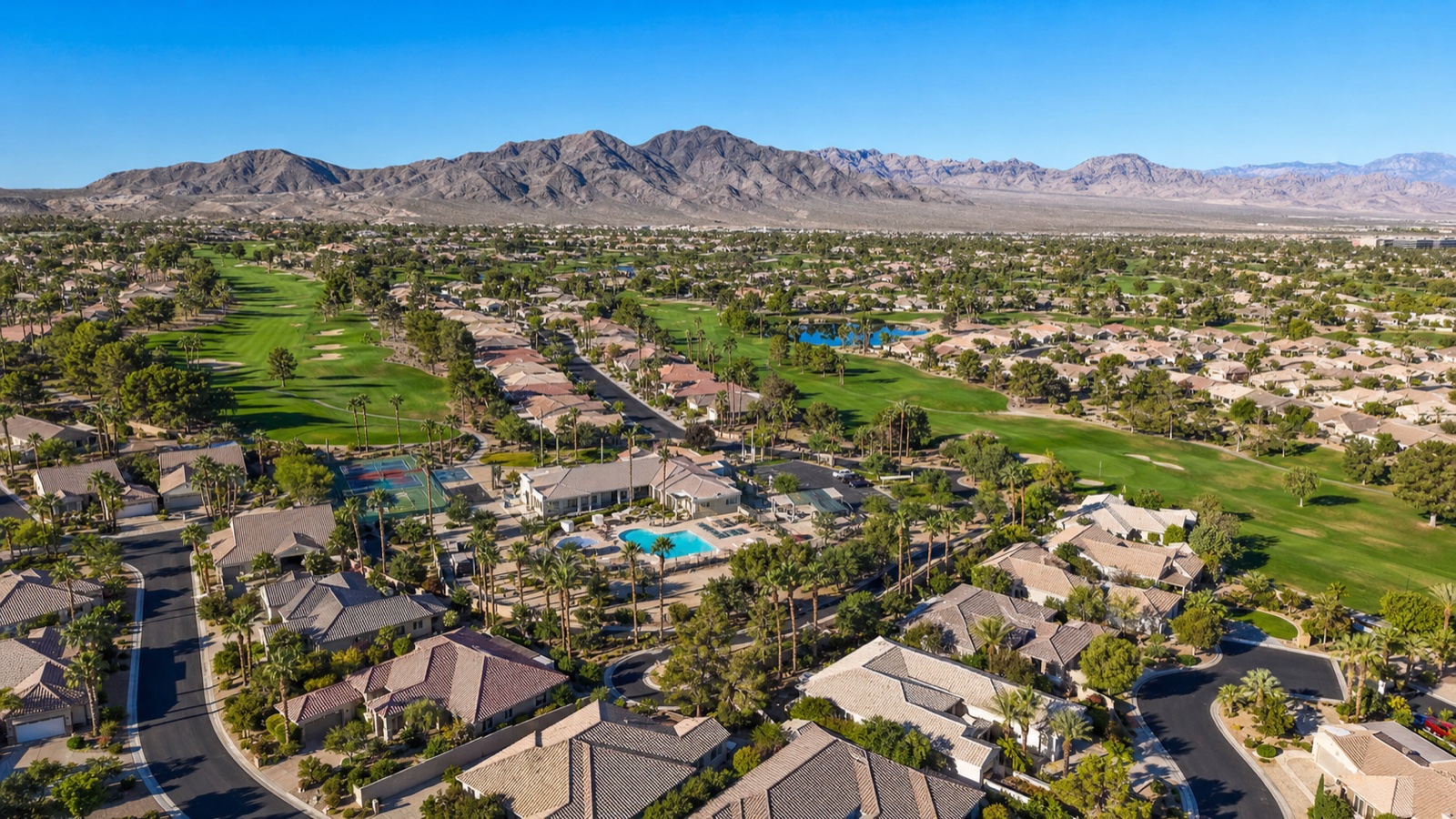
This is usually the first question, and the answer in 2026 is: they're remarkably close. According to Las Vegas REALTORS, the valley's median resale price sits in the mid-$400,000s, and Phoenix's median tracks within the same band — both metros have spent the decade converging as California out-migration pushed demand into both. You're not going to find a dramatic price gap between a comparable home in Summerlin and one in North Scottsdale or Gilbert.
Where small differences show up is at the margins. Phoenix's larger metro footprint and more abundant outer-ring land can mean slightly more new-construction inventory at the entry level, while Las Vegas's geographically constrained valley (hemmed in by federal land and mountains) keeps a tighter lid on developable supply. According to the U.S. Census Bureau, both metros remain among the fastest-growing large metros in the country, so neither is "cheap" in absolute terms — but both are bargains next to coastal California, which is why relocators keep choosing between them rather than staying put.
In practice, the price bands look nearly interchangeable across segments. Entry-level homes in both metros generally start around $375,000 to $450,000, mid-market family homes run $500,000 to $750,000, and the move-up and luxury tiers climb from $900,000 past $2,000,000 in premium areas — North Scottsdale on the Phoenix side, the guard-gated Las Vegas enclaves on the valley side. A relocating buyer with a $600,000 budget will find comparable square footage and finish levels in either metro, which is exactly why housing alone rarely settles the decision. What does move the needle is everything that happens after you buy — taxes, take-home pay, and lifestyle — which is where the two cities genuinely separate.

What Are the Tax Differences Between Nevada and Arizona?
This is the difference that decides it for a lot of buyers, and it's not close. Nevada has no state income tax at all. According to the Nevada Department of Taxation, the state funds itself through sales and gaming taxes rather than taxing wages, capital gains, or retirement income. Arizona, by contrast, levies a 2.5% flat state income tax on most income, according to the Arizona Department of Revenue. For a household earning $200,000, that's roughly $5,000 a year that a Las Vegas resident simply keeps — every year.
| Tax | Nevada / Las Vegas | Arizona / Phoenix |
|---|---|---|
| State income tax | 0% (none) | 2.5% flat |
| Tax on retirement income | None | 2.5% (most) |
| Effective property tax | ~0.5%–0.6% | ~0.45%–0.6% |
| Property-tax increase cap | 3% (primary residence) | Assessment-based limits |
| Combined sales tax | ~8.375% (Clark Co.) | ~8.6% (Phoenix) |
Source: Tax Foundation, Nevada Department of Taxation, Arizona Department of Revenue, and county assessor data, 2026.
According to the Tax Foundation, Nevada consistently ranks among the most tax-friendly states for individuals precisely because of the missing income tax. The property-tax and sales-tax differences between the two metros are minor — roughly a wash — but the income-tax gap compounds year after year. For high earners, retirees with substantial income, and anyone selling appreciated assets, that's the headline. Our deep dive on Nevada's lack of a state income tax breaks down exactly how it works.
Which City Has Better Property Taxes?
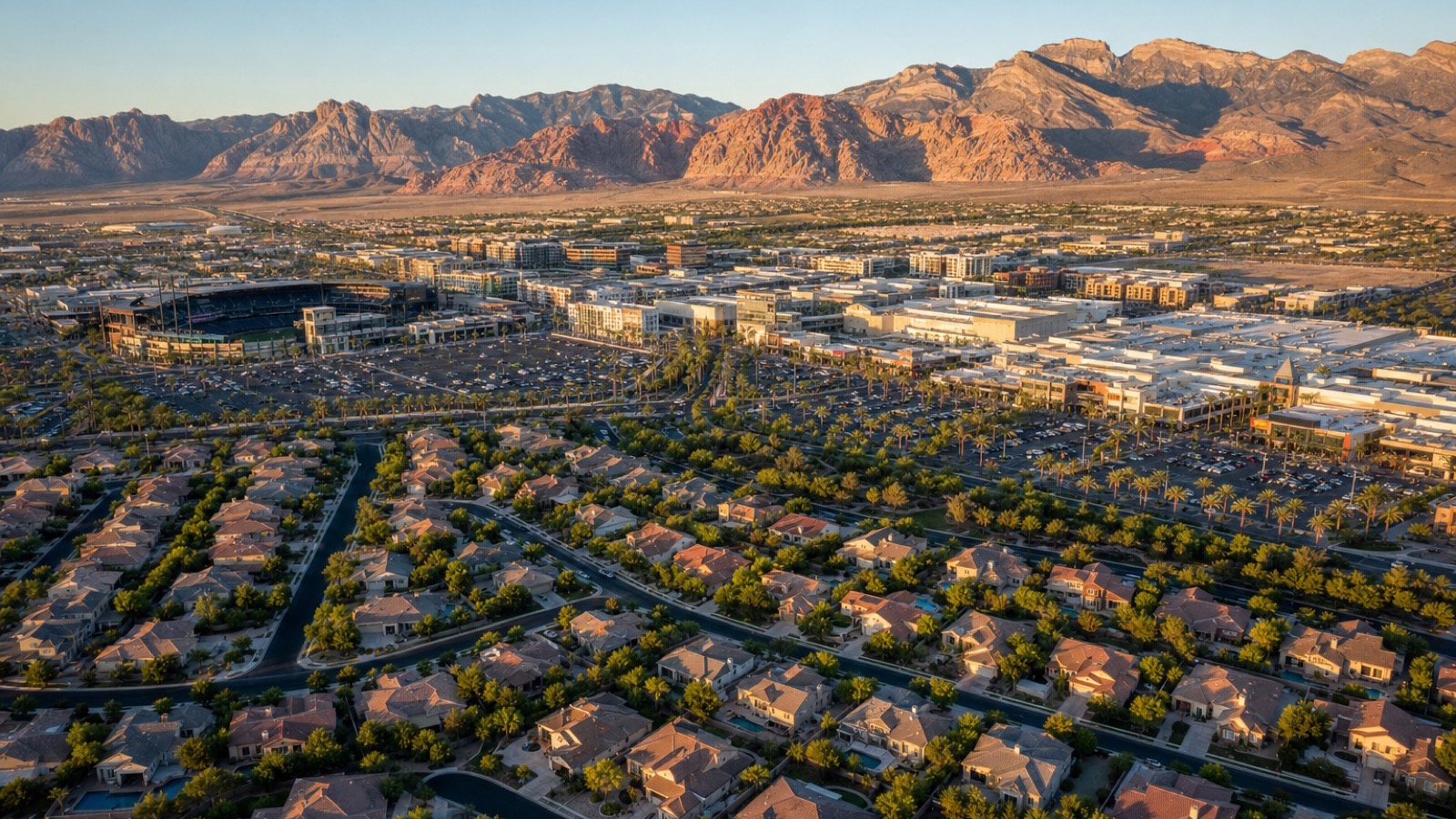
Property taxes are close enough that they rarely decide the choice, but Nevada has a structural edge worth understanding. According to county assessor data, both metros run effective rates in the 0.45% to 0.6% range — far below the national average and a fraction of what relocators from the Northeast or Midwest are used to paying. On a $475,000 home, that's roughly $2,400 to $2,900 a year in either city.
The difference is the cap. Nevada applies a hard 3% annual cap on property-tax increases for owner-occupied primary residences, which means your tax bill can't spike even if values surge — a meaningful long-term protection. Arizona has its own assessment-based limits, but Nevada's flat 3% primary-residence cap is unusually clean and predictable. For a buyer planning to stay a decade or more, that ceiling is real money and real peace of mind, and it pairs with the no-income-tax advantage to make Nevada's overall tax profile the stronger of the two.
How Much Will Taxes Actually Cost You Each Year in Each City?
The income-tax gap stays abstract until you put real dollars on it, so here's what Arizona's 2.5% flat tax costs at different income levels — money a Las Vegas resident keeps in full, every single year:
| Household income | Las Vegas tax | Phoenix tax | Las Vegas keeps |
|---|---|---|---|
| $75,000 | $0 | $1,875 | $1,875 |
| $100,000 | $0 | $2,500 | $2,500 |
| $150,000 | $0 | $3,750 | $3,750 |
| $200,000 | $0 | $5,000 | $5,000 |
| $300,000 | $0 | $7,500 | $7,500 |
| $500,000 | $0 | $12,500 | $12,500 |
Source: Arizona Department of Revenue 2.5% flat rate applied to taxable income; Nevada Department of Taxation, 2026. Simplified illustration before deductions.
These figures compound. A household earning $200,000 keeps an extra $5,000 a year in Las Vegas — roughly $50,000 over a decade, and that's before any raises. A retiree drawing $120,000 in income keeps about $3,000 a year that Arizona would tax. And the gap widens for top earners: at $500,000 of income, the Las Vegas resident keeps $12,500 annually, or $125,000 over ten years. According to the Tax Foundation, it's precisely this no-income-tax structure that lands Nevada near the top of state tax-competitiveness rankings — and it's why the income-tax line, not the home price, is usually the deciding number for relocating buyers weighing Las Vegas against Phoenix.
Is the Job Market Stronger in Phoenix or Las Vegas?
Here's where Phoenix pulls ahead. Phoenix is the larger metro — roughly 5 million people to the Las Vegas valley's 2.3 million — and its economy is more diversified. According to the U.S. Bureau of Labor Statistics, Phoenix has deep employment in semiconductors (anchored by major chip-fabrication investment), finance, healthcare, aerospace, and technology, giving it a broader white-collar base. If your career depends on a large, varied corporate job market, Phoenix has the edge in raw breadth.
Las Vegas's economy is more concentrated but increasingly diversifying. Tourism and hospitality remain the backbone, but according to the Bureau of Economic Analysis, the valley has added significant logistics, distribution, professional-services, and technology employment this decade, plus major sports and stadium investment. For tourism, hospitality, logistics, and entrepreneurship, Las Vegas is excellent; for the widest corporate-career menu, Phoenix wins. Many relocating buyers solve this by confirming the job first and then choosing the home market — and if that's Las Vegas, our moving guide takes it from there.
How Does the Climate Compare Between the Two Cities?
Both are hot desert climates with mild, sunny winters and intense summers — but they are not identical. Phoenix sits at a lower elevation and runs hotter, with more days above 110°F each summer and warmer overnight lows. Las Vegas, at a slightly higher elevation, is marginally milder in peak summer and cools off a bit more at night, though both cities deliver triple-digit heat from roughly June through September.
According to the U.S. Census Bureau, the heat hasn't slowed migration to either metro — both keep growing — but if summer comfort is a tiebreaker, Las Vegas has a slight edge, and both crush any snow-belt city on winter livability. Neither gets meaningful snow; both offer 300+ sunny days. The honest framing I give clients: if you can't tolerate desert summer heat, neither city is for you; if you can, Las Vegas is a touch more forgiving, and winter in both is glorious.
What Is the Cost of Living in Las Vegas vs Phoenix?
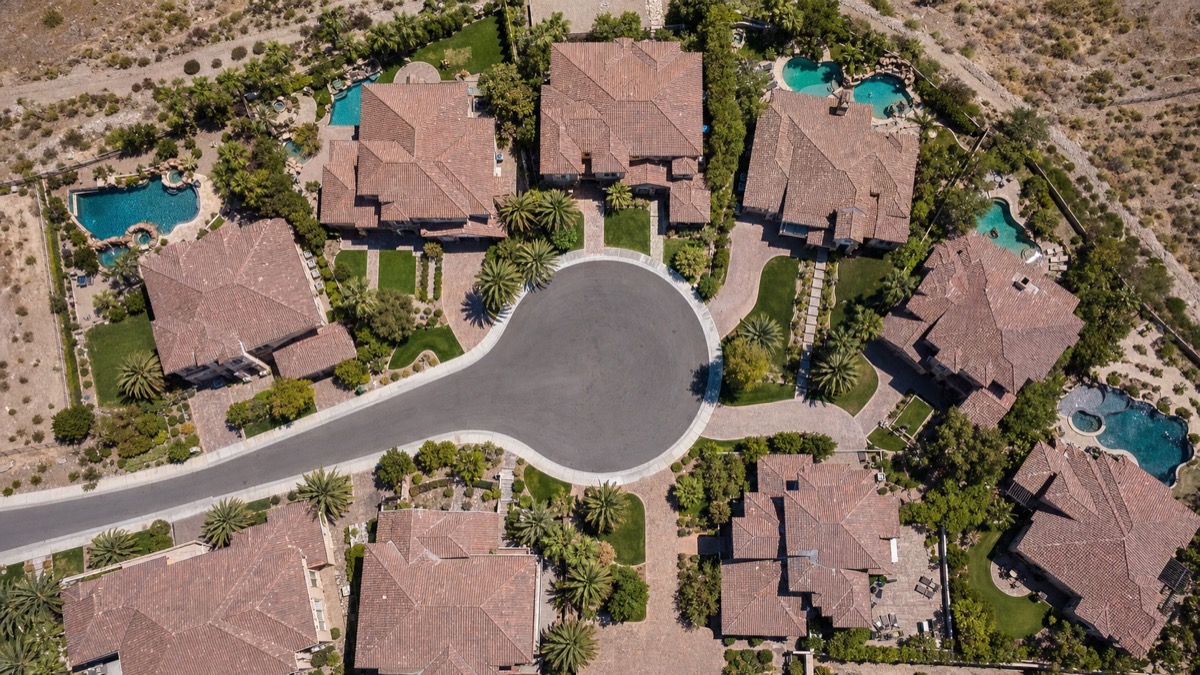
Beyond housing and taxes, day-to-day costs are broadly similar — both metros sit near or slightly below the national average overall, and well below California. Groceries, utilities, and transportation track closely between the two. The two swing factors are the ones we've covered: the income-tax gap (advantage Las Vegas) and housing, which is roughly even in 2026.
According to the Bureau of Economic Analysis, regional price parities for both metros sit in a comparable range, so a household relocating from a high-cost coastal city will feel substantial relief in either place. The practical difference for take-home pay comes back to taxes: with identical salaries and similar home prices, the Las Vegas household keeps more because Nevada doesn't tax the paycheck. Over a multi-year horizon, that compounds into a meaningful cost-of-living advantage for Las Vegas, particularly for higher incomes.
What Is the Lifestyle Difference Between Las Vegas and Phoenix?
The cities feel different day to day. Las Vegas is built around world-class entertainment, dining, nightlife, and now major-league sports — the Strip, championship venues, and a 24/7 energy you won't find in many places. It's compact, drivable, and event-driven. Phoenix sprawls wider and skews more traditionally suburban, with a strong golf, spring-training, and outdoor-recreation culture across a vast metro footprint.
Neither is "better" — it depends on what you want. Buyers who love nightlife, entertainment, dining, and a more urban-feeling core often prefer Las Vegas; buyers who want sprawling master-planned suburbia, golf, and a quieter pace sometimes prefer the Phoenix-area towns. Both offer excellent master-planned communities; in Las Vegas, Summerlin and Henderson consistently rank among the best places to live in the country. Browse the valley's options on our community directory to see what the Las Vegas side offers.
Which City Is Growing Faster?
Both are among the nation's growth leaders, but Phoenix has been adding more total residents simply because it's the larger metro with more developable land. According to the U.S. Census Bureau, the Phoenix metro has been one of the largest absolute population gainers in the country, while the Las Vegas valley grows at a strong percentage rate within a more constrained geography. Both are powered by the same engines: California out-migration, business relocation, retirees, and remote workers chasing sunshine, low taxes, and lower housing costs than the coasts.
The growth has implications for buyers. Phoenix's larger land supply means more new-build choices and somewhat more elastic pricing on the outer ring. Las Vegas's geographic constraints — the valley is ringed by federal land and mountains — mean developable land is finite, which supports long-run home values in established areas. For a buyer focused on appreciation in a supply-limited market, that constraint is a quiet point in Las Vegas's favor.
Is It Easier to Buy a Home in Las Vegas or Phoenix?
The mechanics of buying are similar in both states — standard contracts, inspections, escrow, and title — but a few Nevada specifics make Las Vegas straightforward for relocators. Nevada's no-income-tax status simplifies your financial picture, the 3% property-tax cap makes future costs predictable, and the valley's master-planned communities offer abundant move-in-ready and new-construction inventory. Both markets are well-served by buyer's agents, and in both, the buyer typically pays nothing out of pocket for representation beyond what's negotiated in the deal.
What I tell relocating buyers either way: line up financing and representation before you fly in to tour, because both markets move fast on well-priced homes. If Las Vegas is your pick, we handle the entire out-of-state relocation — virtual tours, neighborhood matching, remote offers, and closing coordination — so you can buy confidently without living here yet. Call (702) 637-1759 or start with our moving to Las Vegas guide.
Who Should Choose Las Vegas Over Phoenix?
A quick decision guide based on what we see with relocating buyers:
- High earner or selling appreciated assets: Las Vegas — no state income tax beats Arizona's 2.5% every year.
- Retiree with significant income: Las Vegas — Nevada doesn't tax retirement income.
- Broadest corporate job market: Phoenix — larger, more diversified economy.
- Entertainment, dining, nightlife, sports: Las Vegas — unmatched for an urban-energy lifestyle.
- Sprawling suburban + golf culture, slightly cheaper entry land: Phoenix.
- Slightly milder summer + supply-constrained appreciation: Las Vegas.
For most tax-sensitive relocators — and especially anyone moving from California — the no-income-tax advantage tips Las Vegas, while Phoenix wins on sheer job-market breadth. The best move is to weight the factors that matter to your household. We help relocating buyers run that comparison honestly and, when Las Vegas is the answer, manage the whole long-distance purchase. Call (702) 637-1759.
Frequently Asked Questions
Is Las Vegas or Phoenix cheaper to live in?
They're close. Median home prices in both metros sit in the mid-$400,000s in 2026, and everyday costs (groceries, utilities, transportation) track similarly. The decisive difference is income tax: Nevada has none, while Arizona charges 2.5%, so a Las Vegas household with the same salary keeps more take-home pay — roughly $5,000 a year on a $200,000 income. That tilts overall cost of living toward Las Vegas, especially for higher earners.
Does Las Vegas or Phoenix have lower taxes?
Las Vegas, overall. Nevada has no state income tax and a 3% annual cap on primary-residence property-tax increases; Arizona levies a 2.5% flat income tax. Property and sales taxes are roughly a wash between the two metros — both run effective property-tax rates near 0.5%. The income-tax gap is the difference-maker and compounds year after year.
Is Phoenix hotter than Las Vegas?
Yes, modestly. Phoenix sits at a lower elevation and runs hotter, with more days above 110°F and warmer overnight lows in summer. Las Vegas, slightly higher in elevation, is marginally milder in peak summer and cools more at night. Both are hot desert climates with mild, sunny winters and no meaningful snow, so the summer difference is a tiebreaker, not a dealbreaker.
Which city has a better job market, Las Vegas or Phoenix?
Phoenix has the broader job market — it's the larger metro (roughly 5 million vs 2.3 million) with a more diversified economy spanning semiconductors, finance, healthcare, and aerospace. Las Vegas is strong in tourism, hospitality, logistics, and a growing tech and professional-services base. For the widest corporate-career menu, Phoenix; for hospitality, logistics, and entrepreneurship, Las Vegas.
Is housing more affordable in Las Vegas or Phoenix?
Roughly even in 2026 — both metros have median prices in the mid-$400,000s, well below California. Phoenix's larger land supply can mean slightly more entry-level new construction, while Las Vegas's geographically constrained valley keeps supply tighter, which supports long-run values in established areas. The price gap between comparable homes is small; taxes and lifestyle usually decide the choice.
Should Californians move to Las Vegas or Phoenix?
For tax-sensitive Californians, Las Vegas usually has the edge because Nevada has no state income tax, while Arizona's 2.5% flat tax still applies. Both offer dramatic relief versus California on income tax, housing, and overall cost of living. Phoenix wins if you need its broader job market. Many California relocators choose Las Vegas for the tax savings plus proximity — it's a shorter drive back to Southern California.
Which Sources Inform This Las Vegas vs Phoenix Comparison?
This guide combines Nevada Real Estate Group's relocation experience across 6,225+ Las Vegas-metro closings with primary public sources. Population and growth data come from the U.S. Census Bureau; tax structures from the Tax Foundation, the Nevada Department of Taxation, and the Arizona Department of Revenue; employment and economic data from the U.S. Bureau of Labor Statistics and the Bureau of Economic Analysis; Las Vegas housing data from Las Vegas REALTORS; and mortgage-rate context from Freddie Mac. For the Nevada side of the move, see our moving to Las Vegas guide and our Nevada income-tax explainer. Tax rates, prices, and job conditions change — verify current figures before relocating.
Information deemed reliable but not guaranteed. This article is educational and is not financial, tax, or legal advice — tax rules and market conditions change and vary by individual situation. Confirm current details with a qualified professional before relocating. Nevada Real Estate Group · (702) 637-1759 · NV License S.181401.