
Published May 31, 2026 · Updated May 31, 2026 · By Chris Nevada, Nevada Real Estate Group · NV License S.181401
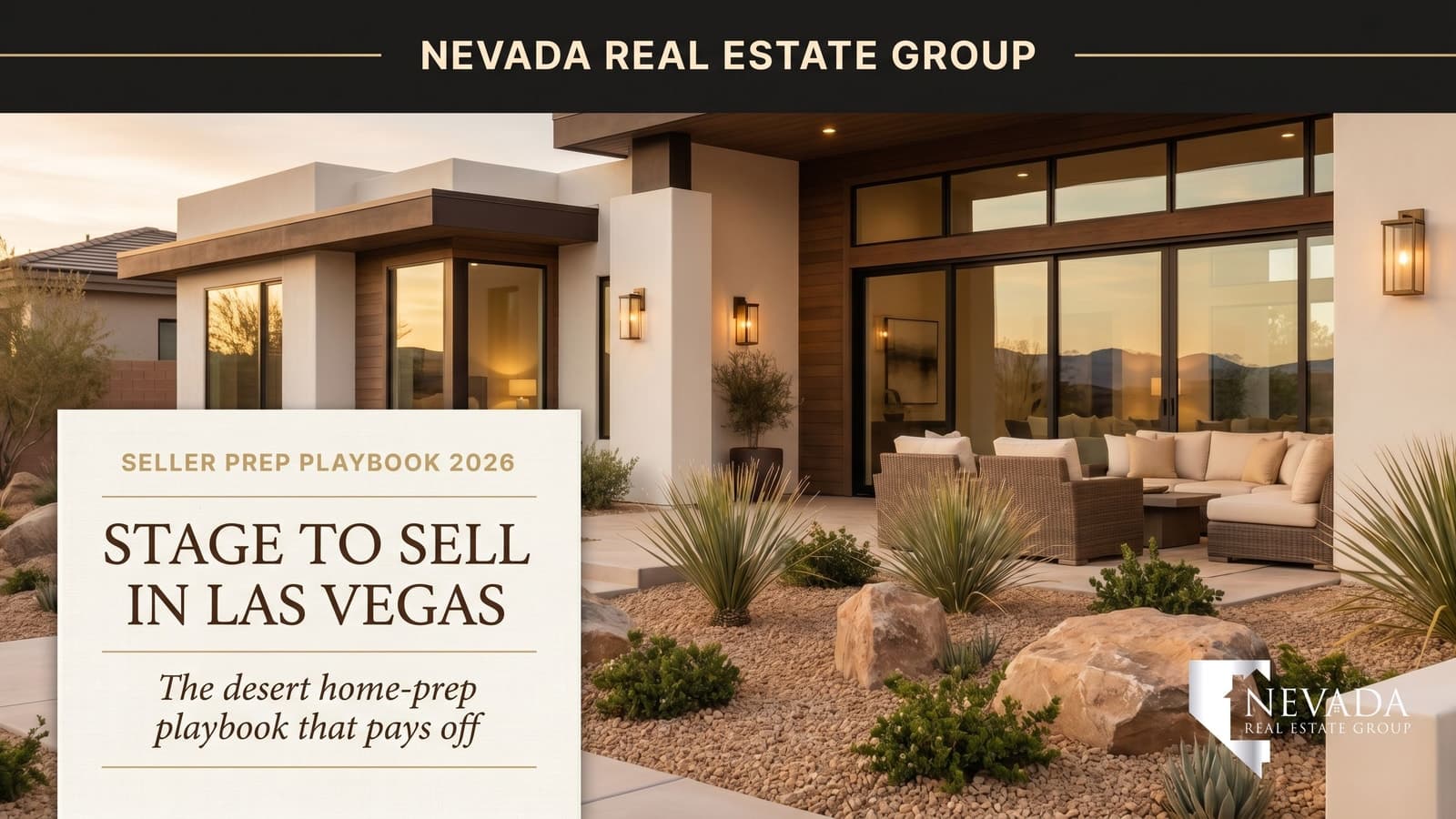
Of everything a seller controls, how the home shows is the biggest lever on price and speed — and it's the cheapest to pull. Yet most Las Vegas sellers either over-spend on the wrong things or under-prepare and leave money on the table. Selling in the desert also isn't like selling in Denver or Dallas: dead summer lawns, blazing afternoon showings, pools, and casitas all change the prep playbook. Done right, staging and pre-listing prep routinely return several times their cost.
At Nevada Real Estate Group, prepping homes to show their best is part of every listing we take — and across 6,225+ Las Vegas-metro closings over 16+ years, we've seen exactly which prep moves pay off here and which waste money. This is the field-tested guide: what staging costs, which repairs are worth it, how to win on desert curb appeal, and the room-by-room plan.
Staging works: per the National Association of REALTORS, most agents say it helps buyers visualize a home, nearly a third report it lifts offers 1–10%, and about half say staged homes sell faster. In Las Vegas, smart prep means desert-friendly curb appeal, a sparkling pool, a working AC, and neutral, decluttered interiors. Professional staging runs roughly $800–$3,000, and high-ROI fixes like paint and a new garage door often pay for themselves.
- Per NAR, 83% of buyer agents say staging helps buyers visualize the home, and ~half say staged homes sell faster.
- Professional staging runs about $800–$3,000 for occupied homes; vacant-home staging is $2,000–$6,000+.
- Spend 1–3% of your home's value on pre-listing prep — paint, garage door, and deep cleaning lead the ROI.
- Desert curb appeal means water-smart landscaping, not a dead lawn — and a working AC is non-negotiable in summer.
- Stage the living room, primary bedroom, and kitchen first — NAR ranks them the most important to buyers.
Does Staging Actually Help Sell a Las Vegas Home?
The data is clear that presentation moves the needle. According to the National Association of REALTORS 2025 Profile of Home Staging, 83% of buyers' agents said staging made it easier for buyers to visualize the property as their future home, 60% said it affected some buyers, and 26% said it affected most buyers' view. On price, 29% of agents reported staging produced a 1% to 10% increase in the dollar value buyers offered, and roughly half of sellers' agents said staging reduced time on the market.
Industry stagers cite even larger effects. According to the International Association of Home Staging Professionals, staged homes often sell for several percent above list and spend dramatically less time on the market — figures that run higher than NAR's because they come from staging advocates, so treat them as the optimistic end of the range. Either way, the direction is consistent: a well-presented home sells faster and for more. In a market with choices like Las Vegas, where relocating buyers from California, New York, and the Pacific Northwest are comparing many listings, showing better is how you stand out. It pairs directly with smart pricing, which we cover in our Las Vegas home-pricing playbook.
Where in the valley your home sits shapes the bar, too. In master plans like Summerlin and Henderson, HOA standards mean buyers judge your home against polished neighbors, so matching that level of presentation is the price of entry; in older or custom pockets, a sharp xeriscape and fresh paint can make your home the clear standout on the street. And because so many buyers here are relocating into the valley's luxury communities and master plans from higher-cost markets, they arrive with high expectations for finish and condition — which rewards sellers who prep thoroughly and punishes those who don't.
How Much Does It Cost to Stage a Home in Las Vegas?
Staging is one of the rare seller expenses that tends to return more than it costs, and the price depends on whether your home is occupied or vacant. According to Angi and other 2026 cost data, here's the range:
| Approach | Typical cost | Best for |
|---|---|---|
| Staging consultation only | $150–$600 (sometimes free with a listing) | Occupied homes you'll prep yourself |
| Occupied-home staging | $800–$3,000 | Lived-in homes that need editing + accessories |
| Vacant-home staging | $2,000–$6,000+ initial setup | Empty homes; furniture rental required |
| Per-room staging | $300–$700 per room | Targeting just the key rooms |
| Monthly furniture rental | $100–$700 per room/month | Ongoing while listed |
For most occupied Las Vegas homes, the highest-value spend is a $150–$600 consultation plus a modest accessories budget — a stager tells you what to remove, where to place what's left, and what few pieces to add. Vacant homes benefit most from full staging, because empty rooms photograph poorly and feel smaller; spending $2,000–$4,000 to furnish the key spaces of a $600,000 listing is rounding error against a faster sale at a stronger price. As your listing agents, we bring a stager's eye to every home and tell you honestly where the dollars matter.
What's the Difference Between Staging and Prepping?
People use the words interchangeably, but they're two distinct jobs, and you usually need both. Prepping is the corrective work: decluttering, deep cleaning, repairs, paint, and curb appeal — fixing what would otherwise distract or worry a buyer. Staging is the additive work: arranging furniture, adding accessories, and styling rooms so the space feels larger, brighter, and aspirational.
Prep comes first and matters more. According to NAR, 51% of sellers' agents don't formally stage every home but do recommend that sellers declutter and correct property faults — because a spotless, well-maintained, neutral home sells well even without full staging, while a cluttered or tired one struggles no matter how it's furnished. Think of prep as the foundation and staging as the polish. Skip the foundation and the polish won't save you.
Which Repairs Should You Make Before Listing?
Not all improvements are worth it — the goal is targeted, high-ROI fixes, not a remodel. A useful rule of thumb is to budget 1% to 3% of your home's value for pre-listing prep; on a $500,000 Las Vegas home, that's $5,000–$15,000, and you rarely need the top of that range. Here's where the dollars work hardest:
| Improvement | Typical cost | Why it pays off |
|---|---|---|
| Fresh interior/exterior paint | $3,000–$7,000 | Often recoups 100%+; erases the look of deferred maintenance |
| Garage door replacement | $1,200–$4,000 | Among the highest ROI of any project (cost recovery near 270%) |
| Professional deep clean | $400–$800 | Removes odors and grime buyers notice instantly |
| Desert-friendly landscaping refresh | $1,000–$5,000 | Curb appeal can lift value by roughly 7% |
| Minor handyman/punch list | $500–$2,000 | Removes red flags that trigger lowball offers |
According to HomeLight agent surveys and 2026 cost-versus-value data, paint and garage doors are perennial ROI leaders, and a deep clean is the single best dollar-for-dollar move. What to skip: major kitchen or bath remodels, pool resurfacing, and trendy upgrades — you rarely recoup them, and buyers prefer to choose their own finishes. When in doubt, fix and clean rather than renovate. Keep prep spending proportional to your price band — it's just one line in your overall seller costs.
How Do You Maximize Curb Appeal in the Desert?
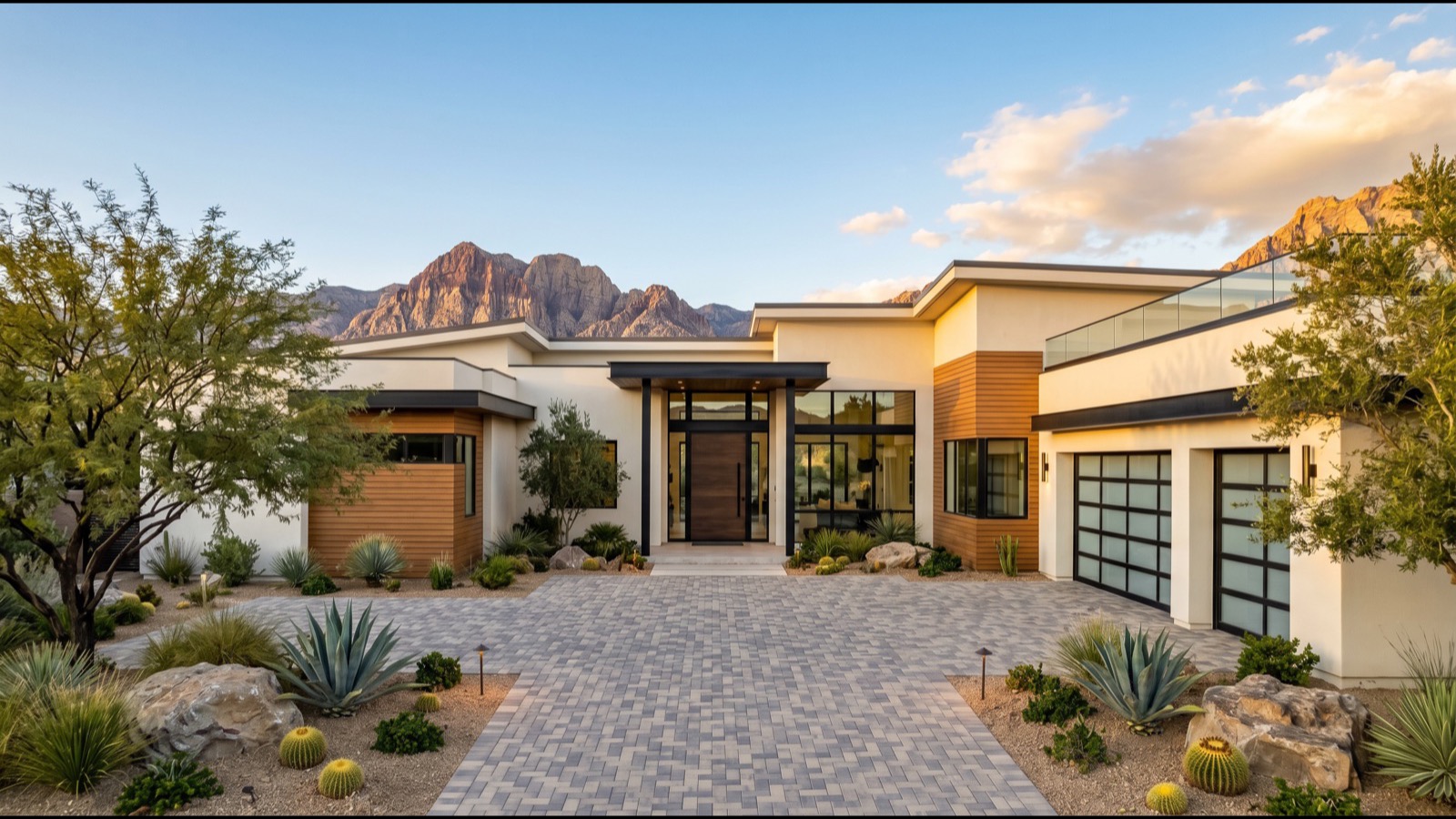
Curb appeal is where Las Vegas sellers most often go wrong, because instincts from other climates backfire here. According to research from the University of Texas at Arlington, strong curb appeal can raise a home's value by an average of about 7% — but in the desert, "curb appeal" doesn't mean a lush green lawn. A struggling, browning lawn in July signals high water bills and high maintenance to buyers; crisp xeriscape — clean rock, healthy drought-tolerant plants, defined borders, and good lighting — signals the opposite, and it's exactly what local buyers expect.
The desert curb-appeal checklist that moves homes here:
- Refresh the landscaping to water-smart desert design; the Southern Nevada Water Authority even offers rebates for converting grass, a selling point worth mentioning.
- Paint or touch up the exterior and front door — sun fades Las Vegas exteriors fast, and fresh paint reads as "well cared for."
- Replace or repaint a tired garage door — it's a huge share of the street view on most valley homes.
- Clean and power-wash driveways, walls, and walkways to cut the desert dust film.
- Stage the entry with potted desert plants, a clean mat, and working exterior lighting for evening showings.
Which Rooms Matter Most to Stage?
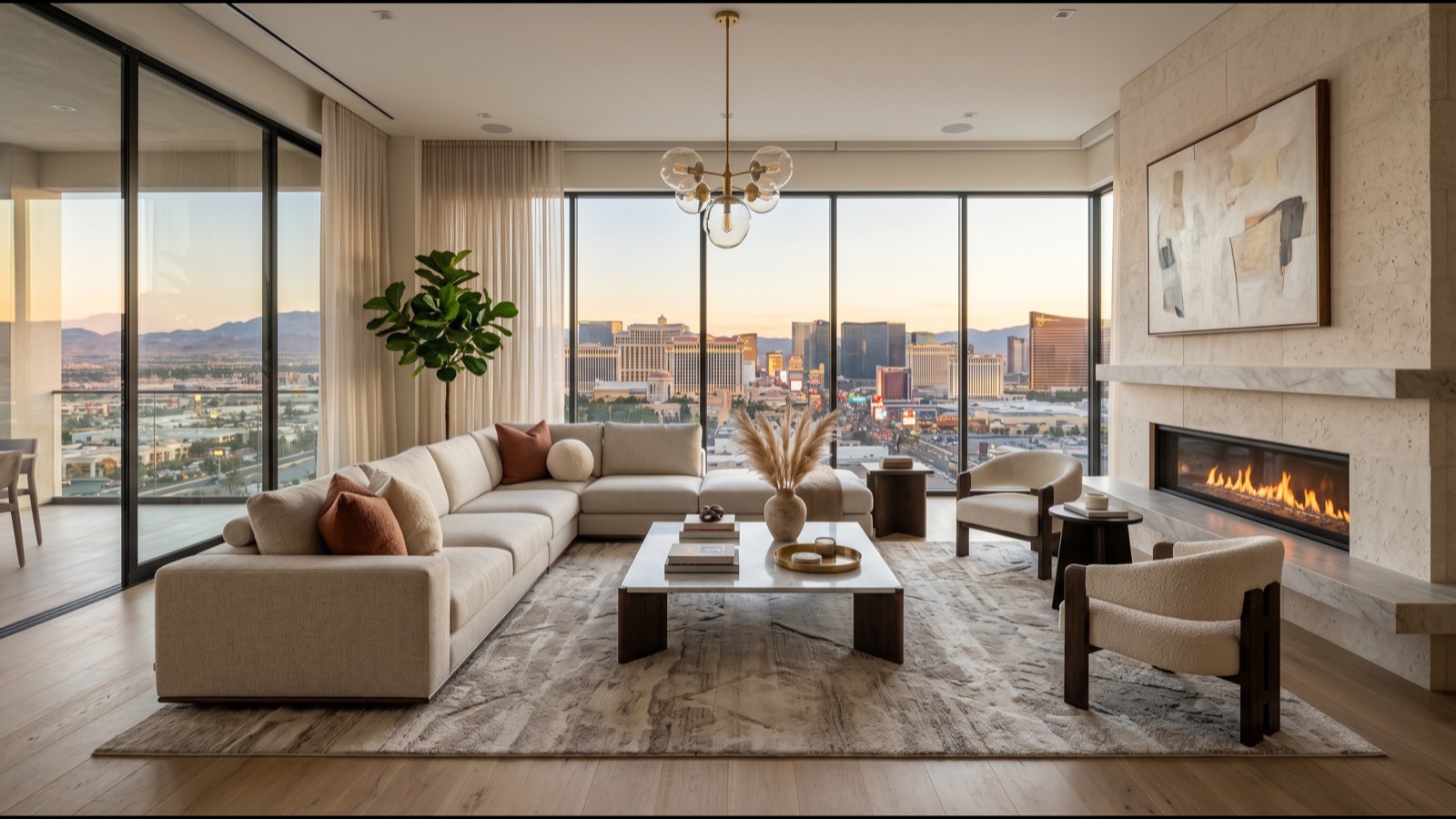
If your budget is limited, concentrate it where buyers decide. According to the NAR Profile of Home Staging, buyers rank the living room (37%) as most important to stage, followed by the primary bedroom (34%) and the kitchen (23%). Those three rooms carry the emotional weight of the showing, so stage them fully and let the rest follow.
In each, the playbook is the same: remove roughly half of what's there, depersonalize (family photos, collections, and bold taste go into storage), keep surfaces clear, and add light. Las Vegas homes shine when they feel bright and cool, so open every blind during showings, swap heavy drapes for sheer panels, and make sure rooms feel airy rather than crowded. A neutral palette also matters more here than in many markets because so many buyers are relocating from elsewhere and want a blank canvas they can picture as their own.
Should You Stage a Vacant Home or an Occupied One?
The answer drives your budget. Occupied homes usually need editing, not furnishing — a consultation, heavy decluttering, and a few accessories are often enough, keeping costs in the $800–$3,000 range. The challenge is emotional: you have to live in a depersonalized, show-ready home, which is harder than it sounds.
Vacant homes almost always benefit from professional staging. Empty rooms feel smaller and colder, photograph poorly, and leave buyers guessing how furniture fits. Spending $2,000–$6,000 to furnish the key rooms of an empty listing is one of the better returns in real estate, because it directly fixes the way buyers experience the space online and in person. If you've already moved out — common for relocating sellers heading to a new job — budget for vacant staging or, at minimum, virtual staging for the photos plus a few real pieces for showings.
How Do You Prep a Las Vegas Pool and Casita?
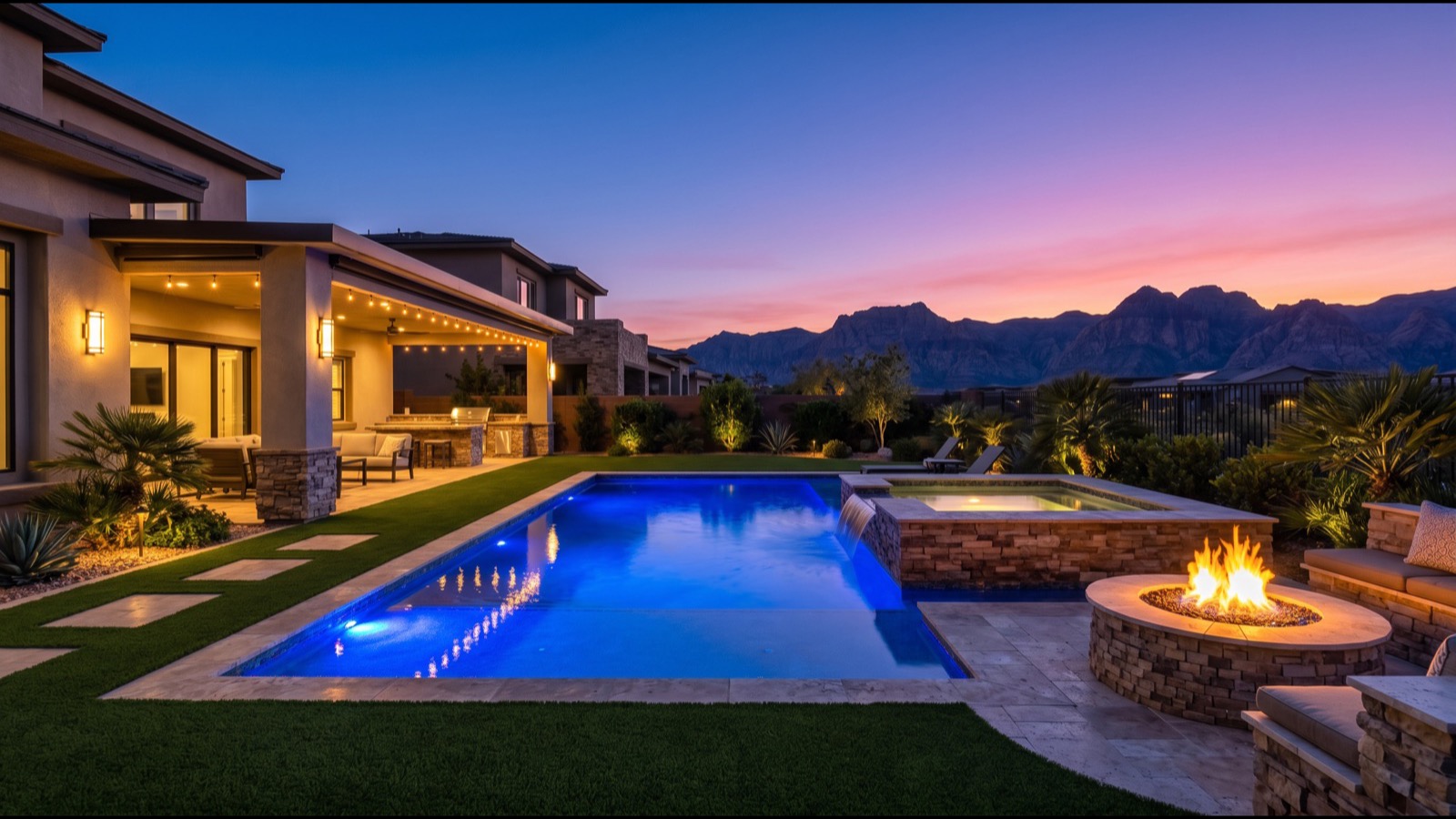
These two features are distinctly Las Vegas, and both are make-or-break when present. A pool is a major selling point in the valley's heat — but only if it shows as an asset, not a chore. Get the water crystal-clear and balanced, clean the deck and surrounding hardscape, repair any visible cracks or torn screens, stage the patio with a couple of clean loungers and an umbrella, and make sure safety features are in place. A green or cloudy pool does the opposite of selling; it screams maintenance cost.
A casita — the detached guest suite common on many valley homes — should be staged for its highest-and-best use: a guest suite, a home office, a gym, or a short-term-rental possibility. Don't leave it as a storage room, which wastes one of your home's most marketable features. Buyers relocating from pricier markets love the flexibility, so show them exactly how the space works. These are the kinds of locally specific moves that distinguish a Las Vegas listing, and they're a big part of how our team markets homes for top dollar.
Do You Need a Professional Stager or Can You DIY?
It depends on the home and your time. For a tidy, well-furnished, occupied home with good bones, a $150–$600 consultation plus your own sweat equity often gets you 90% of the benefit — the stager points out what you can't see, and you do the work. For a vacant home, a luxury listing, or a property that's struggling to show well, a full professional engagement is usually worth it, because the stakes (and the price band) justify the spend.
Be honest about your own blind spots. We all stop seeing our own clutter, our own bold paint, and our own deferred repairs. According to NAR, even agents who don't formally stage overwhelmingly recommend a third-party eye to declutter and fix faults — because objectivity is the real product. Whether you DIY or hire out, the goal is the same: a home that looks like nobody's and everybody's at once.
Whichever route you choose, loop in your listing agent early. We walk every home before it lists and tell you candidly where staging dollars will move the needle and where they won't — that honest walkthrough is part of how we approach selling a Las Vegas home, and it's the cheapest insurance against both over-spending on a needless remodel and under-prepping a home that then lingers. For new-construction or nearly new homes, prep is often as light as a deep clean, decluttering, and great photos; for older homes, the corrective list is longer. The right plan is the one calibrated to your specific house and price band, not a generic checklist.
How Should You Prep for Photos and Showings?
In 2026, the listing photos are the first showing — the vast majority of buyers see your home online before they ever drive by. That makes professional photography non-negotiable, and it makes the day of the photo shoot the single most important prep deadline. Everything should be show-ready: spotless, decluttered, staged, with every light on, blinds open, and the pool sparkling.
Las Vegas light is a gift here — schedule exterior shots for golden hour against the blue desert sky, and twilight shots can make a home glow. For showings, keep the home cool (buyers should never walk into a hot house in summer), lightly scented or odor-free, and consistently show-ready, because Las Vegas buyers — many on tight relocation timelines — often want to see homes on short notice. The easier you make it to show, the faster it sells.
What's the Pre-Listing Prep Timeline?
Good prep takes a few weeks, so build in runway rather than scrambling. A realistic sequence:
| When | Focus |
|---|---|
| 4–6 weeks out | Walkthrough with your agent; staging consultation; book contractors |
| 3–4 weeks out | Repairs, paint, deep clean, landscaping refresh |
| 1–2 weeks out | Declutter and pre-pack, stage rooms, finalize curb appeal |
| Photo day | Full show-ready: clean, staged, lights on, pool sparkling |
| Go live | List, then maintain show-ready condition for showings |
Starting early also protects your pricing strategy: a home that launches polished generates the most interest in its critical first two weeks on market, when buyer attention peaks. A rushed, half-prepped launch wastes that window and often leads to a price cut later. Timing the launch well matters too — see our guide on the best time to sell a house in the valley.
What Prep Mistakes Do Las Vegas Sellers Make?
The avoidable errors we see most often:
- Letting the lawn die in the heat instead of converting to clean xeriscape or keeping it genuinely green.
- Showing a hot house — a broken or weak AC in a July showing kills deals instantly.
- A green or neglected pool, turning an asset into a perceived liability.
- Over-improving with remodels and finishes buyers won't pay for, instead of paint, cleaning, and repairs.
- Skipping the declutter and assuming buyers can "see past" personal items — they can't.
- Cheap or DIY photos that undersell a well-prepped home online, where the showing really begins.
Every one of these is fixable with a plan and an honest second opinion. The throughline: spend on presentation and corrective fixes, not on speculative upgrades, and treat the home as a product you're packaging for a buyer who has options.
Frequently Asked Questions
Is home staging worth it in Las Vegas?
For most sellers, yes. Per NAR, 83% of buyer agents say staging helps buyers visualize a home, about half of seller agents say it speeds up the sale, and nearly a third report it lifts offers 1–10%. Even light staging — declutter, neutralize, and style the key rooms — usually returns far more than its cost, especially for vacant homes and in a market where relocating buyers are comparing many listings.
How much does it cost to stage a home in Las Vegas?
A staging consultation runs about $150–$600 (sometimes free with a listing), occupied-home staging typically $800–$3,000, and vacant-home staging $2,000–$6,000+ for the initial setup, with furniture rental of roughly $100–$700 per room per month if your home stays listed. Most occupied homes get the best return from a consultation plus a modest accessories budget.
What should I fix before selling my Las Vegas home?
Focus on high-ROI, corrective work: fresh paint ($3,000–$7,000, often 100%+ recovery), a garage door if tired (huge ROI), a professional deep clean ($400–$800), a desert-landscaping refresh, and a minor handyman punch list. Budget roughly 1–3% of your home's value. Skip major remodels and pool resurfacing — buyers rarely pay you back for them.
Do I need a green lawn to sell in Las Vegas?
No — and a browning lawn actually hurts. Local buyers expect water-smart desert landscaping, which reads as low-maintenance and low-water-bill. Clean rock, healthy drought-tolerant plants, defined borders, and good lighting beat a struggling lawn every time, and converting grass may even qualify for a Southern Nevada Water Authority rebate worth mentioning to buyers.
How long does it take to prep a home for sale?
Plan on about four to six weeks for a thorough job: walkthrough and staging consultation first, then repairs, paint, cleaning, and landscaping, then decluttering and staging, finishing show-ready by photo day. Starting early matters because your listing gets the most attention in its first two weeks on market, so you want it fully polished at launch.
Should I stage a vacant home or sell it empty?
Stage it, at least partially. Empty rooms feel smaller, photograph poorly, and leave buyers guessing how furniture fits. Full vacant staging ($2,000–$6,000) is one of the better returns in real estate; at minimum, use virtual staging for the photos plus a few real pieces for showings. Relocating sellers who've already moved out should budget for this.
Will I owe taxes on the profit when I sell?
At the state level, no — Nevada has no state income tax or capital gains tax. Federally, the IRS lets you exclude up to $250,000 of gain if single or $500,000 if married filing jointly on a primary residence you've owned and lived in for two of the last five years; gains above that are taxed federally. Nevada's lack of any state income or capital gains tax is a real advantage when you sell — confirm your specific situation with a CPA.
Which Sources Inform This Las Vegas Staging Guide?
This guide combines national research with Nevada Real Estate Group's experience preparing and listing homes across 6,225+ Las Vegas-metro closings. Staging effectiveness data comes from the National Association of REALTORS 2025 Profile of Home Staging and the International Association of Home Staging Professionals; cost ranges from Angi and HomeLight 2026 data; and curb-appeal research from the University of Texas at Arlington. Market context reflects Las Vegas REALTORS, and the federal home-sale gain exclusion is per the IRS. Costs and ROI vary by home and market — get a tailored prep plan from your listing agent before spending.
Information deemed reliable but not guaranteed. This article is educational and is not financial or tax advice; staging costs, ROI, and home-sale tax outcomes vary by situation — consult your agent and a CPA. Nevada Real Estate Group · (702) 637-1759 · NV License S.181401.