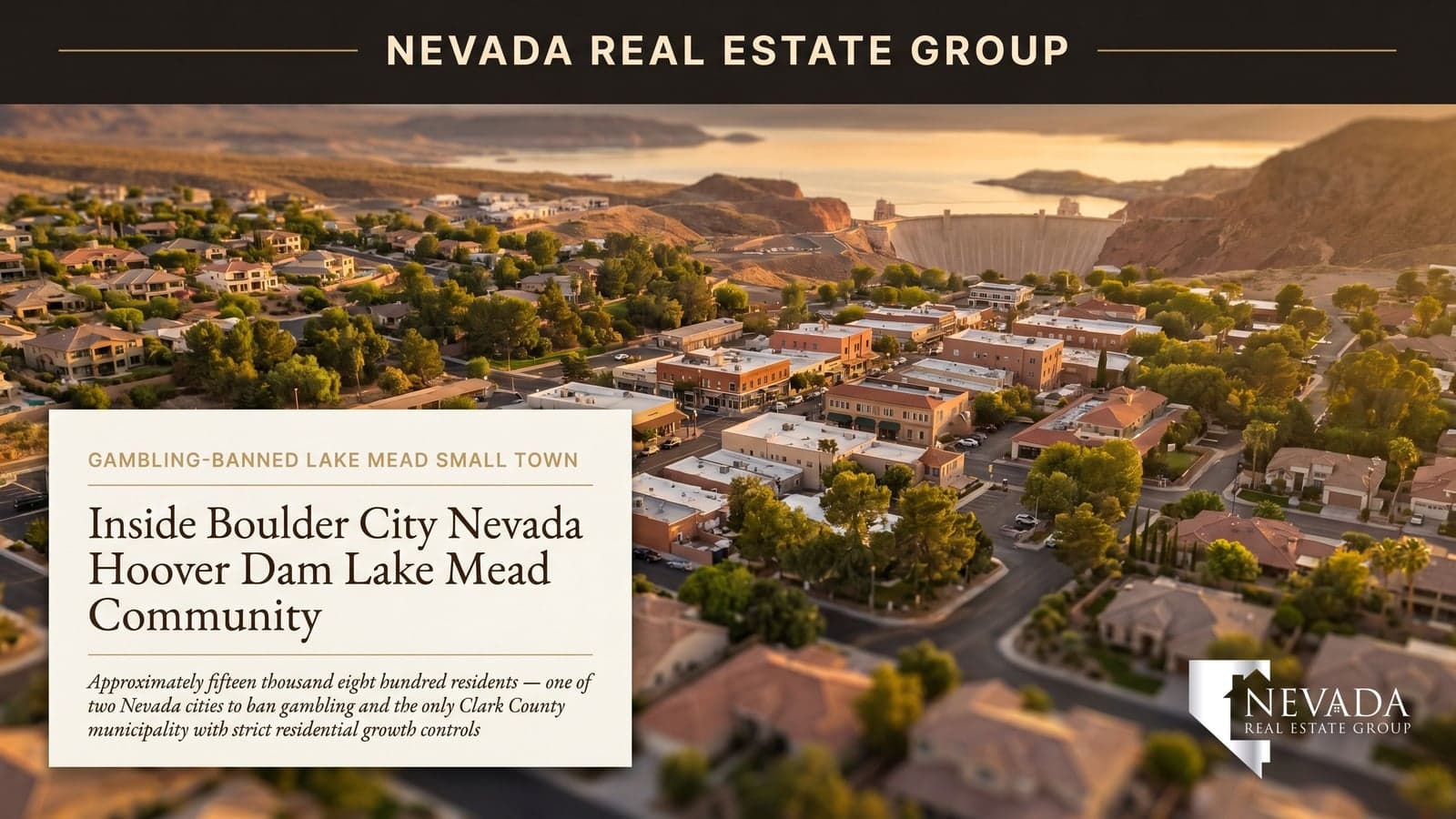

Las Vegas valley buyers shopping for a genuinely different lifestyle — a small, walkable town with historic downtown character, no casinos, an enforced growth limit on new home construction, and Lake Mead literally at the back door — consistently put one place at the top of their tour list: Boulder City. Incorporated in 1959 after originally being built as a federal company town in 1931 for Hoover Dam construction workers, Boulder City sits 23 miles southeast of the Las Vegas Strip on US-93 and operates as one of only two Nevada cities to ban gambling within municipal limits. The 2026 population is approximately 15,800 — a fraction of Henderson's 350,000+ — and a city-imposed growth ordinance has capped new residential building permits to roughly 120 per year since 1979.
This guide answers what every relocating buyer asks before a Boulder City tour: where the city sits geographically, how the housing stock breaks down, what 2026 home prices actually look like, how the growth ordinance affects new construction, what schools serve the community, what daily commercial life looks like with no casinos, and how Boulder City stacks up against alternative Henderson or Lake Las Vegas options. Numbers come from the GLVAR MLS, the City of Boulder City, Clark County Assessor records, and the 789 transactions my team at Nevada Real Estate Group closed across the valley in 2025.
Boulder City is an incorporated city of approximately 15,800 residents in southeast Clark County (ZIP 89005), located 23 miles from the Las Vegas Strip and adjacent to Lake Mead National Recreation Area. The city is one of only two in Nevada to ban gambling within municipal limits and operates a strict growth-control ordinance that caps new residential building permits to roughly 120 per year. Housing stock spans approximately 5,800 owner-occupied homes including 1931–1940s historic Hoover Dam-era homes, 1950s–1970s mid-century construction, and 1980s–2020s subdivisions. The 2026 median Boulder City home price is approximately $475,000 — roughly 2% above the broader Clark County metro median.
- Boulder City sits 23 miles southeast of the Las Vegas Strip, in ZIP 89005 between Henderson and Lake Mead National Recreation Area.
- One of only two Nevada cities to ban gambling within city limits — no casinos operate inside Boulder City.
- Growth-control ordinance has capped new residential building permits to approximately 120 per year since 1979 — meaningfully different from any Las Vegas valley master plan.
- 2026 median home price is approximately $475,000 — roughly on par with Clark County metro median, with a wide spread across historic, mid-century, and newer subdivisions.
- Lake Mead National Recreation Area is accessible in 5 minutes; Hoover Dam is 8 minutes; Henderson border is 12 minutes via US-93.
Where Does Boulder City Sit Geographically?
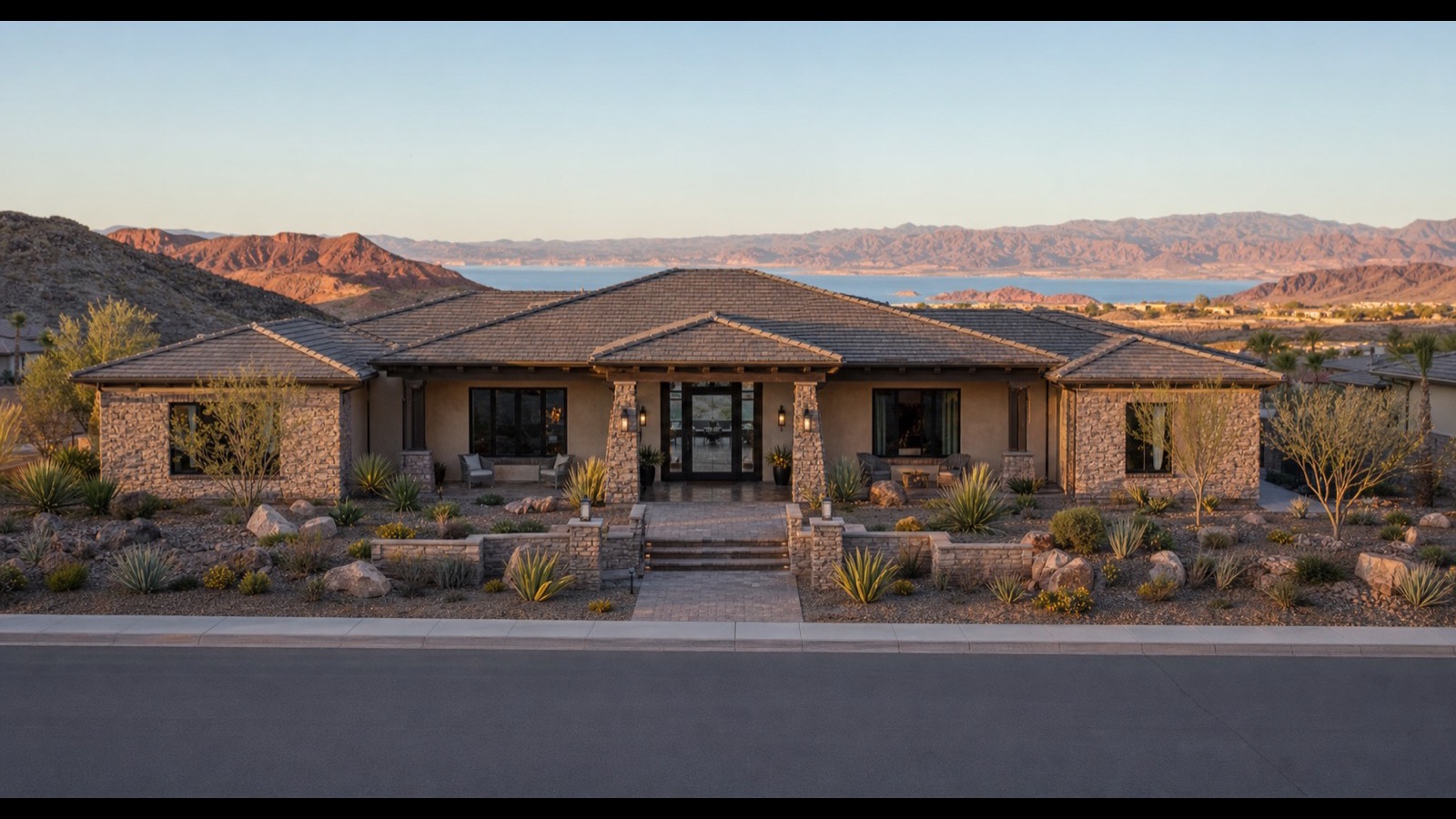
Boulder City occupies approximately 211 square miles of incorporated area in southeast Clark County, making it geographically larger than San Francisco despite a population roughly 1/55th the size. The developed residential footprint is much smaller — approximately 8 square miles — concentrated in the historic downtown core and the surrounding mid-century and modern subdivisions. The city is bounded by Lake Mead National Recreation Area on the east and south, the El Dorado Valley on the southwest, and the Henderson city line on the northwest.
According to the Nevada Department of Transportation, US-93 (the main connector to Henderson and the Las Vegas valley) carries approximately 24,000 daily vehicles through Boulder City — a small-arterial profile that keeps traffic manageable but also funnels commuter and visitor flow through the same corridor. The 215 Beltway intersection at Henderson sits 12 minutes northwest via US-93; the Las Vegas Strip is 23 miles via US-93 and I-15.
The ZIP coverage is 89005 (the dominant residential ZIP) with small parts of 89006 capturing the federal Hoover Dam complex. According to the U.S. Census Bureau's 2024 American Community Survey, median household income in 89005 is approximately $77,600 — slightly above the Clark County metro median of $73,800 and meaningfully below the Henderson Anthem ZIP ($124,900) or Summerlin's upper ZIPs ($134,000+). The demographic profile skews older: approximately 32% of Boulder City residents are 65 or older, more than double the Clark County share of 15%.
Three location facts matter most. First, Lake Mead access: the Lake Mead National Recreation Area visitor center is approximately 5 minutes east via Lakeshore Road. Second, Hoover Dam proximity: the dam visitor parking is 8 minutes east via US-93. Third, elevation: Boulder City sits at approximately 2,500 feet, about 500 feet above the central Las Vegas valley floor. According to the National Weather Service Las Vegas office, that elevation differential translates to summer afternoon temperatures running 3–5°F cooler than the Strip corridor and meaningfully drier than the lakeside microclimate.
What Does the Growth-Control Ordinance Actually Do?
Boulder City adopted its first growth-management ordinance in 1979 after rapid 1970s growth threatened the small-town character. The current ordinance, codified in Boulder City Municipal Code Chapter 11-32 and amended several times across the 1980s–2020s, caps the issuance of new residential building permits to a formula tied to the prior year's population growth and infrastructure capacity. In practice, the city has issued approximately 100–140 new single-family residential building permits per year over the past decade — a fraction of Henderson's 4,000+ annual permits.
According to the City of Boulder City's Annual Growth Report, the ordinance has three primary effects. First, new-construction supply is structurally constrained — buyers cannot count on a steady pipeline of new builds the way Henderson or Summerlin buyers can. Second, the housing stock is dominated by older inventory (mid-century and 1980s–1990s subdivisions); buyers tolerant of resale and remodel-friendly older homes find better selection than buyers committed to 2020+ construction. Third, the ordinance has insulated Boulder City home values from the deep absorption-phase discounts that newer master plans experience — Boulder City resale appreciation has historically tracked or modestly outpaced the Clark County metro.
According to Las Vegas REALTORS March 2026 housing statistics, the Las Vegas valley median single-family home price was $465,000. Boulder City's median of approximately $475,000 sits roughly 2% above the metro — meaningfully different from the Boulder City of twenty years ago when the city traded at a discount to the broader metro because of the older housing stock. The growth ordinance combined with proximity to Lake Mead and the small-town premium has gradually closed and reversed the discount over the past decade.
What Does the Housing Stock Look Like in 2026?
Boulder City's approximately 5,800 owner-occupied homes break down across roughly four eras of construction, each with distinct character, system age, and renovation-readiness:
- 1931–1949 historic (approximately 8% of stock) — Hoover Dam-era cottages and small bungalows concentrated in the historic district. Often 800–1,400 square feet, single-story, with original wood floors, modest yards, and frequent National Register or local historic designation that limits exterior modifications.
- 1950s–1970s mid-century (approximately 28%) — Boulder City's largest construction era. Ranch and split-level homes, typically 1,400–2,400 square feet, on lots 0.18–0.35 acres. Most carry 1990s–2010s remodel updates; HVAC and roof systems typically refreshed at least once.
- 1980s–1990s subdivision (approximately 32%) — newer subdivisions on the south and east sides of town, typically 1,800–2,800 square feet on 0.15–0.30 acre lots. Standard suburban floor plans, two-car garages, original stucco facades.
- 2000s–2020s newer (approximately 32%) — Boulder Hills, Lake Mountain Estates, and the limited newer-build subdivisions. Typically 2,200–3,800 square feet on 0.15–0.45 acre lots, often with Lake Mead view orientation.
Each era trades at meaningfully different per-square-foot pricing. According to GLVAR MLS data covering 2025–2026 closings:
| Construction Era | Share of Stock | Typical Sqft Range | Per-Sqft Range |
|---|---|---|---|
| 1931–1949 historic | ~8% | 800–1,400 sqft | $385–$520/sqft |
| 1950s–1970s mid-century | ~28% | 1,400–2,400 sqft | $185–$285/sqft |
| 1980s–1990s subdivision | ~32% | 1,800–2,800 sqft | $215–$310/sqft |
| 2000s–2020s newer | ~32% | 2,200–3,800 sqft | $260–$390/sqft |
The per-square-foot premium on historic-district homes is driven by lot character and the National Register premium rather than building condition.
How Much Do Boulder City Homes Cost in Twenty Twenty-Six?
Pricing inside Boulder City splits across three broad tiers driven by construction era, lot size, and view orientation. An older 1,400–1,800-square-foot mid-century home in a central neighborhood lands $385K–$485K. A 1,800–2,800-square-foot 1980s–2000s subdivision home runs $475K–$685K. A newer 2,800–3,800-square-foot subdivision home with potential Lake Mead views clears $685K–$895K. The custom tier — 4,000+ square feet on premium hillside or Lake Mead view lots — runs $895K–$1.35M, with a 2025 closing at $1.62M setting the recent ceiling.
According to Las Vegas REALTORS March 2026 housing statistics, the Clark County median was $465,000. Boulder City's median therefore trades at roughly 1.02x the valley median — slightly above metro but meaningfully below Henderson's mid-tier neighborhoods or any Summerlin village. The per-square-foot premium is real, however: Boulder City buyers pay for the lot, the small-town character, and the growth-ordinance scarcity more than for the building itself.
Here is how 2026 closings have distributed across the Boulder City price tiers:
| Price Tier | Typical Size | Dominant Era | Share of Sales |
|---|---|---|---|
| $385K – $485K | 1,400–1,800 sqft | 1950s–1970s mid-century | ~26% |
| $485K – $685K | 1,800–2,800 sqft | 1980s–1990s subdivision | ~38% |
| $685K – $895K | 2,800–3,800 sqft | 2000s–2020s newer | ~24% |
| $895K+ | 3,800+ sqft | Custom or view-premium | ~12% |
A few patterns. Lake Mead view premium adds approximately $135–$215 per square foot on hillside lots with direct lake frame. Historic district designation adds approximately 12–18% to base pricing for buyers who value the National Register or local historic premium but also restricts exterior modifications. Lot size matters disproportionately — Boulder City lots run materially larger than valley averages, and buyers willing to pay for 0.30+ acre lots find them at meaningful discounts to equivalent Henderson neighborhoods. Pool installation is less common in Boulder City than the broader valley due to older housing stock and smaller lots, but pools add $65,000–$130,000 to comparable un-pooled homes when present.
What Are the Major Sub-Neighborhoods Inside Boulder City?
Boulder City is organized into roughly twelve named sub-neighborhoods spread across the small developed footprint. The most recognizable:
- Historic District — central downtown, 1931–1940s Hoover Dam-era homes, National Register protected
- Boulder City Estates — 1970s–1980s ranch and split-level subdivisions, central residential
- Lake Mountain Estates — newer 1990s–2010s subdivision on the south side, Lake Mead view potential
- Boulder Hills — newer 2000s–2020s subdivision on the southeast, larger lots
- El Dorado Hills — west-side hillside subdivision, mountain views to the west
- Hemenway Valley — older neighborhood north of downtown, mixed construction eras
- Marina Heights — eastern subdivision closer to Lake Mead Marina access
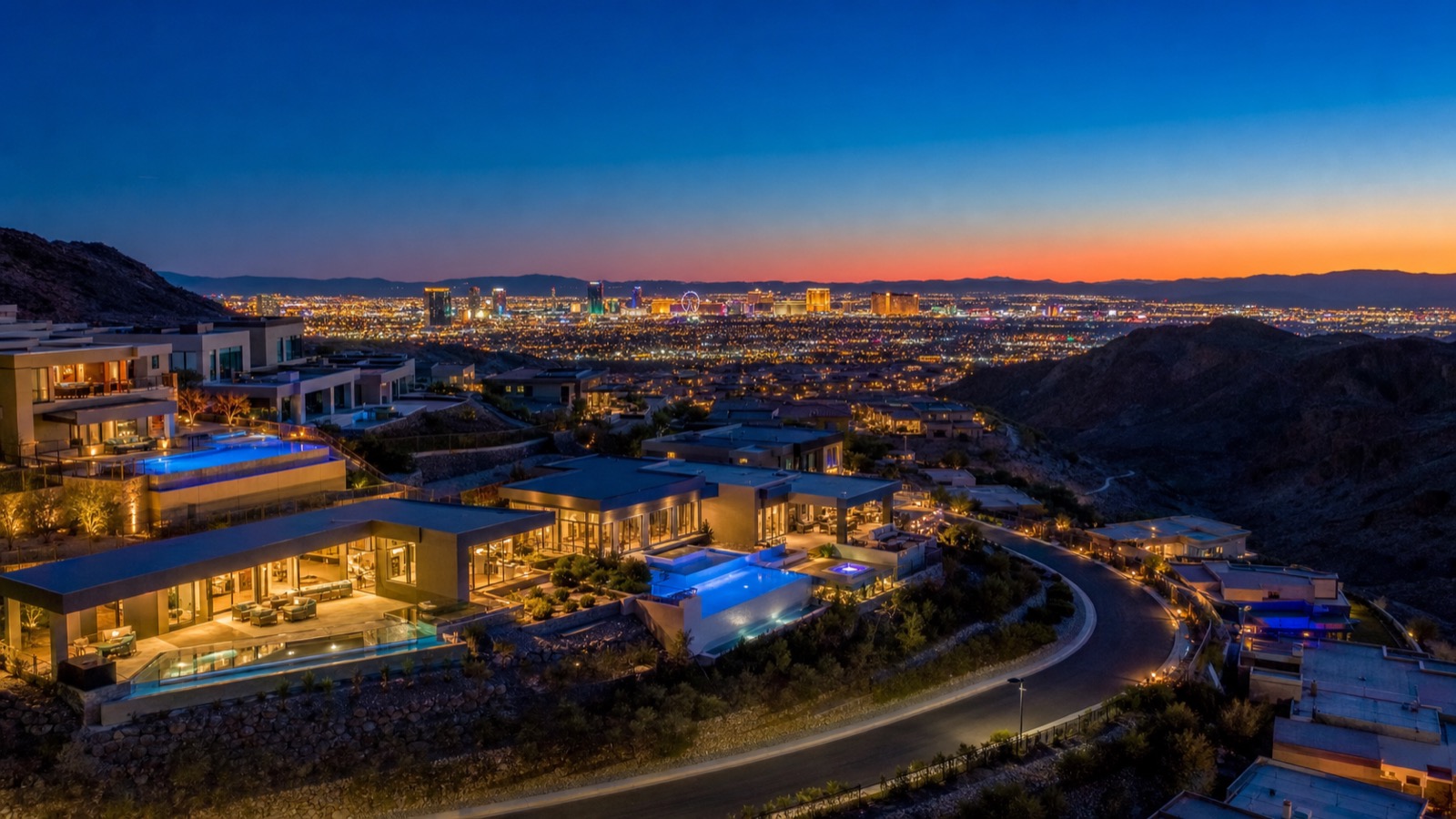
- Lakeview Heights — premium hillside subdivision with strongest Lake Mead views
- Adams Boulevard — mid-century corridor running through central town
- Bristlecone Heights — newer 2010s subdivision on the north
- Tuscany Estates — small Mediterranean-themed pocket
- Old Town surrounding — eclectic mix of remodeled and original homes adjacent to the historic district
The sub-neighborhood distinction matters primarily for construction era, lot size, and Lake Mead view orientation. School assignment is consistent across the entire city (Boulder City schools serve all residential ZIPs).
According to GLVAR MLS resale data covering Boulder City, approximately 175–225 closings happen annually across the city — a healthy resale market reflecting the older population mix and the predictable estate-cycle turnover that characterizes towns with high senior shares.
How Does Boulder City Compare to Anthem and Lake Las Vegas?
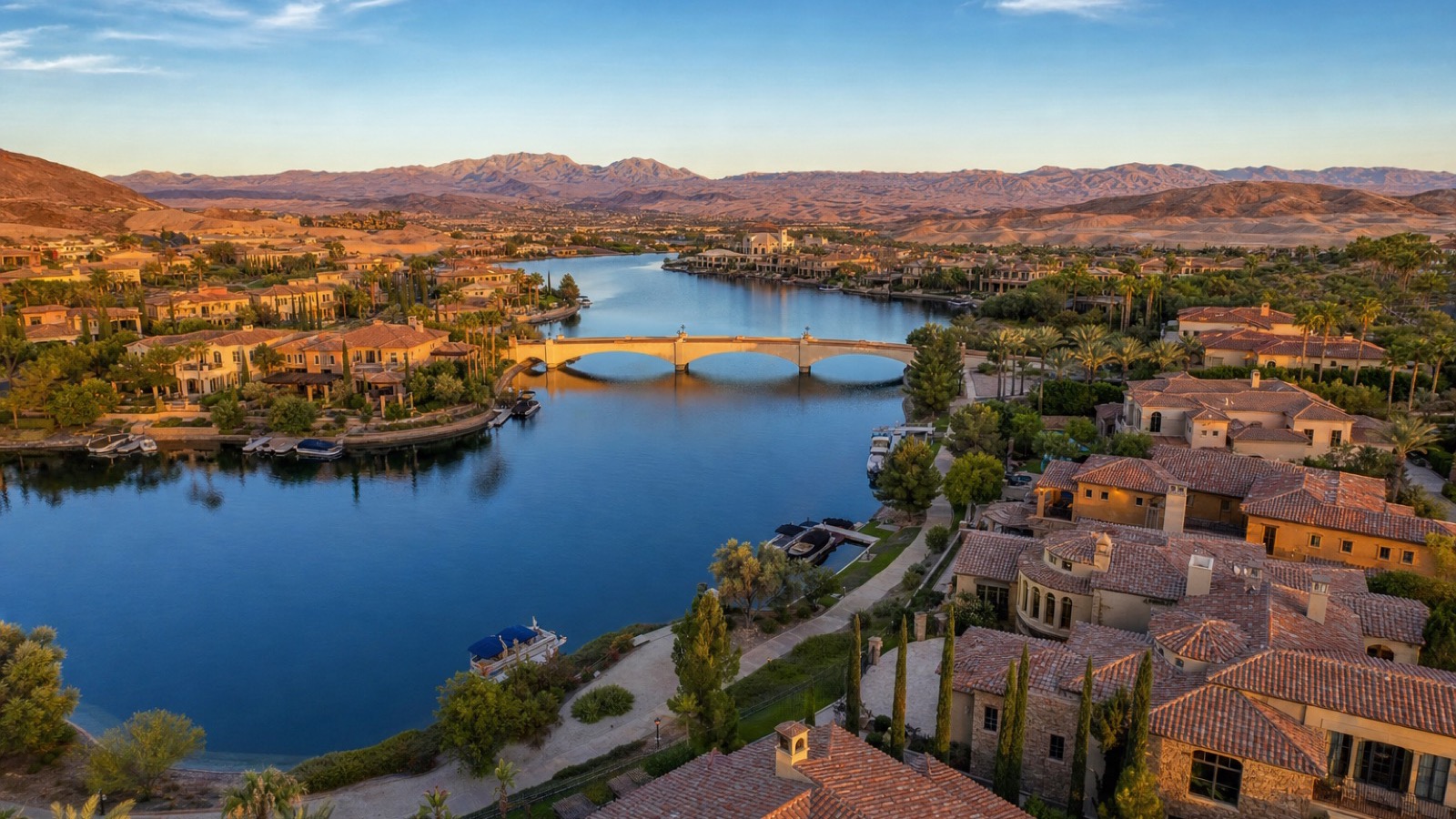
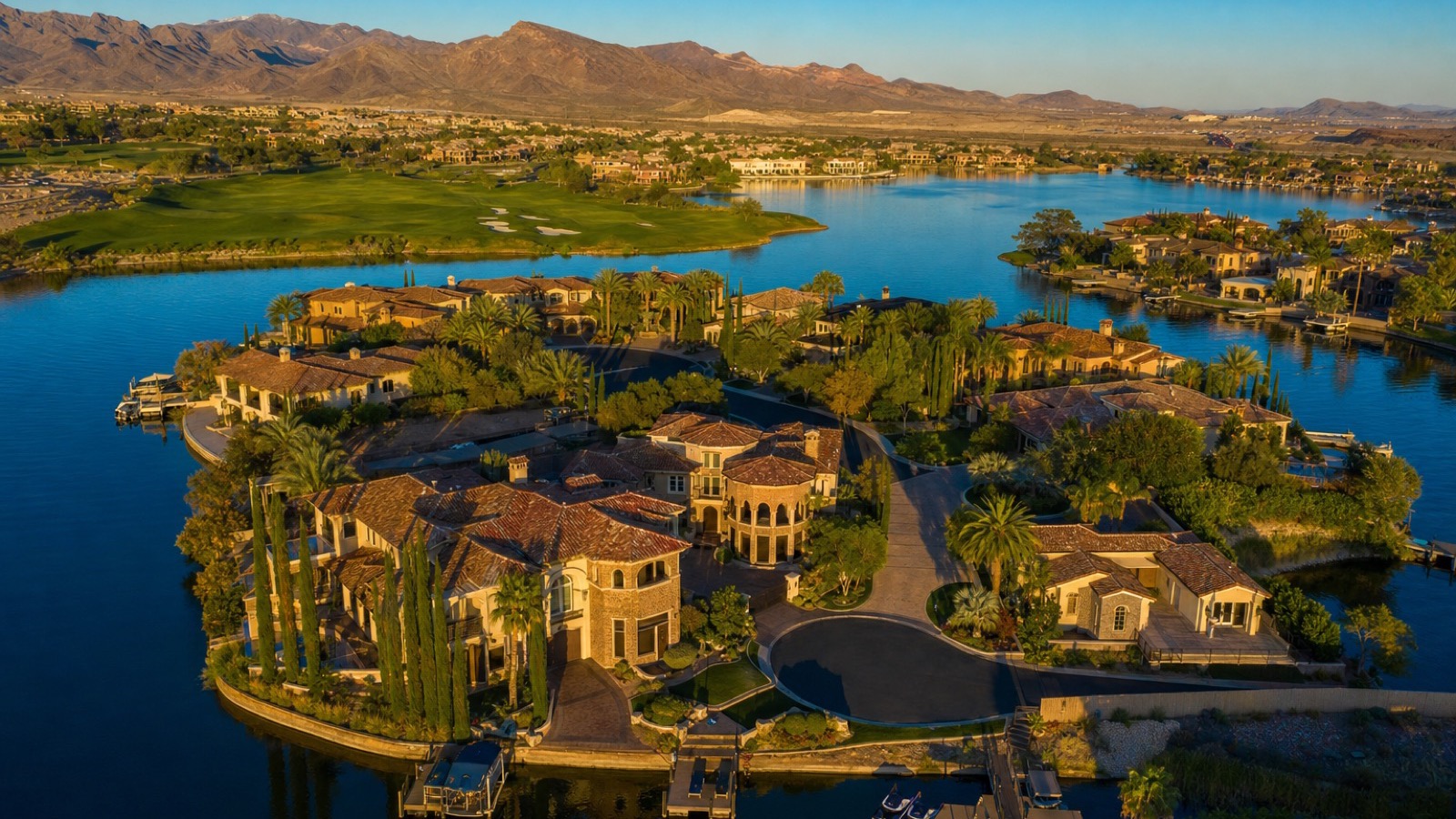
Buyers shopping the south Henderson / Boulder City corridor often cross-compare these three: Boulder City for the small-town and gambling-free lifestyle, Henderson Anthem for the broader master-plan amenities and schools, and Lake Las Vegas for the lakefront resort lifestyle. Here is how they break down side by side:
| Dimension | Boulder City | Henderson Anthem | Lake Las Vegas |
|---|---|---|---|
| Type | Incorporated city | Master plan | Master plan |
| Population / homes | ~15,800 people | ~30,000 people | ~5,800 homes |
| Median 2026 close | $475K | $685K | $915K |
| Casinos / gambling? | Banned | No (residential) | No (residential) |
| New construction pace | ~120 permits/yr (capped) | Active master plan | Active phases |
| Strip drive time | ~27 min | ~18 min | ~28 min |
| School system | CCSD Boulder schools | CCSD Anthem cluster | CCSD Anthem / Liberty |
| Best for | Small-town + Lake Mead + no casinos | Henderson master-plan amenities | Waterfront resort lifestyle |
The headline trade-off: Boulder City trades at roughly 31% below Henderson Anthem and 48% below Lake Las Vegas at the median, primarily because the housing stock is older and the new-construction pipeline is structurally limited. Boulder City wins on the small-town character that the master plans cannot replicate. Henderson Anthem wins on master-plan amenities and stronger A-rated schools. Lake Las Vegas wins on waterfront access and resort lifestyle.
What Schools Serve Boulder City Families?
Boulder City operates under Clark County School District zoning, but the schools serving the city function as a relatively self-contained cluster compared to the broader CCSD assignment system. As of the 2026–2027 attendance calendar, the dominant assignments are:
- Elementary: King Elementary School (south Boulder City) or Mitchell Elementary School (north) — both rated B+ on the Nevada Department of Education school report cards.
- Middle: Garrett Junior High School — B-rated, serves all Boulder City middle-school-age students.
- High: Boulder City High School — B+ rated, serves all Boulder City high-school-age students.
According to the most recent GreatSchools ratings, Boulder City HS scores 7/10 academically — solid but below the 8–9/10 ratings at Palo Verde HS in Summerlin or Liberty HS in Henderson Anthem. The school cluster benefits from small class sizes and stable enrollment driven by the growth ordinance. Boulder City schools historically retain meaningfully higher percentages of students through 12th grade than larger CCSD schools — the small-town continuity is a real lifestyle advantage for families.
Boulder City buyers with children pursuing strong AP or advanced-track programs frequently consider open-enrollment options at Coronado HS in southern Henderson or magnet programs at the Las Vegas Academy of the Arts downtown. According to the Clark County School District facilities planning page, the Boulder City catchment is stable with no current boundary realignment under study. Class sizes have remained relatively constant at 22–26 students per elementary class — below the CCSD overall average of approximately 28.
What Does Daily Life Look Like With No Casinos?
Boulder City is one of only two Nevada cities to prohibit gambling within municipal limits — the other being Panaca in Lincoln County. The casino ban dates to the original 1931 federal company-town designation when Hoover Dam construction workers were prohibited from gambling on company property. The ban survived Boulder City's 1959 incorporation and has been repeatedly reaffirmed by city voters.
The practical effect: Boulder City operates as a genuine small town with no casino tourism economy embedded in the local commercial fabric. The downtown along Nevada Highway and Arizona Street is a walkable mid-century streetscape with restaurants, small retail, antique shops, the historic 1933 Boulder Dam Hotel, and the Hoover Dam Museum. Nightlife exists but operates at small-town scale — local restaurants and bars, not casino resorts. Buyers relocating from major metros consistently describe Boulder City evenings as "quiet in a good way."
Daily commercial life:
- Grocery and pharmacy — Albertsons and Vons anchor the central commercial district; smaller specialty markets and the Boulder City Co-op serve specialty needs
- Restaurants — approximately 35 local restaurants in the downtown footprint, mix of family casual, brewpubs, Mexican, and a handful of fine-dining options
- Healthcare — Boulder City Hospital (35-bed acute care, limited specialty); serious medical emergencies trigger air ambulance transport to Henderson or Las Vegas
- Retail — practical goods and tourism-oriented retail concentrated downtown; full-service big-box retail requires a 12-minute drive into Henderson
- Hardware and home improvement — Home Depot, Lowe's, and Costco are all in Henderson approximately 15 minutes via US-93
- Lake Mead Marina — Lake Mead RV Village, Boulder Beach, and the Hoover Dam visitor area all sit within 10 minutes east
What Are the HOA Structures Across Boulder City?
Unlike Henderson or Summerlin master plans, Boulder City does not have a master HOA. Each subdivision and pocket operates its own HOA where one exists, and many older neighborhoods (particularly the historic district and 1950s–1970s pockets) have no HOA at all. Total monthly HOA assessments where applicable run roughly $0–$185 monthly depending on subdivision.
The largest HOAs in Boulder City:
- Lake Mountain Estates — approximately $145–$185 monthly, covers landscape and common-area maintenance
- Boulder Hills — approximately $95–$135 monthly, smaller subdivision-specific assessment
- Tuscany Estates — approximately $125–$165 monthly, Mediterranean-themed pocket with tighter palette enforcement
- Lakeview Heights — approximately $135–$185 monthly, premium hillside subdivision
The historic district has no HOA — exterior modifications are governed by Boulder City's historic-preservation ordinance rather than a private HOA. Mid-century neighborhoods typically have no HOA. Buyers relocating from heavily HOA-administered metros frequently find the no-HOA option a meaningful quality-of-life upgrade.
Annual carrying cost for HOA-only ownership inside Boulder City — where applicable — runs roughly $0–$2,220 per year. Property taxes are administered by Clark County at the standard rate of approximately 0.65% effective on assessed value, slightly above the Las Vegas valley average.
What Should Buyers Know About Boulder City Resale Values?
Boulder City has been actively trading for over six decades, so the resale market is mature and the comps are reliable. The growth ordinance combined with the demographic mix (32% age 65+) drives a predictable estate-cycle turnover pattern — annual closings of approximately 175–225 homes against a base of approximately 5,800 owner-occupied units means roughly 3–4% annual turnover, healthy but not high.
According to GLVAR MLS data, the average Boulder City resale that closed in 2025 traded approximately 5.9% above its previous sale price, with a roughly 96-month average hold-to-resale period (significantly longer than valley average reflecting the older-skewing population). According to the Federal Housing Finance Agency's House Price Index, the Las Vegas-Henderson-Paradise MSA appreciated approximately 6.4% in calendar 2025 — Boulder City resale appreciation tracked slightly below the metro number, reflecting the older inventory mix.
Three buyer rules for Boulder City resale exit math:
- System age compounds at sale — most 1950s–1970s mid-century inventory carries original HVAC, electrical panels, and plumbing that will need replacement in the buyer's hold window. Document system age and remediation history.
- Lake Mead view premium is durable — hillside lots with documented Lake Mead views consistently command resale premiums of 18–25% over comparable interior lots.
- Historic district designation limits remodel flexibility — the National Register and local historic-preservation ordinance restrict exterior modifications. Plan remodel scope around interior changes only.
The headline for resale buyers: Boulder City is mature enough that price discovery is liquid, but the relatively thin inventory (175–225 annual closings) means good homes move quickly at competitive listings. Average days on market typically runs 32–55 days for inventory priced at comp.
Who Should Buy in Boulder City in 2026?
After tours with approximately 65 buyers in Boulder City across 2024–2025, here is the closing profile:
- Retiring relocations — primarily Bay Area, Pacific Northwest, and Southern California retirees seeking small-town character, Lake Mead access, and meaningfully lower cost of living than coastal CA.
- Lake Mead enthusiasts — buyers whose lifestyle centers on Lake Mead boating, fishing, hiking, or RVing and who value 5-minute lake access.
- No-casino lifestyle buyers — buyers actively choosing to live outside the Las Vegas casino tourism orbit and valuing the small-town commercial fabric.
- Federal employees — Hoover Dam, Bureau of Reclamation, and National Park Service employees who work in or near Boulder City.
- Older mid-century renovators — buyers who want a renovation project on a 1950s–1970s home with character and a long hold horizon.
Where buyers do not end up in Boulder City: families with school-age children seeking A-rated CCSD schools (Boulder City schools are B/B+, solid but below Henderson Anthem or Summerlin); buyers committed to new construction (the growth ordinance limits supply); and buyers requiring extensive specialty medical care (Boulder City Hospital handles primary acute care; specialty care routes to Henderson). Buyers who land in Boulder City consistently describe the small-town trade-off as worth the school-tier and amenity-tier compromise.
What Hidden Costs Should Boulder City Buyers Plan For?
Boulder City buyers underestimate three line items beyond the purchase price and HOA:
- System replacement on older inventory — most 1950s–1970s homes carry HVAC, electrical panels, water heaters, and plumbing now 25–50 years past original installation. Full HVAC replacement runs $18K–$32K; main electrical panel upgrade $4K–$8K; sewer-line repair or replacement $8K–$25K; whole-house repipe (galvanized to PEX) $12K–$28K. Inspect carefully and plan for a remediation reserve of $35K–$80K.
- Historic-preservation modification limits — properties in the historic district require preservation-board approval for exterior modifications. The approval process adds 6–12 weeks to remodel timelines and limits material substitutions on windows, doors, roofing, and exterior cladding.
- Lake Mead Marina costs and air ambulance insurance — Boulder City residents who actively use Lake Mead Marina face annual slip and dry-storage fees ranging $1,800–$8,400 depending on vessel size. Air ambulance membership ($85–$175 annually) is recommended for any household with a serious-medical-event risk profile, since Boulder City Hospital does not handle complex specialty care.
According to the Clark County Department of Building and Fire Prevention, residential remodel permit volume across the Las Vegas metro exceeded 8,200 permits in calendar 2024. Boulder City permits operate through the city's own building department with typical lead times running 6–10 weeks — slightly longer than the Henderson permit office.
What Should Investors Know About Boulder City Rentals?
Boulder City is a moderate rental market — demand is supported by Hoover Dam workforce housing, retirees temporarily renting before purchase, and seasonal Lake Mead tourism. According to GLVAR rental data, median Boulder City rental rates run:
- 2BR/1BA mid-century (1,200 sqft): approximately $1,650–$1,900 monthly
- 3BR/2BA 1980s–1990s (2,000 sqft): approximately $2,200–$2,650 monthly
- 4BR/3BA newer subdivision (2,800 sqft): approximately $2,800–$3,400 monthly
- Premium Lake Mead view (3,500+ sqft): approximately $3,800–$4,800 monthly
Cap-rate math at standard 2026 Boulder City pricing typically lands 5.0–5.8% gross before tax — slightly above Henderson masters and notably above Summerlin or Reverence. According to the U.S. Bureau of Labor Statistics CPI rent index, the Las Vegas MSA rent index appreciated approximately 4.1% year-over-year through Q1 2026. Boulder City rentals have appreciated roughly in line with the metro index, with stronger growth in newer subdivision product than in older mid-century inventory.
Frequently Asked Questions
Is Boulder City part of Las Vegas?
No — Boulder City is an incorporated municipality separate from the City of Las Vegas, North Las Vegas, and Henderson. It sits in Clark County, Nevada, 23 miles southeast of the Las Vegas Strip. Boulder City has its own city council, mayor, police, fire, and building departments, with municipal services administered locally rather than through the larger neighboring cities.
Why is gambling banned in Boulder City?
The ban originated in 1931 when the federal government established Boulder City as a company town for Hoover Dam construction workers and prohibited gambling on company property. After Boulder City incorporated in 1959, the prohibition was carried into municipal code and has been repeatedly affirmed by city voters in subsequent ballot initiatives. Boulder City is one of only two Nevada cities to ban gambling — the other being Panaca in Lincoln County.
How does the growth ordinance affect home values?
The growth ordinance has structurally limited new-construction supply since 1979, capping new residential building permits to approximately 120 per year. The supply constraint combined with steady demand from retirees, Hoover Dam workforce, and Lake Mead enthusiasts has gradually closed and reversed Boulder City's historical pricing discount to the broader Las Vegas metro. Boulder City's current median sits roughly 2% above the metro median — different from twenty years ago when it traded at a meaningful discount.
Can I find new construction in Boulder City?
Yes, but limited supply. The growth ordinance allows approximately 120 new single-family permits per year, allocated through a city process that distributes permits across active subdivisions. Active newer subdivisions (Boulder Hills, Lake Mountain Estates, Bristlecone Heights, Lakeview Heights) carry occasional new-build inventory but at meaningfully lower volume than any Henderson or Summerlin master plan. Buyers committed to new construction frequently need to wait 6–18 months for the right combination of permit availability, lot, and floor plan.
What's the school situation for Boulder City families?
Boulder City schools operate within Clark County School District but function as a relatively self-contained cluster: King or Mitchell Elementary → Garrett Junior High → Boulder City High School. The cluster carries B and B+ ratings on the Nevada Department of Education report cards — solid but below the A-rated Palo Verde (Summerlin) or Liberty (Henderson Anthem) clusters. The small-town benefit: class sizes are smaller (22–26 elementary versus 28 CCSD average) and high-school retention is meaningfully higher than larger CCSD schools.
How does the commute from Boulder City work?
Boulder City connects to the Las Vegas valley via US-93, which intersects with Henderson and the 215 Beltway in approximately 12 minutes. From the Beltway, the Strip is 18 additional minutes off-peak and Harry Reid International Airport is 22 additional minutes. Total Strip commute averages 27–32 minutes off-peak and 38–48 minutes during heavier rush windows. Boulder City does not have public transit connectivity comparable to the broader Las Vegas valley — residents who work in Las Vegas drive personally or carpool.
What about flood and natural-hazard risk?
Boulder City sits on relatively flat to gently sloping terrain at 2,500 feet elevation with limited flood-plain exposure compared to lower-elevation valley locations. According to the Federal Emergency Management Agency flood mapping, the bulk of Boulder City residential lots fall in flood-zone X (minimal risk). Wildfire risk is moderate — the city is surrounded by desert and exposed to Mojave wildfire seasons. Earthquake risk is low for the Las Vegas region overall. Boulder City Hospital and emergency services are positioned to handle local incidents, with specialty trauma and complex medical events routed to Henderson or Las Vegas via ground or air ambulance.
Which Sources Inform This Boulder City Guide?
This guide is built from active GLVAR MLS data, the City of Boulder City, Clark County Assessor parcel records, and the 789 transactions Nevada Real Estate Group closed across the valley in 2025.
- Las Vegas REALTORS — March 2026 housing statistics — valley median price and absorption
- U.S. Census Bureau — 2024 American Community Survey — ZIP-level income and demographic data
- Federal Housing Finance Agency — House Price Index — Las Vegas MSA appreciation tracking
- Nevada Department of Transportation — US-93 traffic counts and corridor data
- National Weather Service Las Vegas — elevation-driven temperature differentials
- Nevada Department of Education — CCSD school report cards
- GreatSchools — Boulder City HS and feeder ratings
- Clark County School District — facilities planning — boundary stability outlook
- Clark County Department of Building and Fire Prevention — residential permit volume
- Federal Emergency Management Agency — flood mapping — flood-zone classification
- U.S. Bureau of Labor Statistics — CPI rent index — metro rent appreciation
- City of Boulder City Annual Growth Report — building permit allocation and growth-ordinance enforcement data
Across the 789 transactions NREG represented in 2025, our team toured approximately 65 buyers through Boulder City and closed 14 inside the city. For a current Boulder City standing-inventory PDF, a side-by-side against Henderson Anthem or Lake Las Vegas, or representation on a historic-district or hillside purchase, reach our team at (702) 637-1759 or info@nevadagroup.com.