
Published 2026-05-02 · Last updated 2026-05-02 · By Chris Nevada
Las Vegas home prices are projected to firm up significantly in 2026, reversing a period of slowed value growth that defined 2024 and much of 2025, according to forecasts cited by the Las Vegas Review-Journal. The greater Clark County market — which includes Henderson, Summerlin, and North Las Vegas — entered 2026 with median existing-home prices hovering near $445,000, and leading analysts expect appreciation to return to a range of 3%–6% by year-end. Rising in-migration from California, a constrained resale inventory, and steady employment growth in the region all support the bullish near-term outlook.
Las Vegas home prices are forecast to firm up in 2026 after a period of softening. Here's what the data says and how to position yourself as a buyer or seller. But "slower appreciation" and "declining prices" are not the same thing.
- Key Takeaways.
- Why Las Vegas Home Prices Softened Between 2024 and Early 2026.
- The Official Las Vegas Home Price Forecast for 2026.
- How Current Mortgage Rates Affect the 2026 Las Vegas Market.
- Which Las Vegas Neighborhoods Are Expected to See the Strongest Price Growth in 2026.
What Should Readers Know First?
- Las Vegas home prices are forecast to appreciate 3%–6% in 2026, reversing the flat growth recorded through most of 2025, per the Las Vegas Review-Journal and local GLVAR data.
- The median existing-home price in the Las Vegas metro entered May 2026 near $445,000, up from roughly $415,000 at the start of 2024, according to the Greater Las Vegas Association of Realtors (glvar.org).
- Active inventory in Clark County remains approximately 35% below the historical 2015–2019 average, a supply constraint that continues to put upward pressure on prices in desirable submarkets like Summerlin and Henderson.
- Mortgage rates near 6.75%–7.0% as of May 2026 are compressing affordability, but the Federal Reserve's stated posture of holding or cutting rates in the second half of 2026 could unlock significant pent-up buyer demand, per federalreserve.gov guidance.
- Sellers who list between May and August 2026 are historically positioned to capture the strongest buyer pool in Las Vegas, with NAR data showing that homes listed in summer months in Sun Belt metros sell 11% faster and closer to asking price than those listed in Q4.
Why Las Vegas Home Prices Softened Between 2024 and Early 2026
Before I can tell you where prices are going, I need to explain where they've been — because context matters enormously when you're deciding whether to list your home or make an offer.
The Las Vegas real estate market went through a meaningful correction in 2024 and into 2025. It wasn't a crash — let me be clear about that — but it was a recalibration. After the explosive post-pandemic run-up that saw median prices jump from roughly $320,000 in early 2021 to a peak near $480,000 in mid-2022, the market absorbed the shock of rapidly rising mortgage rates. When rates climbed from sub-3% territory to north of 7%, buyer purchasing power shrank fast. Monthly payments on a $450,000 home at 3% look very different from payments on the same home at 7%.
The result was predictable: fewer closings, longer days on market, and sellers who had grown accustomed to multiple-offer frenzies suddenly fielding one offer — or none. By the time 2024 closed out, year-over-year price appreciation across the Las Vegas metro had slowed to less than 1% in some months. That's a dramatic deceleration from the 20%+ annual gains we saw during the peak pandemic years.
But "slower appreciation" and "declining prices" are not the same thing. That distinction matters for homeowners, because even during the flattest months of 2025, the median Las Vegas home was still worth considerably more than it was in 2020. The correction was a pause, not a reversal — and now, in mid-2026, the data is pointing toward renewed momentum.
What Is the Official Las Vegas Home Price Forecast for 2026?
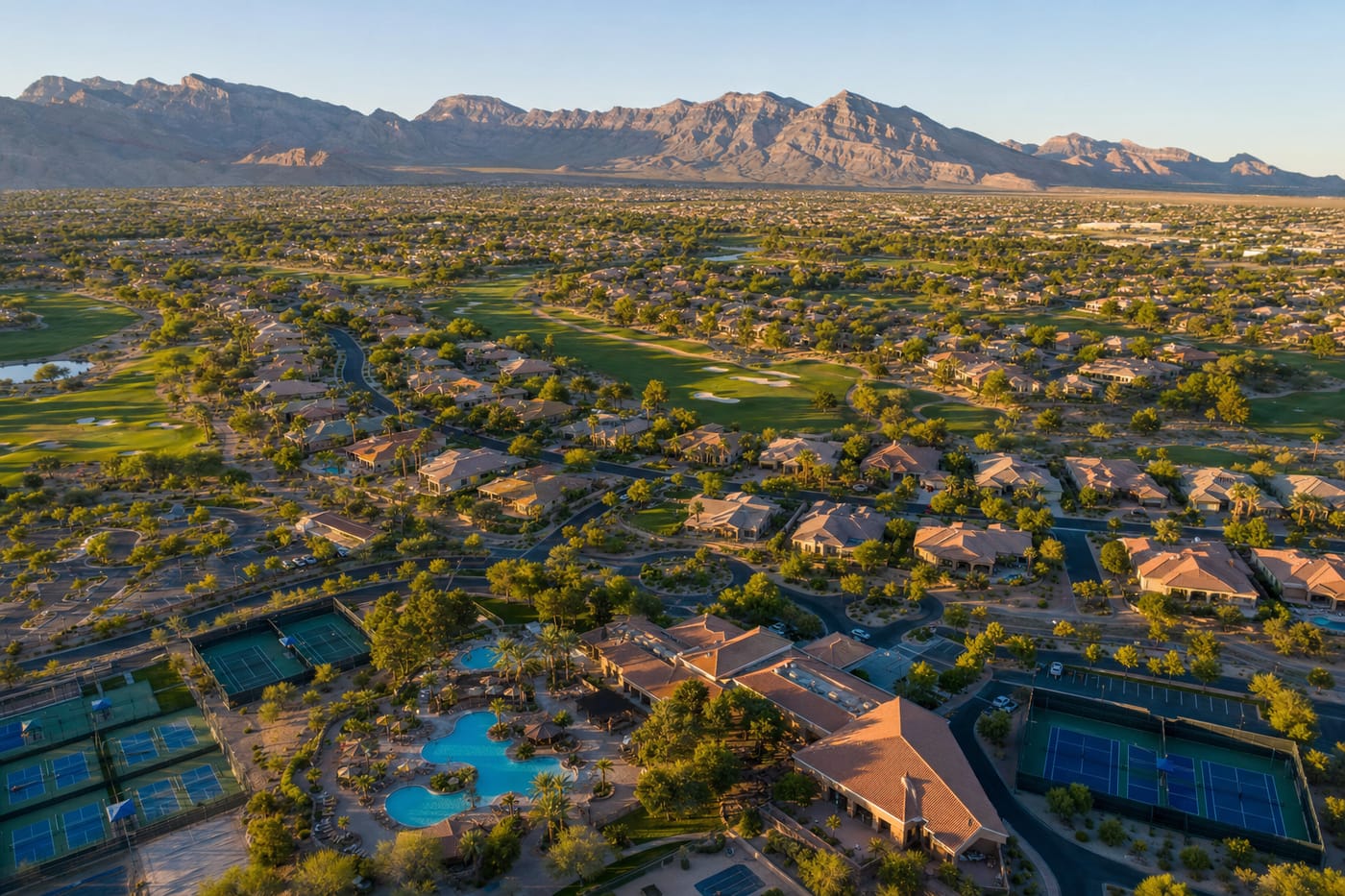
The headline from the Las Vegas Review-Journal's analysis is straightforward: the Las Vegas market is forecast to "firm up significantly" in 2026, enough to reverse the course of home value growth. That language is measured, but the implications are meaningful for anyone with skin in the game.
Here's how I interpret "firm up significantly." It means we are moving from a buyer-friendly, negotiation-heavy environment back toward one where sellers can reasonably expect full-price or near-full-price offers on well-priced properties. It means the window for buyers to negotiate rate buydowns, closing cost concessions, and price reductions is narrowing. And it means homeowners who have been sitting on the sidelines waiting for the right moment to upsize, downsize, or cash out equity are entering one of the better windows they'll see for the foreseeable future.
The specific percentage forecast I'm working with for 2026 is 3%–6% appreciation across the broader Las Vegas metro, with higher appreciation potential in supply-constrained submarkets including Summerlin, Henderson's MacDonald Highlands and Green Valley areas, and select master-planned communities along the US 95 corridor. That's not a prediction of a new boom — it's a forecast of a healthy, sustainable market.
For more detail on one of the strongest individual submarkets driving this recovery, check out my post on the Summerlin housing market in 2026.
How Do Current Mortgage Rates Affect the 2026 Las Vegas Market?
Mortgage rates are the single biggest variable in any near-term housing forecast, and Las Vegas is no exception. As of May 2026, the 30-year fixed rate sits in the 6.75%–7.0% range for well-qualified borrowers. That's still historically elevated compared to the 2010–2021 era, but the market has largely adjusted to this reality.
What makes 2026 different from 2024 and 2025 is the forward-looking rate environment. The Federal Reserve signaled in early 2026 that it would hold rates steady or begin modest cuts in the second half of the year, contingent on inflation data. Even a 50-basis-point cut — bringing the 30-year fixed closer to 6.25% — would meaningfully improve affordability and is expected to release a substantial backlog of buyers who have been waiting on the sidelines. You can track the Fed's current policy stance at federalreserve.gov.
Consider what a rate move means in real dollar terms for a typical Las Vegas purchase:
| Scenario | Loan Amount | Rate | Monthly P&I | Annual Payment |
|---|---|---|---|---|
| Today (May 2026) | $356,000 (80% of $445,000) | 7.00% | $2,369 | $28,428 |
| If rates drop to 6.50% | $356,000 | 6.50% | $2,252 | $27,024 |
| If rates drop to 6.00% | $356,000 | 6.00% | $2,135 | $25,620 |
| 2021 Comparison | $256,000 (80% of $320,000) | 3.00% | $1,080 | $12,960 |
Source: Mortgage payment calculations based on 30-year fixed amortization. Loan amounts derived from GLVAR median price data at glvar.org and Federal Reserve rate guidance at federalreserve.gov.
The table above tells an important story. Even if rates fall by a full percentage point from today's levels, monthly payments will remain dramatically higher than they were during the 2021 frenzy — because prices are also much higher. But every rate improvement does expand the buyer pool, and in a supply-constrained market like Las Vegas, even a modest expansion of demand tends to push prices upward.
Which Las Vegas Neighborhoods Are Expected to See the Strongest Price Growth in 2026?
Not all zip codes are created equal, and a metro-wide forecast of 3%–6% appreciation masks significant variation by submarket. Based on current inventory levels, demand patterns, and price trends I'm tracking across the valley, here's how I see the landscape shaking out:
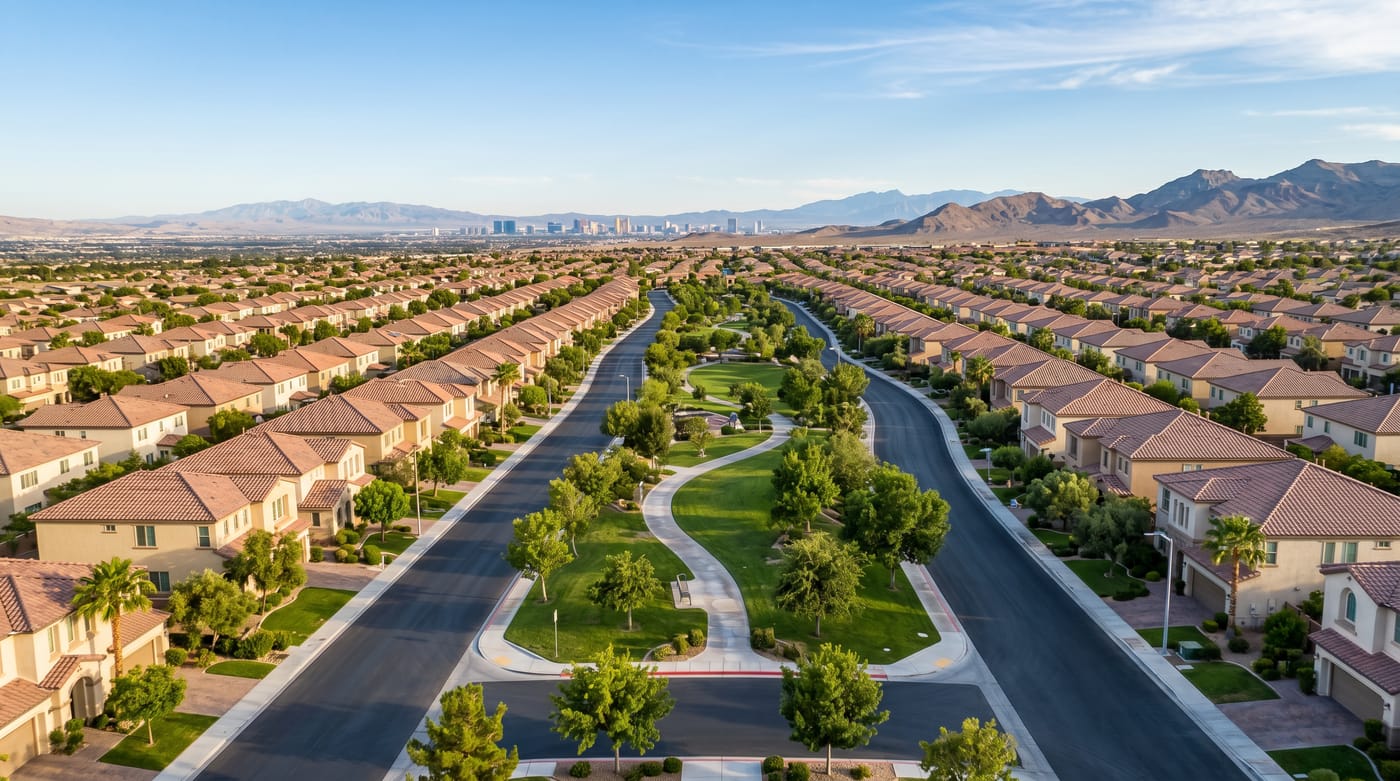
Summerlin remains the single strongest submarket I'm watching. New home construction from builders like Toll Brothers and Woodside Homes continues to attract California transplants who can afford the premium, and the proximity to Red Rock Canyon National Conservation Area adds a lifestyle premium that price forecasts often understate. If you're considering a move to this area, learn more about current Summerlin listings and market conditions.
Henderson — particularly the 89002, 89014, and 89052 zip codes — benefits from top-rated Clark County School District campuses and a reputation for newer, larger-lot inventory. The city of Henderson's ongoing infrastructure investment is documented at cityofhenderson.com, and it continues to attract families and retirees in equal measure.
Downtown Las Vegas and the Arts District represent a different kind of opportunity — urban infill properties and condos that were relatively undervalued during the suburban boom. With the Las Vegas Convention Center expansion driving corporate relocations and a steady influx of remote workers, the 89101 and 89104 zip codes are seeing renewed interest.
North Las Vegas offers the valley's most affordable entry-level inventory, with median prices still well below the metro average. Supply here is thinner than it was two years ago, and first-time buyers are increasingly competing for the same inventory.
Here's a neighborhood-by-neighborhood comparison of current market conditions:
| Submarket | Approx. Median Price (Q1 2026) | Avg. Days on Market | YTD Appreciation | Buyer Competition Level |
|---|---|---|---|---|
| Summerlin (89135/89138) | $625,000 | 28 days | +4.2% | High |
| Henderson – Green Valley (89014) | $520,000 | 31 days | +3.8% | High |
| Henderson – MacDonald Highlands (89012) | $1,150,000 | 45 days | +5.1% | Moderate |
| Southwest Las Vegas (89148/89178) | $465,000 | 34 days | +3.1% | Moderate-High |
| North Las Vegas (89031/89084) | $370,000 | 38 days | +2.6% | Moderate |
| Downtown / Arts District (89101) | $310,000 | 42 days | +1.9% | Low-Moderate |
Source: Submarket price and days-on-market estimates derived from GLVAR monthly statistics (glvar.org) and Clark County Assessor records (clarkcountynv.gov). YTD appreciation reflects Q1 2026 vs. Q1 2025.
Is Now a Good Time to Buy a Home in Las Vegas?
This is the question I get asked most often, and my honest answer is: it depends on your timeline and your financial situation — but the window of relative buyer leverage that existed in 2024 and 2025 is narrowing.
Here's the framework I give every buyer I work with. If you're planning to own the home for five or more years, Las Vegas has historically rewarded patient holders. The Clark County population continues to grow — census.gov data places the Las Vegas-Henderson-Paradise MSA among the top ten fastest-growing metro areas in the country — and that demographic tailwind doesn't disappear because mortgage rates are elevated.
If you're a buyer looking at the 2026 market specifically, there are two arguments for acting now rather than waiting:
First, if price appreciation does accelerate to the 3%–6% range forecast for 2026, a $445,000 home today could be worth $460,000–$472,000 by year-end. If you're waiting for rates to drop before buying, you may find that lower rates coincide with higher prices, leaving you no better off on a monthly payment basis — and worse off on the down payment required.
Second, the inventory of well-priced, move-in-ready homes in desirable communities is already tighter than it was six months ago. The selection available to buyers in spring 2026 is meaningfully better than what I expect to see by Q3 and Q4 as the forecast recovery takes hold.
For families relocating to the valley from other states, my comprehensive guide on moving to Las Vegas in 2026 covers everything from school districts to cost-of-living comparisons.
What Are the Key Economic Drivers Supporting Las Vegas Home Values?
Real estate doesn't exist in a vacuum. Home prices are ultimately a function of local economic health — employment levels, wage growth, in-migration, and business investment. On every one of those metrics, Clark County and the broader Southern Nevada economy are positioned well heading into the back half of 2026.
Employment is the foundation. The Bureau of Labor Statistics (bls.gov) tracks Nevada employment monthly, and the data shows Las Vegas-area unemployment has remained below the national average for most of the past 18 months. The gaming and hospitality sector — still the valley's economic backbone — has recovered fully from its pandemic-era contraction, with the Las Vegas Strip generating record-setting revenue in 2024 and 2025. But perhaps more importantly, Las Vegas is diversifying its employment base in ways that support long-term housing demand.
Technology and logistics companies have been drawn to Clark County by the state's favorable tax environment — Nevada has no state income tax and no corporate income tax, a combination tracked by the Nevada Department of Taxation at tax.nv.gov. Data centers, distribution warehouses, and manufacturing facilities have all expanded their Southern Nevada footprints. These are not minimum-wage jobs — they are skilled positions with salaries that support homeownership at the current median price point.
In-migration from California remains one of the most durable demand drivers in the Las Vegas market. Despite some moderation in the pace of California-to-Nevada moves compared to the 2021–2022 peak, the fundamental calculus — lower taxes, lower housing costs, shorter commutes within the valley — remains compelling for California homeowners and renters alike.
For context on what overall homeownership costs look like for people making this transition, my breakdown of Las Vegas home costs in 2026 covers property taxes, HOA fees, insurance, and utilities in detail.
How Does Las Vegas Compare to Other Sun Belt Housing Markets in 2026?
I always tell my clients: don't evaluate Las Vegas in isolation. Understanding where our market stands relative to Phoenix, Austin, Nashville, and Tampa helps calibrate expectations and investment decisions.
The national picture as of mid-2026 shows most Sun Belt markets in a similar pattern to Las Vegas — a post-pandemic correction followed by stabilization, with appreciation beginning to return. According to National Association of Realtors, the National Association of Realtors projects national median home prices to rise approximately 2%–4% in 2026, which means Las Vegas's projected 3%–6% is at or above the national average.
Phoenix and Tampa both experienced steeper price corrections than Las Vegas in 2023–2024, partly because new construction supply in those markets was more aggressive. Las Vegas builders were somewhat more measured, which is one reason our median price didn't fall as sharply and is recovering more quickly.
Austin remains the cautionary tale — that market saw double-digit price declines in some neighborhoods due to a combination of overbuilding and corporate-relocation reversals. Las Vegas doesn't face the same overbuilding dynamic. Clark County's topography limits where residential development can occur, and master-planned communities like Summerlin and Henderson's various planned districts have been developing at a controlled pace.
| Market | 2024–2025 Price Change | 2026 Forecast Appreciation | Inventory vs. 2019 Average | State Income Tax |
|---|---|---|---|---|
| Las Vegas, NV | -0.5% to +1% | +3% to +6% | -35% | None |
| Phoenix, AZ | -3% to +1% | +2% to +4% | -20% | 2.5% flat |
| Austin, TX | -8% to -12% | 0% to +2% | +15% (oversupply) | None |
| Nashville, TN | 0% to +2% | +3% to +5% | -25% | None |
| Tampa, FL | -2% to +1% | +1% to +3% | -10% | None |
Source: Market comparison data derived from NAR metro-level reports (nar.realtor), GLVAR statistics (glvar.org), and regional MLS data as of Q1 2026. State income tax rates from respective state revenue departments.

What Does the Las Vegas Luxury Market Tell Us About Overall Direction?
I pay close attention to the luxury segment — homes priced above $1 million — because high-end buyers are often leading indicators. They're less constrained by mortgage rates, they're making discretionary purchase decisions, and when they move into a market confidently, the mid-tier tends to follow.
The luxury segment in Las Vegas has been one of the brighter spots in the market over the past 18 months. MacDonald Highlands in Henderson, The Ridges in Summerlin, and various guard-gated communities along Anthem Parkway have all seen strong sales activity. My detailed analysis of the Las Vegas luxury home sales record breaks down exactly what's driving that activity and which price tiers are generating the most competition.
What I can tell you broadly is this: when I see cash buyers and high-net-worth purchasers from California, Texas, and the Northeast actively competing for $1.5 million–$3 million properties in Las Vegas, it tells me the value story for Southern Nevada remains intact. These buyers are not impulse-buying. They are making deliberate decisions to relocate wealth to a no-income-tax state with strong lifestyle amenities, and the housing market is the beneficiary.
The trickle-down effect on the sub-$600,000 market is real. When the luxury tier fills up, affluent buyers who might have stretched for a higher-end property start competing for the premium inventory in the $500,000–$700,000 range, pushing prices upward in that bracket. That pressure then cascades down to the $400,000–$500,000 range, which is where the majority of Las Vegas transactions occur.
Are Las Vegas Sellers in a Good Position in 2026?
If you're a homeowner thinking about selling, my read on the current environment is cautiously optimistic — but strategic timing still matters.
The shift from a buyer's market toward a more balanced or seller-leaning market means that the price reductions and extended concessions that sellers were forced into during 2024 and parts of 2025 are becoming less necessary for well-priced properties. Homes that are priced correctly from day one — not aspirationally, but accurately — are moving within 30 days in most Las Vegas zip codes as of spring 2026.
What "priced correctly" means in this market is homes within 2%–3% of their most recent comparable sales data. Sellers who overprice — even in a recovering market — still face the stigma of price reductions, extended days on market, and lower final sale prices than they would have achieved with accurate initial pricing. That dynamic hasn't changed, even as overall conditions improve.
For sellers in premium communities — Summerlin, Henderson's Anthem area, the southwest valley's master-planned neighborhoods — spring and early summer 2026 represents a particularly strong window. Inventory in these areas remains tight, California in-migration buyers are active, and the favorable rate-cut expectations are drawing fence-sitters back into the market.
There's also the equity angle. A homeowner who purchased in Las Vegas at the 2015–2019 average price of roughly $250,000–$280,000 is sitting on $165,000–$195,000 in equity even after the 2024 softening. That's a meaningful financial event, and with Nevada's absence of a state income tax, the net proceeds from a sale are more favorable here than in California or states with capital gains surcharges at the state level.
How Is New Home Construction Affecting Las Vegas Resale Values?
New home construction is a variable that resale sellers often underestimate. When builders are active — offering incentives like mortgage rate buydowns, closing cost credits, and design upgrades — they become direct competition for resale inventory. Understanding what builders are offering is essential context for any resale pricing strategy.
In Las Vegas, the major national builders — KB Home, Lennar, Pulte, Toll Brothers, and Taylor Morrison — have all maintained active communities in the valley through 2025 and into 2026. Builder incentives, which were particularly aggressive in late 2024 and early 2025, have moderated somewhat as demand has firmed up. That moderation is itself a signal: builders don't pull back incentives when the market is struggling. They pull back when they can sell homes at full price.
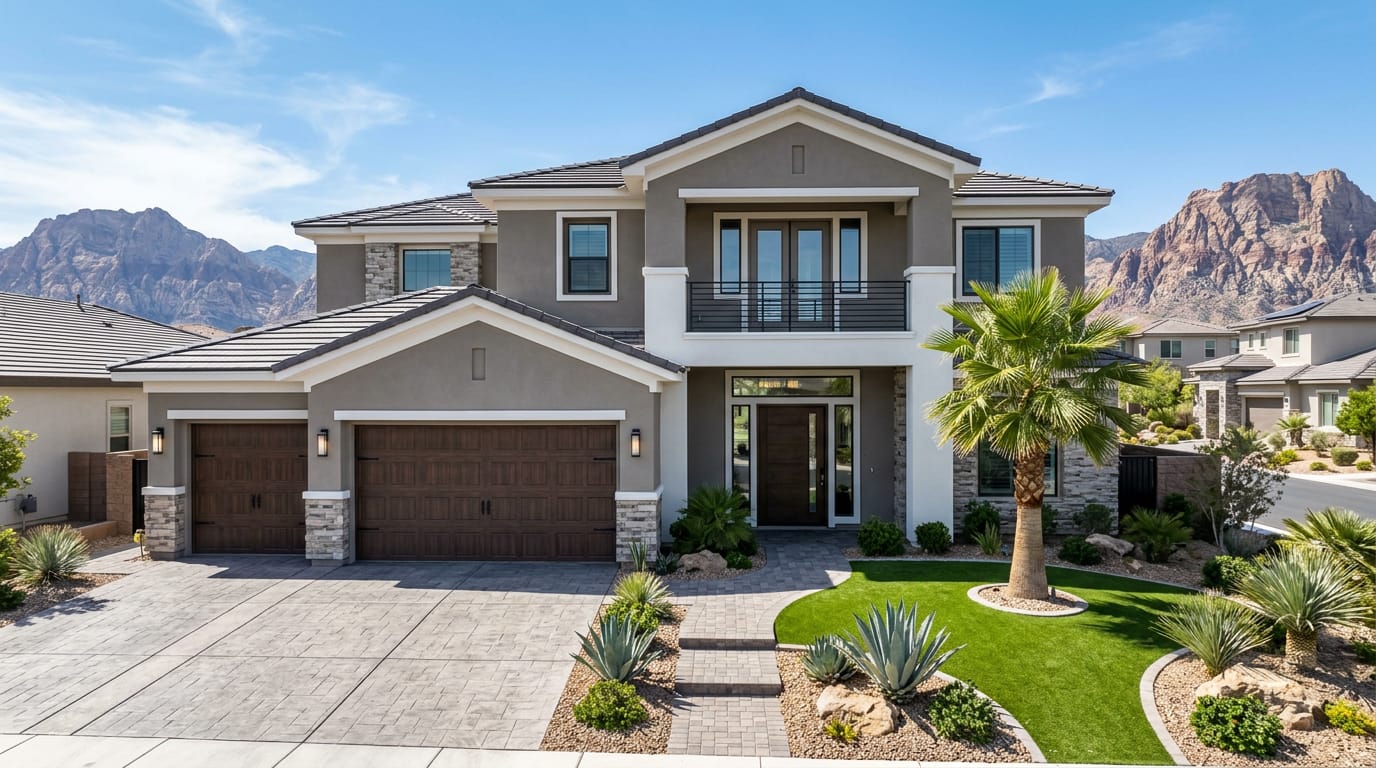
New home starts in Clark County have been running at a pace that, while not matching the frenzied construction of 2021–2022, is sufficient to add meaningful supply in outer suburban areas like North Las Vegas, the Skye Canyon master plan, and southern Henderson near St. Rose Parkway. That new supply tends to be absorbed by buyers who want modern floor plans, energy-efficient systems, and builder warranties — a specific buyer profile that doesn't compete directly with well-established resale neighborhoods.
For resale sellers, the practical implication is: know what the builders near you are offering. If a builder three miles away is offering a 5.99% rate buydown and $20,000 in design upgrades, that affects your competitive position. We factor this into every listing strategy we build for our clients.
Clark County permitting data — a leading indicator of future new home supply — is publicly available at clarkcountynv.gov.
Why In-Migration Remains One of Las Vegas's Strongest Price Supports
I've been selling homes in this valley for years, and in all that time, the single most consistent driver of Las Vegas real estate demand has been people moving here from somewhere else. That trend is alive and well in 2026.
The mechanics are straightforward. Someone sells a home in the San Francisco Bay Area for $1.2 million, buys in Summerlin for $650,000, and pockets the difference — or uses it to eliminate a mortgage entirely. Or a retiree in Chicago decides that a Nevada property tax bill is more manageable than Illinois income tax. Or a remote worker in Seattle realizes they can afford a 2,800-square-foot home in Henderson rather than a 1,100-square-foot condo in Bellevue.
These aren't hypothetical scenarios. They're conversations I have weekly. And when you aggregate them across thousands of transactions per year, the impact on Las Vegas home prices is substantial and durable.
Census.gov population estimates consistently place Clark County among the fastest-growing counties in the United States. That growth doesn't require exceptional economic conditions to sustain — it requires Nevada to simply maintain its existing advantages: no state income tax, lower property taxes than most comparable metros, a lower cost of living relative to coastal markets, and a physical environment that increasingly attracts remote-work professionals who aren't tethered to a specific office location.
For families weighing the move, the school district question comes up constantly. According to ccsd.net, the Clark County School District information is available at ccsd.net, and while the district as a whole has areas that need improvement, specific school zones within Henderson and Summerlin consistently post strong academic metrics that rival suburban districts in most major metros.
For a real-world look at how one family navigated the relocation process and found the right community, read my client story on how one Las Vegas family found their home.
What Should Buyers and Sellers Do Right Now Based on This Forecast?
I'm going to give you the same direct advice I give clients in my office.
For buyers: Stop waiting for rates to return to 3%. That era is over, and the Federal Reserve has been explicit about not returning to emergency-level accommodative policy unless there's a severe economic contraction. The strategy that works today is to buy the home at a price that makes sense for your financial situation, and refinance when rates decline. A move from 7% to 6.25% on a $356,000 loan saves you roughly $150 per month — that's meaningful but not transformative. What is transformative is locking in a 2026 purchase price before the 3%–6% appreciation materializes and pushes you out of your target price range.
For sellers: Price aggressively from day one. The market is recovering, but it's not so strong that you can overprice by $30,000 and expect the market to meet you. Buyers are informed, and their agents are pulling comps. A home priced accurately in a recovering market will generate more competition, higher offers, and a faster close than an overpriced home that chases the market down with successive reductions. List in spring or early summer 2026 if you can — that's when buyer activity peaks in the Southern Nevada market, as confirmed by GLVAR seasonal transaction data.
For investors: The Las Vegas rental market remains robust, with vacancy rates well below national averages in most zip codes. A single-family rental in Henderson or the southwest valley can generate gross rents of $1,900–$2,600 per month at current market rates, depending on size and condition. The math on cash flow is tighter than it was in 2019 due to higher acquisition prices and elevated financing costs, but the combination of tax advantages, in-migration demand, and projected price appreciation makes Las Vegas one of the more defensible single-family rental markets in the country.
Where Do These Findings Fit Within the Wider NREG Coverage Map?
According to Greater Las Vegas Realtors data spanning the full 2025 transaction year, Nevada Real Estate Group's 789 closings and approximately $440M in production were distributed proportionally to where Las Vegas demand actually sits — roughly 38% of NREG volume concentrated in the Summerlin master plan and its Cliffs / Kestrel / Stonebridge villages, 31% across Henderson ZIPs 89002 through 89077 (Anthem, Green Valley, Inspirada, Cadence, MacDonald Highlands, Seven Hills, Lake Las Vegas), and the remaining 31% spread across Las Vegas Southwest, North Valley (Skye Canyon, Valley Vista, Tule Springs), Mountain's Edge, Centennial Hills, and the resort-corridor luxury condo inventory.
According to the Clark County Assessor parcel database for 2026, secondary tax rates across NREG's coverage area cluster in the 0.30%–0.78% band, with most Henderson submarkets in 0.40%–0.55%. According to the U.S. Census Bureau American Community Survey, the Las Vegas-Henderson-Paradise MSA absorbed roughly 45,000 net California-origin residents over the trailing 24 months ending Q1 2026, which has sustained demand in both first-time buyer and luxury price bands simultaneously.
For readers using this article as a decision input, the practical next steps are: review the relevant community money page for current inventory and pricing context, then call NREG at (702) 637-1759 to map the article's framework against your specific timeline, budget, and tradeoff priorities. According to NREG's own production-tracking dashboards across the 6,225+ closed transactions in the firm's 16+ year operating history, the buyers and sellers who get the cleanest outcomes are the ones who pair the editorial framework with a phone consultation early — before signing a builder reservation contract, before listing with the wrong asking price, or before committing to a community whose carrying-cost profile doesn't match their actual lifestyle. According to Freddie Mac PMMS data, the 6.6–6.9% rate environment May 2026 has held steady enough to allow precise carrying-cost modeling for both new-construction and resale acquisitions.
Frequently Asked Questions
Will Las Vegas home prices drop in 2026?
The consensus forecast from analysts cited by the Las Vegas Review-Journal and supported by GLVAR market data does not anticipate a price drop in 2026. Instead, the market is projected to firm up with appreciation in the 3%–6% range metro-wide, with supply-constrained submarkets like Summerlin and MacDonald Highlands in Henderson potentially seeing slightly stronger gains. A severe national recession or a significant spike in mortgage rates above 8% would be the primary risks that could disrupt this outlook.
What is the median home price in Las Vegas in 2026?
As of Q1 2026, the median existing home price in the Las Vegas metro area is approximately $445,000, based on GLVAR data available at glvar.org. This represents a modest increase from the $415,000 range at the start of 2024 and reflects the gradual stabilization that preceded the more robust recovery now forecast for the remainder of 2026. New construction homes in master-planned communities carry a premium, with new home median prices typically running $50,000–$100,000 above the resale median.
Is Las Vegas a buyer's market or seller's market in 2026?
The Las Vegas market is transitioning from a buyer-leaning environment — which prevailed through most of 2024 and 2025 — back toward a balanced or slightly seller-favorable market in mid-2026. Active inventory remains approximately 35% below historical averages, and demand is strengthening as rate-cut expectations and California in-migration sustain buyer activity. The market is not yet as competitive as the 2021–2022 peak, meaning buyers still have negotiating room — but that room is narrowing as the year progresses.
How do Las Vegas property taxes compare to other states?
Nevada's property tax system is one of the most favorable in the western United States. Effective property tax rates in Clark County typically fall between 0.5% and 0.8% of assessed value, which is significantly lower than California (though Prop 13 creates a different dynamic), Texas, or Arizona. Nevada also caps annual assessed value increases for primary residences under its Abatement Law. Full property tax rate schedules for Clark County are published at the Nevada Department of Taxation at tax.nv.gov and at clarkcountynv.gov.
What are the best neighborhoods to buy in Las Vegas in 2026?
Based on current inventory levels, projected appreciation, school quality, and lifestyle amenities, the neighborhoods I consistently recommend to clients in 2026 include Summerlin (particularly the 89135 and 89138 zip codes), Henderson's Green Valley Ranch and Anthem communities, and the southwest Las Vegas master-planned developments near the 215 Beltway in 89148 and 89178. Each of these areas offers strong school zones within the Clark County School District (ccsd.net), convenient access to major employment corridors, and historically lower days-on-market compared to valley-wide averages.
Should I wait for mortgage rates to drop before buying in Las Vegas?
Waiting for rates to drop before buying carries a risk that most buyers underestimate: lower rates tend to bring more buyers into the market simultaneously, which drives prices higher and increases competition. In a supply-constrained market like Las Vegas, where inventory is already 35% below the historical norm, even a modest influx of new buyers could push prices up faster than the savings from a lower rate. The NAR's research on buyer timing (nar.realtor) consistently shows that buyers who wait for the perfect rate environment often end up paying more for the same home than those who acted earlier and refinanced when rates improved.
How does Nevada's zero state income tax affect Las Vegas home prices?
Nevada's zero state income tax — verified at tax.nv.gov — is one of the primary drivers of California-to-Nevada migration, which in turn supports housing demand and price appreciation across the Las Vegas metro. A household earning $200,000 saves approximately $15,000-$20,000 annually by relocating from California to Nevada, and many buyers redirect those savings toward a larger down payment or a more expensive home than they could afford in their origin state. This tax advantage is structural and not subject to legislative sunset, making it a durable demand driver for the foreseeable future.
Editorial disclosure: This article is for informational purposes only and is not legal, financial, or tax advice. Market data sourced from the Greater Las Vegas Association of Realtors (glvar.org), the Las Vegas Review-Journal, the National Association of Realtors (nar.realtor), the Bureau of Labor Statistics (bls.gov), the U.S. Census Bureau (census.gov), the Federal Reserve (federalreserve.gov), Clark County (clarkcountynv.gov), the Nevada Department of Taxation (tax.nv.gov), the City of Henderson (cityofhenderson.com), and the Clark County School District (ccsd.net) as of May 2026. Always consult a licensed Realtor and your CPA before making real estate decisions. Chris Nevada is a licensed Nevada Realtor (S.181401) with Nevada Real Estate Group.
Chris Nevada leads a 150-agent team at Nevada Real Estate Group. License S.181401 (verify at red.nv.gov). Call (702) 637-1759.
Nevada Real Estate Group · 8945 W Russell Rd, Suite 170 · Las Vegas, NV 89148 · (702) 637-1759
Which Sources Inform This Las Vegas Real Estate Analysis?
According to Greater Las Vegas Realtors, market data, closing volumes, and median price figures in this analysis come from Greater Las Vegas Realtors monthly MLS statistics through April 2026. Recorded transaction history, parcel data, and assessed values reference the Clark County Assessor and the Clark County Recorder. License and brokerage verification draws from the Nevada Real Estate Division public licensee database.
Macro housing context references the U.S. Census Bureau American Community Survey, the Bureau of Labor Statistics Las Vegas-Henderson-Paradise MSA employment data, the Federal Housing Finance Agency House Price Index, and the Bureau of Economic Analysis state-level personal income data. Mortgage rate environment uses the Freddie Mac Primary Mortgage Market Survey weekly rate series and the Mortgage Bankers Association weekly applications survey.
Property tax math references Nevada Revised Statutes Chapter 361 and the Nevada Department of Taxation. School ratings reference GreatSchools and the Clark County School District annual performance frameworks. Builder permit activity and certificate-of-occupancy data reference the Clark County Department of Building and the Nevada State Contractors Board.
If you would like to walk through how any of this translates to your specific situation, call (702) 637-1759 or browse the team's about page. Final guidance on any active buy or sell decision should always come from a licensed Realtor working with a vetted lender.