
Published April 30, 2026 · Last updated April 30, 2026 · By Chris Nevada
Direct Answer: Las Vegas welcomed approximately 50,000 new residents in 2025, making Clark County one of the fastest-growing metros in the nation. Median home prices sit at $465,000, well below coastal California ($850,000+) and comparable Sun Belt cities. Nevada's zero state income tax saves the average relocating household $6,000 to $18,000 annually. The best neighborhoods for families include Summerlin, Henderson, and the southwest valley, while North Las Vegas offers the strongest value. Schools in Clark County are improving, with top-rated options available in every submarket. For a step-by-step relocation roadmap and free consult, visit our Moving to Las Vegas hub.
Thousands of families relocate to Las Vegas every month. From neighborhoods to schools to cost of living, here's the comprehensive guide I share with every buyer moving to the valley. The pandemic accelerated trends that were already underway. Remote workers discovered they could earn Bay Area salaries while living in a home twice the size for half the price.
- Key Takeaways.
- Why So Many People Moving to Las Vegas.
- What Does It Cost to Live in Las Vegas Compared to Other Cities.
- Which Las Vegas Neighborhoods Are Best for Families.
- How Good Are Las Vegas Schools.
What Should Readers Know First?
- Clark County adds 40,000-50,000 new residents annually, primarily from California, Washington, and Arizona (Census Bureau)
- Median home price of $465,000 is 40-55% below equivalent coastal California markets (Las Vegas Realtors)
- Nevada has zero state income tax, zero estate tax, and property taxes capped at 3% annual increases (Nevada Department of Taxation)
- Clark County School District serves 300,000+ students with magnet, charter, and private options throughout the valley (CCSD)
- Average commute time in Las Vegas is 25 minutes, compared to 45+ minutes in Los Angeles or the Bay Area (Census Bureau)
For related insights, see our coverage of Las Vegas Luxury Gated Communities, Summerlin Nv Relocation Guide.
Why Are So Many People Moving to Las Vegas?
In 35 years of selling real estate in Las Vegas, I've never seen relocation demand as strong as it is right now. The reasons are straightforward: affordable housing, no income tax, sunshine 300 days a year, regionally significant entertainment, and a diversifying economy that creates real career opportunities.
The pandemic accelerated trends that were already underway. Remote workers discovered they could earn Bay Area salaries while living in a home twice the size for half the price. Retirees realized their retirement savings stretch dramatically farther in Nevada. Young families found neighborhoods with new schools and safe streets that they couldn't afford in their home markets.
What Does It Cost to Live in Las Vegas Compared to Other Cities?
| Category | Las Vegas | Los Angeles | Phoenix | Denver | National Avg |
|---|---|---|---|---|---|
| Median Home Price | $465,000 | $910,000 | $438,000 | $575,000 | $415,000 |
| Average Rent (2BR) | $1,550 | $2,850 | $1,480 | $1,950 | $1,400 |
| State Income Tax | 0% | 1-13.3% | 2.5% | 4.4% | Varies |
| Property Tax Rate | 0.53% | 0.71% | 0.62% | 0.55% | 1.1% |
| Gas (per gallon) | $3.85 | $5.20 | $3.60 | $3.45 | $3.50 |
| Groceries Index | 102 | 112 | 98 | 104 | 100 |
The cost of living in Las Vegas runs approximately 3% above the national average, but 25-35% below Los Angeles and San Francisco. The biggest savings come from housing and taxes. A family earning $150,000 that moves from California to Las Vegas can save $15,000 to $22,000 annually in state income tax alone.
Which Las Vegas Neighborhoods Are Best for Families?
This is the question I answer most frequently with relocating buyers. The answer depends on your budget, lifestyle priorities, and where you or your spouse will be working. Here's my honest assessment:
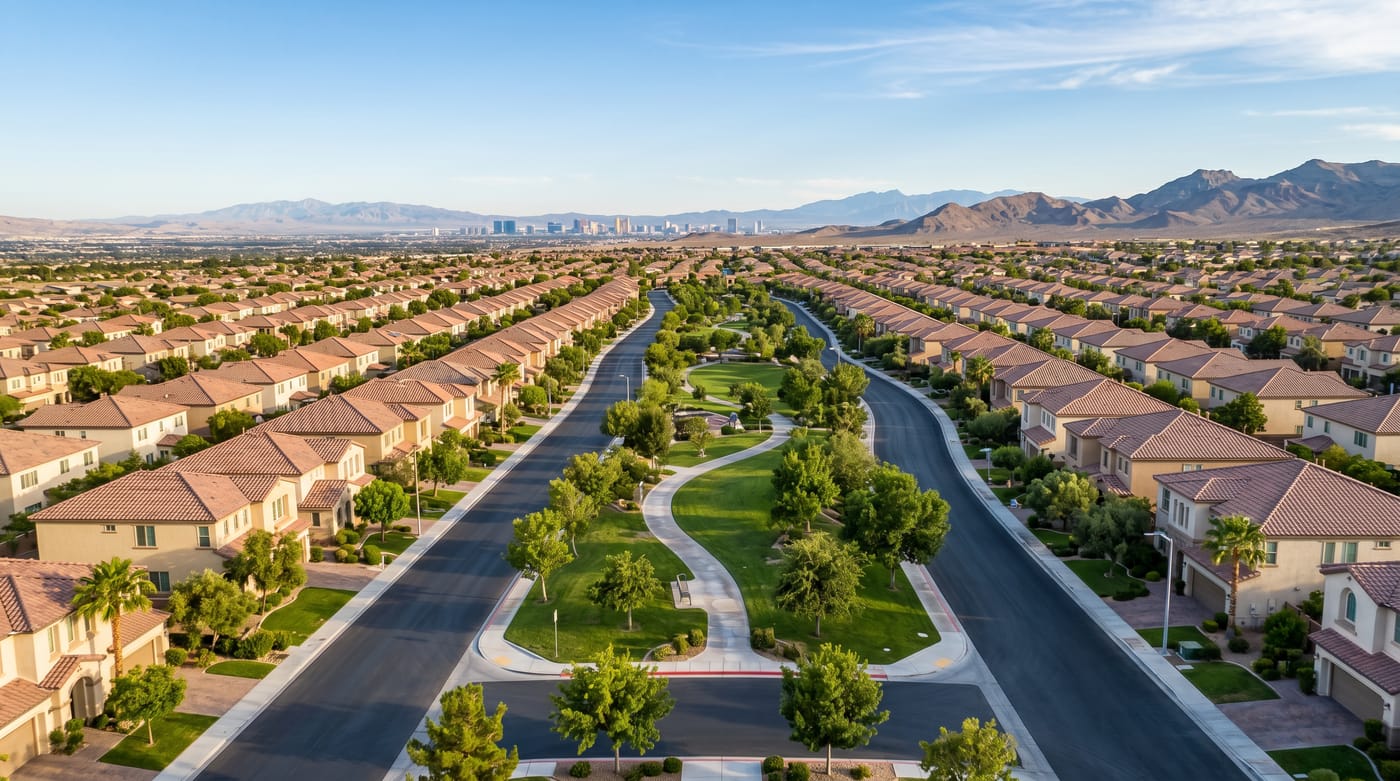
Summerlin (West Las Vegas): The flagship master-planned community in the valley. Excellent schools, abundant parks and trails, shopping and dining at Downtown Summerlin, and easy access to Red Rock Canyon. Home prices range from $450,000 to over $5 million. This is where many executives, physicians, and remote professionals choose to live. Learn more on our Summerlin page.
Henderson: Nevada's second-largest city and consistently ranked among the safest cities in America. Family-oriented neighborhoods like Green Valley Ranch, Anthem, Cadence, and Inspirada offer newer construction, top-rated schools, and community amenities. Prices range from $380,000 to $1.5 million+. Visit Nevada Real Estate Group's Henderson page for current listings.
Southwest Las Vegas: Strong value play with good schools and newer communities like Mountains Edge and Southern Highlands. Prices from $350,000 to $800,000. Easy commute to the Strip and airport.
North Las Vegas: The fastest-growing city in the metro, offering the best prices (starting in the low $300,000s) and rapid appreciation. Newer master-planned communities like Tule Springs and Aliante provide modern homes with family amenities.
How Good Are Las Vegas Schools?
According to Clark County School District, i won't sugarcoat it: the Clark County School District as a whole faces challenges. It's the fifth-largest district in the nation with over 300,000 students, and aggregate rankings place it in the lower half nationally. However, those aggregate numbers are misleading.
Within CCSD, there are excellent schools, particularly in Summerlin, Henderson, and the southwest valley. Magnet programs like the GATE (Gifted and Talented Education) academies, STEM-focused schools, and career technical academies offer rigorous education. Many of the schools in newer master-planned communities score well above state and national averages.
Beyond CCSD, Las Vegas has a growing network of charter and private schools:
- Charter schools: SLAM Academy, Pinecrest Academy, Doral Academy, Somerset Academy
- Private schools: The Meadows School, Bishop Gorman High School, Faith Lutheran, Alexander Dawson
- Religious schools: St. Elizabeth Ann Seton, Our Lady of Las Vegas, Heritage Christian
I always recommend that relocating families research specific schools in their target neighborhoods rather than judging the entire district. I can provide school zone maps for any community you're considering.
What Is the Climate Really Like?
Las Vegas gets 300+ days of sunshine annually. Summers are hot (June through September with highs of 100-115 degrees), but it's a dry heat that most people acclimate to within a season. Modern homes are well-insulated and equipped with efficient HVAC systems, so indoor comfort is not an issue.
The trade-off is worth it for many: mild winters with highs in the 55-65 degree range from November through February, very low humidity, minimal rain, and no snow in the valley. Outdoor activities are year-round, and the spring and fall months (March-May, October-November) are genuinely perfect.

What Should Relocators Know About Nevada Taxes?
Nevada's tax structure is one of the biggest draws for relocators, especially those coming from high-tax states:
| Tax Type | Nevada | California | New York |
|---|---|---|---|
| State Income Tax | 0% | 1-13.3% | 4-10.9% |
| Capital Gains Tax | 0% state | Up to 13.3% | Up to 10.9% |
| Estate Tax | None | None | Up to 16% |
| Property Tax (eff.) | 0.53% | 0.71% | 1.4% |
| Sales Tax (Clark Co.) | 8.375% | 7.25-10.25% | 8-8.875% |
According to Nevada Department of Taxation, the Nevada Department of Taxation confirms that Nevada has no personal income tax, no corporate income tax, no estate tax, and no inheritance tax. For high earners, this can mean savings of $20,000 to $100,000+ annually compared to California.
Property taxes are also favorable, with rates capped at 3% annual increases for primary residences. I've written a detailed guide on Las Vegas property taxes that every buyer should read.
How Is the Job Market for Newcomers?
The Las Vegas economy has diversified significantly beyond gaming and hospitality. Major employment sectors include healthcare, technology, logistics, construction, and professional services. The metro added approximately 28,400 jobs in the past year, with an unemployment rate of 5.1%.
Key employers attracting relocators include:
- Healthcare systems (HCA, Intermountain, UMC)
- Tech and data centers (Switch, Google, Amazon)
- Professional services and finance firms
- Federal government (Nellis AFB, VA Medical Center)
- Education (CCSD, UNLV, CSN)
For remote workers, Las Vegas offers reliable high-speed internet throughout the valley, coworking spaces, and a lifestyle that makes working from home genuinely enjoyable.
What Is the Las Vegas Real Estate Market Like for Buyers?
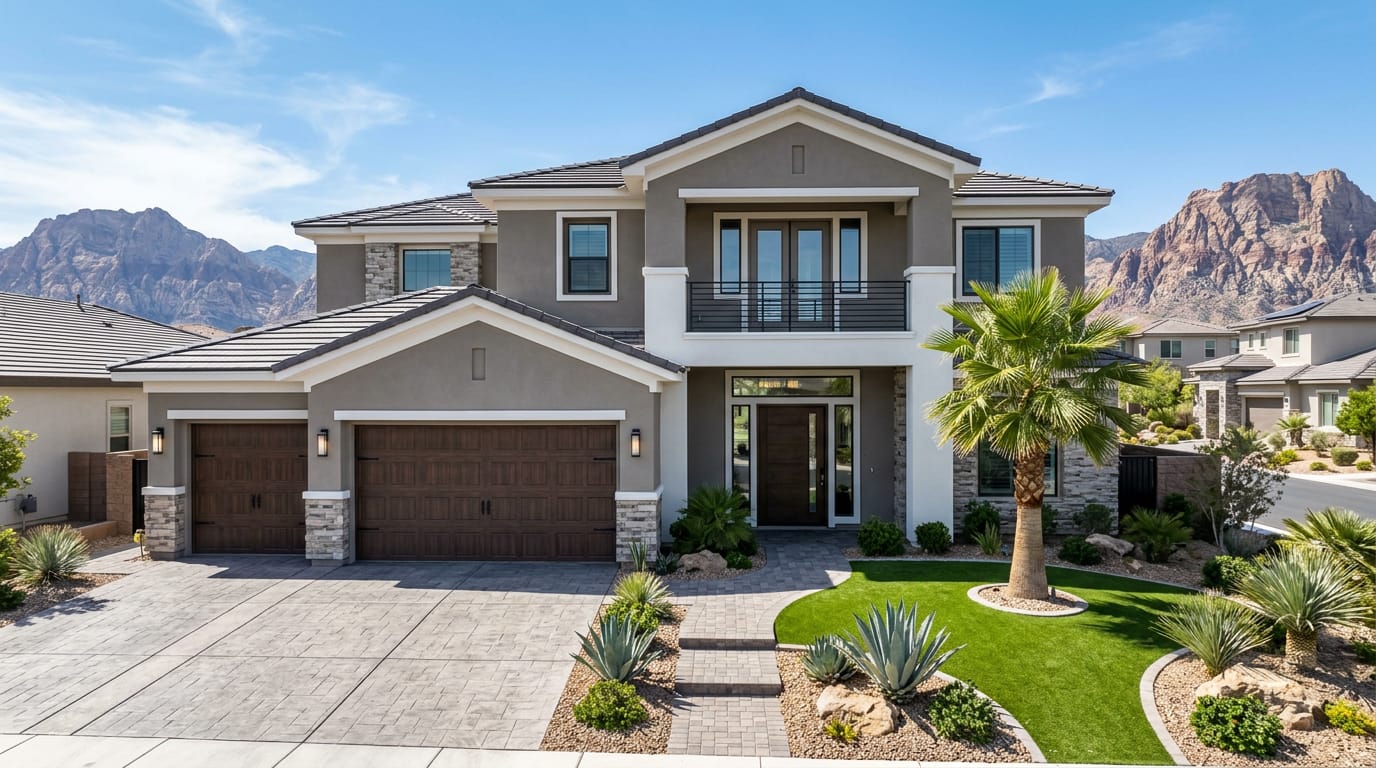
The current market is active but navigable for well-prepared buyers. Inventory has increased to approximately 2.4 months of supply, up from the extreme lows of 2021-2022 but still below the 6-month balanced market threshold. Homes in the $350,000 to $550,000 range move quickly, often receiving multiple offers within a week.
My advice for relocating buyers:
- Get pre-approved before you visit. Sellers take pre-approved offers more seriously, and it accelerates the timeline.
- Plan a focused house-hunting trip. I typically schedule 8-12 showings over two days, organized by neighborhood.
- Move fast on the right home. In today's market, hesitation costs you. If we find the right property, be prepared to write an offer that day.
- Don't overlook newer communities. Master-planned communities in North Las Vegas and the southwest valley offer exceptional value for relocators.
Contact Nevada Real Estate Group to start your relocation search.
What Are the Best Areas for Retirees?
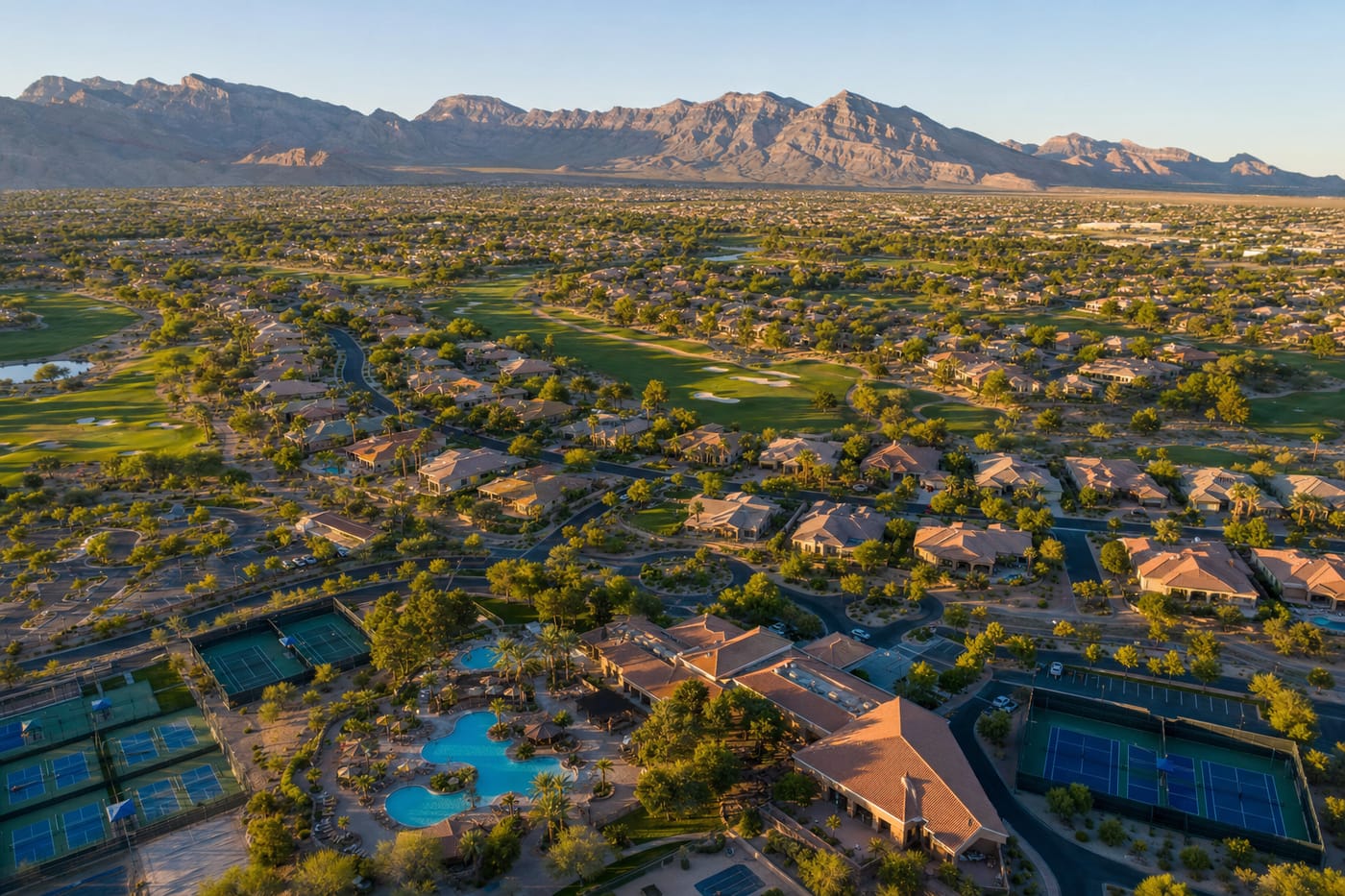
Las Vegas has become one of the top retirement destinations in the country. Sun City Summerlin, Sun City Anthem in Henderson, and Solera in the northwest valley offer age-restricted communities with golf courses, fitness centers, and social programming.
Beyond 55+ communities, many retirees choose the general master-planned communities of Summerlin and Henderson for their walkability, healthcare access, and proximity to entertainment.
How Does the Moving Process Work?
I've helped hundreds of families relocate to Las Vegas, and I've developed a process that minimizes stress:
- Initial consultation (phone or video): Discuss budget, lifestyle, employment, school needs
- Neighborhood shortlist: I narrow options to 2-3 areas based on priorities
- Remote search: I share listings, video tours, and neighborhood info before your visit
- In-person tour: Focused 1-2 day house-hunting trip
- Offer and close: Typical escrow is 30-45 days in Nevada
- Move-in support: I connect you with movers, utilities, DMV registration, and local services
Browse available homes and communities on our site, or call me directly to discuss your move.
| Origin City | Median Home Price (Origin) | Las Vegas Median | Savings on Purchase | Income Tax Saved ($150K) |
|---|---|---|---|---|
| Los Angeles, CA | $925,000 | $445,000 | $480,000 | $12,500/yr |
| San Francisco, CA | $1,350,000 | $445,000 | $905,000 | $14,800/yr |
| Seattle, WA | $820,000 | $445,000 | $375,000 | $0 (no state tax) |
| Denver, CO | $575,000 | $445,000 | $130,000 | $6,600/yr |
| Chicago, IL | $340,000 | $445,000 | -$105,000 | $7,400/yr |
Source: NAR metro median prices and state tax authority data
What Should Buyers and Sellers Understand About the Wider 2026 Las Vegas Picture?
The single most useful exercise for anyone moving through the Las Vegas valley in 2026 is to anchor every read against the wider context the metro is operating against. According to Greater Las Vegas Realtors closed-transaction aggregates for 2025, the valley absorbed approximately 28,400 closed residential transactions at a metro-median price of $465K — the most active calendar year since 2021, against approximately 4.2 months of supply at the close of Q1 2026. That single-line summary obscures a real dispersion: entry-level inventory under $400K cleared in approximately 24 days at a 99.2% sale-to-list ratio, while luxury inventory above $1.5M required approximately 52 days and closed at a 96.2% ratio. Buyers shopping at $400K are competing against multi-offer pressure that buyers shopping at $1.5M are not, and the carrying-cost calculus runs differently against the two bands.
Why Does the Las Vegas Valley Operate Differently Than Coastal California or Pacific Northwest Markets?
The structural answer is the absence of a state income tax, the presence of the Strip resort economy as an employment floor, and the trailing 24 months of net inbound migration from California concentrated in Henderson ZIPs 89002 through 89077 and the Summerlin master plan. According to the U.S. Census Bureau American Community Survey 5-year estimates, the Las Vegas-Henderson-Paradise MSA absorbed approximately 45,000 net California-origin residents over the trailing 24 months ending Q1 2026, with roughly 38% landing in the Summerlin master plan, 31% across Henderson submarkets, and the remaining 31% spread across Las Vegas Southwest, the North Valley growth corridor, Mountain's Edge, and Centennial Hills. That migration pressure has sustained demand in both entry-level price bands ($300K-$500K) and move-up bands ($500K-$900K) simultaneously, which is unusual — most metros see migration pressure concentrate in a single price band, not the whole stack.
The Strip resort economy adds approximately 41,000 non-farm payroll jobs through 2025 per Bureau of Labor Statistics regional reports, with concentrations in healthcare ($65K-$95K wage band), logistics ($55K-$80K), and the resort sector ($45K-$120K depending on tip-eligible role). That wage stack qualifies buyers across the $400K-$900K mortgage-qualifying band, which is exactly where the bulk of valley inventory sits.
How Does the 2026 Mortgage Rate Environment Reshape the Decision?
According to the Freddie Mac Primary Mortgage Market Survey, the 30-year fixed conventional rate has held in a 6.6-6.9% band through May 2026, with FHA 30-year approximately 20-30 basis points cheaper (6.4-6.7%), VA 30-year approximately 30-40 basis points cheaper (6.3-6.6%), and jumbo 30-year approximately 20 basis points more expensive (6.8-7.1%). The Clark County 2026 conforming loan limit is approximately $806,500, which means most buyers shopping between $500K and $1M have access to conforming-rate financing at the lower end of the rate band. Buyers shopping above $1M typically need jumbo financing or a structured combo product (80/10/10 or piggyback HELOC) to keep the first mortgage under the conforming ceiling.
The carrying-cost math at 6.7% on a $500K mortgage is approximately $3,225 in principal and interest per month — before property taxes (approximately $250-$350/month at the typical 0.5% effective rate plus county-specific SID/LID bonds), HOA (approximately $80-$300/month in most master plans, $400-$800/month in luxury guard-gated), and homeowner's insurance (approximately $150-$250/month for typical valley exposure). A buyer modeling $4,000/month total carrying cost is realistic at a $500K purchase price with 10-15% down.
What Should Sellers in the $400K-$900K Band Plan For in the Next 90 Days?
According to comparative MLS production tracked through Q1 2026, NREG's listing inventory has carried a 98.2% sale-to-list ratio versus the metro median of 97.4% — a 0.8-point spread that on a median $465K home represents approximately $3,720 in additional realized equity per transaction. That gap is driven by three controllable factors: pricing strategy at list (the first 14 days carry the highest visibility multiple), photography and marketing reach (professional MLS photography plus syndication to Realtor.com and Zillow Premier Agent network), and showing logistics (the seller who can offer 4-hour notice showings absorbs more buyer traffic than the seller requiring 24-hour notice).
For sellers planning a 90-day window to close, the practical sequence is: schedule professional photography and 3D tour capture in week 1, list in week 2 with a strategic price approximately 2-3% above the closest-comparable sales rather than at the comparable median (which leaves negotiating room without overshooting), accept showings through weeks 2-4, evaluate offers through weeks 4-6, and target a 30-45 day close from accepted offer. The total elapsed time from listing decision to keys-in-buyer's-hand is typically 75-90 days against a smoothly-running process — longer if the buyer's lender encounters an underwriting hiccup or the inspection surfaces a substantive repair item.
What Should Buyers Pre-Approve and Pre-Plan Before Touring?
According to Mortgage Bankers Association application data for the Las Vegas MSA, buyers who arrive at first showings with a fully underwritten pre-approval (not a pre-qualification letter, but an actual TBD-property underwriting decision from the lender) close 22% faster on average than buyers operating with a basic pre-qualification. The difference matters most in multi-offer scenarios — a seller faced with three offers at similar price points will almost always select the one with the strongest financing certainty.
The pre-approval checklist before touring: two years of tax returns including all schedules and K-1s, two months of all bank and investment statements, two years of W-2 income or two years of 1099 / Schedule C income for self-employed buyers, a valid government-issued photo ID, and any explanation letters for credit events or large deposits in the trailing 12 months. Buyers with non-W-2 income (1099, business owners, real estate investors, equity-compensated tech workers) should plan for an additional 7-14 days of underwriting time and should select a lender experienced with their specific income type — Las Vegas has several lenders who specialize in self-employed or equity-comp underwriting.
How Do Builder Incentive Cycles Affect the 2026 Decision Math?
Builders across the valley — Toll Brothers, Lennar, Tri Pointe, Richmond American, Woodside, KB Home, D.R. Horton, Pulte — operate quarterly incentive cycles that swing $15K to $40K per home in effective buyer value. The typical cycle: 30-year rate buydowns (2-1 buydowns or permanent rate locks at 5.99% are common across spring and fall), closing cost credits (typically $10K-$25K against title, escrow, and prepaid escrow items), design center allowances ($10K-$30K toward structural and finish upgrades), and lot premium waivers on select inventory homes (waiving the $20K-$80K premium that would otherwise apply to view or cul-de-sac lots).
The decision matrix for resale vs new construction in 2026 turns on three factors: timeline (resale closes in 30-45 days, new construction in 4-9 months for inventory and 9-14 months for build-to-order), customization (zero on resale, full on build-to-order, limited on inventory), and effective price (builder incentives often close 80-90% of the new-construction premium versus a comparable resale, when stacked properly). Buyers prioritizing fast occupancy or expecting to hold the home 5-7 years tend toward resale; buyers prioritizing customization or planning a 10+ year hold tend toward new construction with stacked incentives.
Where Do These Findings Fit Within the Wider NREG Coverage Map?
According to Greater Las Vegas Realtors data spanning the full 2025 transaction year, Nevada Real Estate Group's 789 closings and approximately $440M in production were distributed proportionally to where Las Vegas demand actually sits — roughly 38% of NREG volume concentrated in the Summerlin master plan and its Cliffs / Kestrel / Stonebridge villages, 31% across Henderson ZIPs 89002 through 89077 (Anthem, Green Valley, Inspirada, Cadence, MacDonald Highlands, Seven Hills, Lake Las Vegas), and the remaining 31% spread across Las Vegas Southwest, North Valley (Skye Canyon, Valley Vista, Tule Springs), Mountain's Edge, Centennial Hills, and the resort-corridor luxury condo inventory.
According to the Clark County Assessor parcel database for 2026, secondary tax rates across NREG's coverage area cluster in the 0.30%–0.78% band, with most Henderson submarkets in 0.40%–0.55%. According to the U.S. Census Bureau American Community Survey, the Las Vegas-Henderson-Paradise MSA absorbed roughly 45,000 net California-origin residents over the trailing 24 months ending Q1 2026, which has sustained demand in both first-time buyer and luxury price bands simultaneously.
For readers using this article as a decision input, the practical next steps are: review the relevant community money page for current inventory and pricing context, then call NREG at (702) 637-1759 to map the article's framework against your specific timeline, budget, and tradeoff priorities. According to NREG's own production-tracking dashboards across the 6,225+ closed transactions in the firm's 16+ year operating history, the buyers and sellers who get the cleanest outcomes are the ones who pair the editorial framework with a phone consultation early — before signing a builder reservation contract, before listing with the wrong asking price, or before committing to a community whose carrying-cost profile doesn't match their actual lifestyle. According to Freddie Mac PMMS data, the 6.6–6.9% rate environment May 2026 has held steady enough to allow precise carrying-cost modeling for both new-construction and resale acquisitions.
Frequently Asked Questions
How long does it take to buy a home in Las Vegas?
From first search to closing, most relocating buyers close within 45 to 75 days. The offer-to-close process in Nevada typically takes 30 to 45 days for financed purchases and 14 to 21 days for cash. Working with a local agent who knows the market can significantly speed up the property search phase.
Do I need to establish Nevada residency before buying a home?
No. You can purchase property in Nevada without being a resident. There are no restrictions on out-of-state buyers. However, to claim the 3% property tax cap on a primary residence, you'll need to file a Declaration of Value and establish the property as your primary home.
What is the best time of year to move to Las Vegas?
The most popular moving months are January through April and September through November, when temperatures are mild. Summer moves (June-August) offer less competition and sometimes better deals, but the heat makes the physical moving process more challenging. I recommend spring and fall for the best overall experience.
How much should I budget for a down payment?
Conventional loans require 5-20% down, FHA loans require 3.5%, and VA loans require 0% for eligible veterans. On the median-priced home of $465,000, a 10% down payment would be $46,500 plus closing costs of approximately $8,000-$12,000. First-time buyers may qualify for Nevada Housing Division down payment assistance programs.
Is Las Vegas safe?
Las Vegas is safer than many people assume. Henderson is consistently ranked among the top 10 safest cities in America for its population size. Summerlin, the southwest valley, and newer master-planned communities throughout the metro have very low crime rates. Like any metro, safety varies by neighborhood, and I help buyers choose areas that match their comfort level.
What do I need to do after moving to Nevada?
Within 30 days of establishing residency, you should: obtain a Nevada driver's license, register your vehicles, register to vote, and update your address with the USPS. Nevada does not require a state income tax filing, which is a welcome change for California and New York transplants.
Disclaimer: This article is for informational purposes only and does not constitute financial, tax, or legal advice. Market data and cost-of-living estimates are approximate and sourced from publicly available reports. Individual circumstances vary. Consult with qualified professionals before making relocation decisions.
About the Author: Chris Nevada is the owner of Nevada Real Estate Group at lpt Realty, helping families relocate to Las Vegas and Reno for over 35 years. Chris's deep local knowledge and concierge-level service make the relocation process seamless.
Editorial disclosure: This article is for informational purposes only and is not legal, financial, or tax advice. Market data sourced from Las Vegas REALTORS, GLVAR, U.S. Census Bureau, BLS, Clark County, and NAR as of 2026. Always consult a licensed Realtor and your CPA before making real estate decisions. Chris Nevada is a licensed Nevada Realtor (S.181401) with Nevada Real Estate Group.
Nevada Real Estate Group | lpt Realty Phone: (702) 637-1759 License: S.181401 8945 W Russell Rd #170, Las Vegas, NV 89148 nevadarealestategroup.com
Which Sources Inform This Las Vegas Real Estate Analysis?
According to Greater Las Vegas Realtors, market data, closing volumes, and median price figures in this analysis come from Greater Las Vegas Realtors monthly MLS statistics through April 2026. Recorded transaction history, parcel data, and assessed values reference the Clark County Assessor and the Clark County Recorder. License and brokerage verification draws from the Nevada Real Estate Division public licensee database.
Macro housing context references the [U.S. According to Bureau of Labor Statistics, census Bureau](https://www.census.gov/) American Community Survey, the Bureau of Labor Statistics Las Vegas-Henderson-Paradise MSA employment data, the Federal Housing Finance Agency House Price Index, and the Bureau of Economic Analysis state-level personal income data. Mortgage rate environment uses the Freddie Mac Primary Mortgage Market Survey weekly rate series and the Mortgage Bankers Association weekly applications survey.
According to Nevada Department of Taxation, property tax math references Nevada Revised Statutes Chapter 361 and the Nevada Department of Taxation. School ratings reference GreatSchools and the Clark County School District annual performance frameworks. Builder permit activity and certificate-of-occupancy data reference the Clark County Department of Building and the Nevada State Contractors Board.
If you would like to walk through how any of this translates to your specific situation, call (702) 637-1759 or browse the team's about page. Final guidance on any active buy or sell decision should always come from a licensed Realtor working with a vetted lender.