
Published May 1, 2026 · Last updated May 1, 2026 · By Chris Nevada
Summerlin is a master-planned community on the western edge of Las Vegas with more than 100,000 residents, 30+ distinct villages, and median home prices ranging from $600,000 to well over $1 million in 2026. It consistently ranks as one of the top-selling master-planned communities in the entire United States. If Summerlin is one of several Las Vegas neighborhoods you're considering, our Moving to Las Vegas page maps the full valley against tax savings, schools, and timeline.
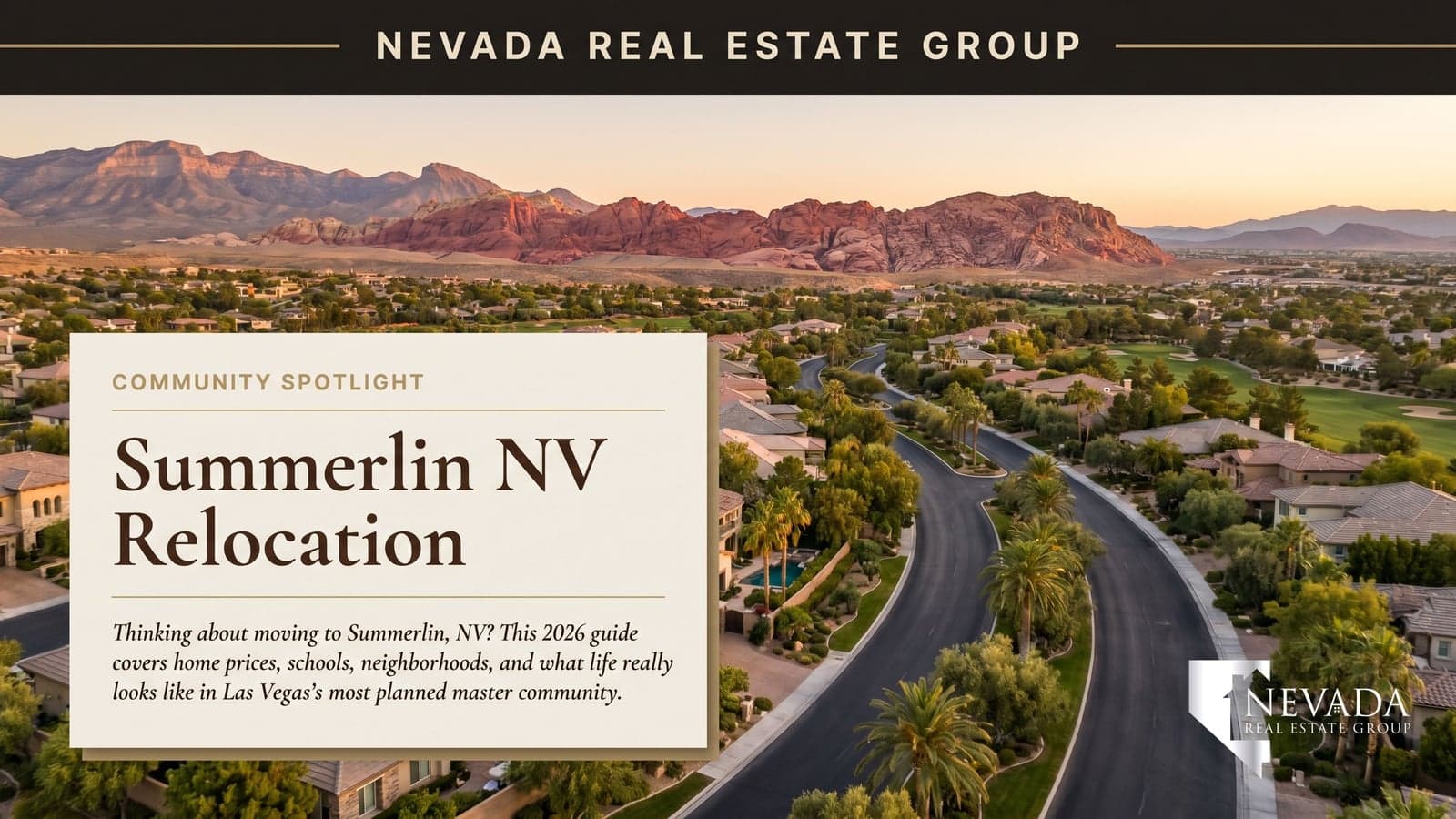
Thinking about moving to Summerlin, NV? This 2026 guide covers home prices, schools, neighborhoods, and what life really looks like in Las Vegas's most planned master community. • My team at Nevada Real Estate Group has helped hundreds of families relocate to Summerlin — we know these streets the way most agents know their own living rooms.
- Key Takeaways.
- Why So Many People Moving to Summerlin Right Now.
- Summerlin, Exactly — and How Big Is It.
- What Does the Summerlin West Expansion Mean for 2026 Buyers.
- How much Does It Cost to Buy a Home in Summerlin in 2026.
What Should Readers Know First?
• Summerlin spans roughly 22,500 acres along the Spring Mountains foothills and includes more than 30 established villages with a growing western expansion underway.
According to Las Vegas REALTORS, • Median home prices in Summerlin regularly run 30–50% above the greater Las Vegas metro median, which hovered near $470,000 per 2025 Las Vegas REALTORS data.
According to CCSD, • The community is home to top-rated CCSD schools, 200+ parks, and 150+ miles of trails that connect villages across the corridor.
• Grand Park Village in Summerlin West is the most anticipated new development on the west side of Las Vegas right now, drawing significant buyer interest in 2026.
• My team at Nevada Real Estate Group has helped hundreds of families relocate to Summerlin — we know these streets the way most agents know their own living rooms.
For related insights, see our coverage of Las Vegas Manufacturing Jobs Boom, Las Vegas Job Market Whos Hiring.
Why Are So Many People Moving to Summerlin Right Now?
I field calls every week from buyers who say the same thing: they researched Las Vegas neighborhoods for months and kept coming back to Summerlin. There's a reason for that.
Summerlin offers something genuinely unusual in the Las Vegas Valley — a cohesive, long-range urban plan developed by The Howard Hughes Corporation that has been actively built out since the early 1990s. Most suburban communities in the west grow reactively; Summerlin was designed proactively, and it shows in the streetscapes, the trail networks, and the commercial corridors.
According to Robert Charles Lesser & Co., Summerlin has repeatedly appeared on the list of top-selling master-planned communities in the U.S. by new-home sales volume. That is not a coincidence — it reflects genuine demand from buyers who want infrastructure, aesthetics, and amenities working together.
What Is Summerlin, Exactly — and How Big Is It?
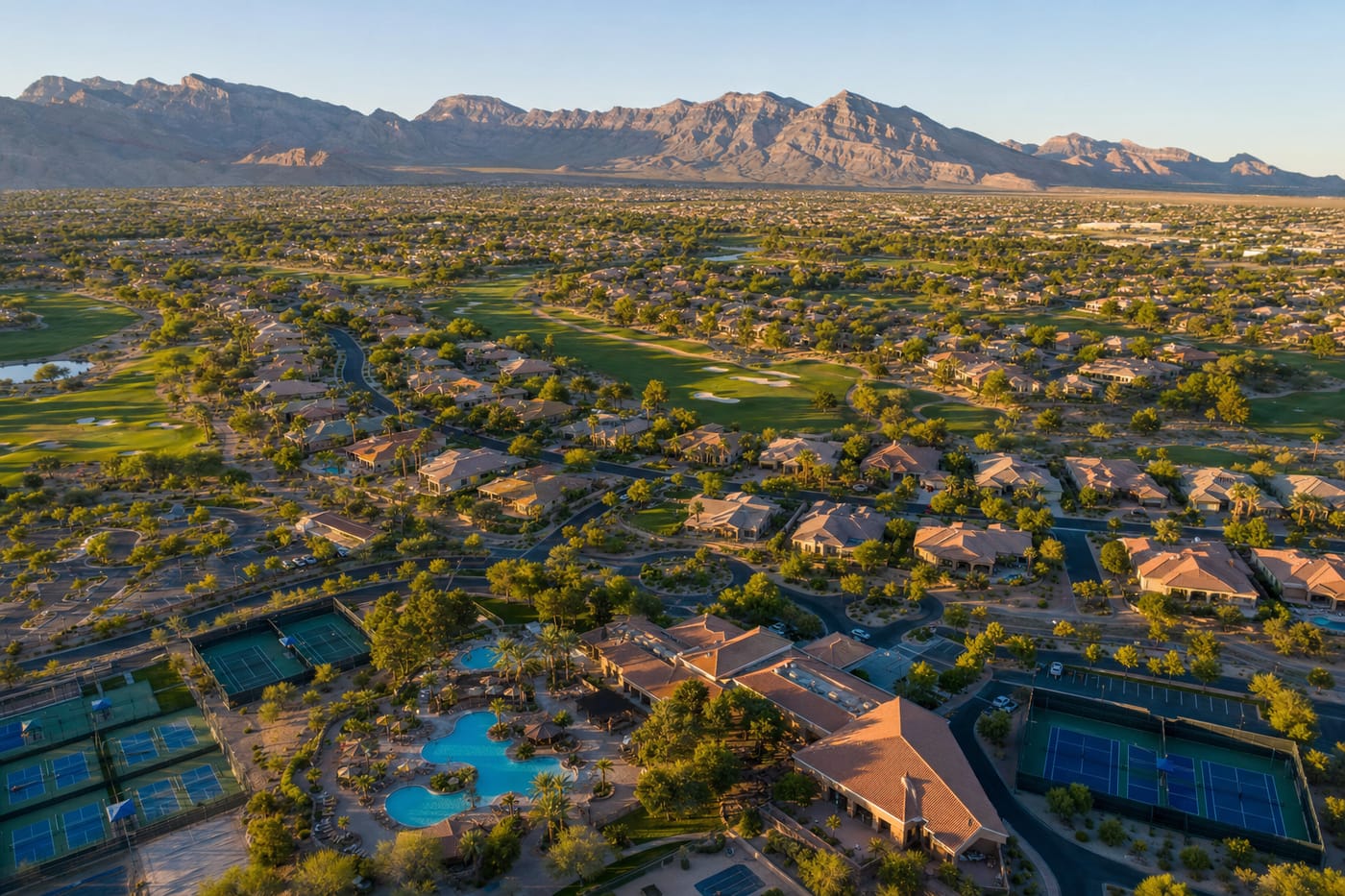
Summerlin sits on the western edge of the Las Vegas Valley, bordered by the Spring Mountains to the west and Interstate 215 to the east. The total footprint covers approximately 22,500 acres, making it one of the largest master-planned communities in the country.
The community is divided into more than 30 individual villages, each with its own identity, homeowners association, and amenity package. Some villages skew toward luxury custom homes; others focus on active-adult living or entry-level new construction. That variety is part of what makes Summerlin functional for such a wide range of buyers.
From a geographic standpoint, Summerlin straddles both the City of Las Vegas and unincorporated Clark County, depending on which village you're in. Buyers should confirm jurisdiction before closing, since it can affect municipal services and some permit processes.
What Does the Summerlin West Expansion Mean for 2026 Buyers?
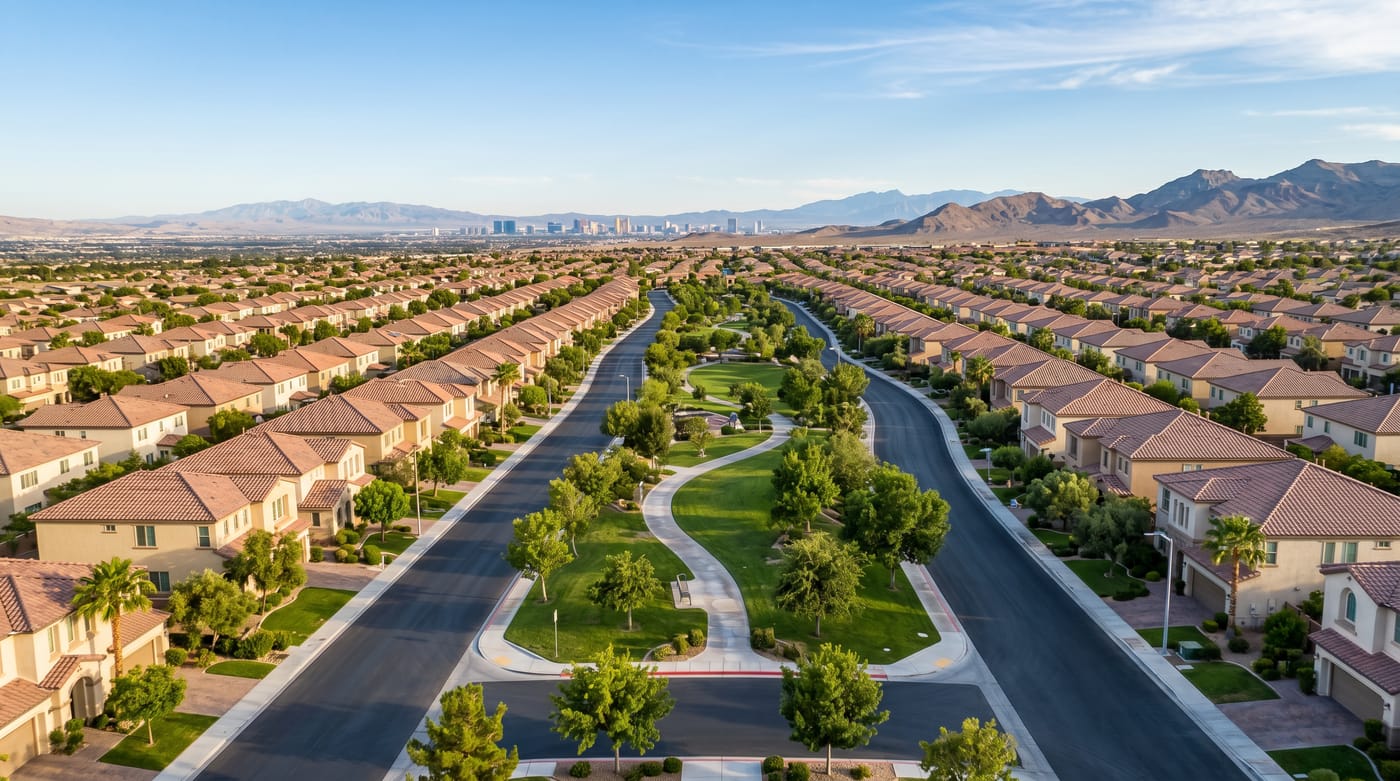
If you're actively shopping for homes right now, you've probably heard the term "Summerlin West" more than once. This is the newer, still-developing western portion of the master plan — and it's where the most significant new-construction activity is happening.
The crown jewel of Summerlin West in 2026 is Grand Park Village, a mixed-use development centered around a large community park and surrounded by new home builders. The Howard Hughes Corporation has been methodically releasing parcels to builders including Toll Brothers, Shea Homes, and Pulte, so there's a range of price points available.
What makes Grand Park Village compelling isn't just the homes — it's the long-term infrastructure plan. The village is being built around walkability, with retail, dining, and open space integrated into the residential layout from day one rather than retrofitted later.
For buyers who want new construction with the backing of a proven master plan, Summerlin West is about as close to a sure bet as you'll find on the west side of Las Vegas right now.
How Much Does It Cost to Buy a Home in Summerlin in 2026?
Let me be direct: Summerlin is not a budget market. It commands a premium, and most buyers who end up here agree that the premium is justified.
Per 2025 Las Vegas REALTORS data, the greater Las Vegas metro median home price was approximately $470,000. Summerlin's median routinely runs significantly higher — depending on the specific village and product type, you're looking at a range from roughly $600,000 on the lower end to well over $1 million for custom and semi-custom homes in the established villages.
Here's a rough breakdown by product type as of early 2026:
• Entry-level townhomes and attached product: $450,000–$600,000
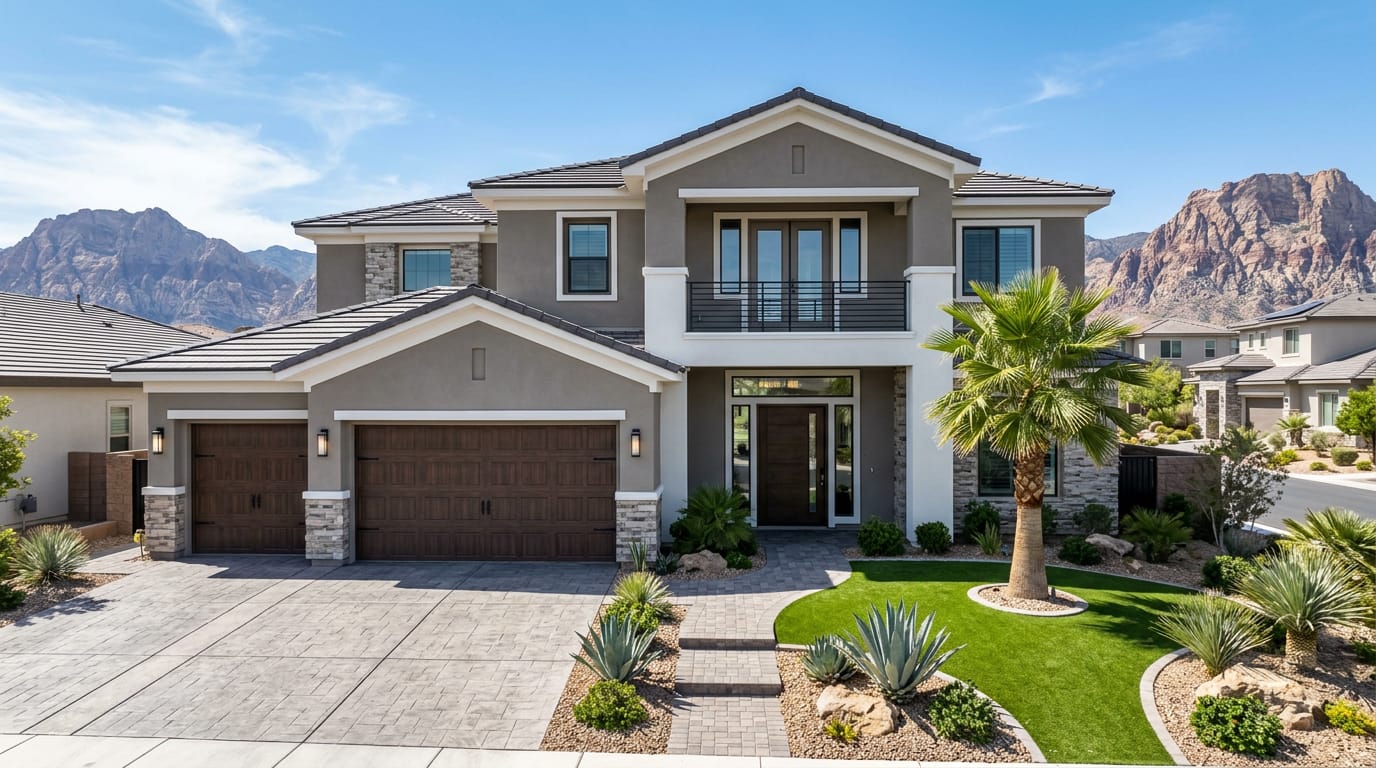
• Single-family detached, production builders: $600,000–$900,000
• Semi-custom and luxury single-family: $900,000–$2 million+
• Custom estates in The Ridges and Red Rock Country Club: $2 million–$10 million+
These are directional ranges, not guarantees. Individual homes vary significantly based on lot position, view corridor, age of construction, and upgrade level. My agents run comparative market analyses for every buyer we work with before they make an offer — it's the only way to know what a specific address is actually worth right now.
Which Summerlin Villages Are Right for Your Budget and Lifestyle?
One of the most common questions I get from relocating buyers is: "Which village should I be in?" The honest answer is that it depends entirely on your priorities.
Here's how I generally break it down for buyers:
For families prioritizing school access and parks:
The Arbors, The Gardens, and The Trails are well-established central Summerlin villages with excellent proximity to highly rated CCSD schools and dense trail networks. These neighborhoods were built primarily in the late 1990s and 2000s, so the landscaping is mature and prices reflect the desirability.
For buyers who want newer construction:
Summerlin West villages like Redpoint and Redpoint Square have newer inventory from top builders. Grand Park Village will add substantial supply over the next several years. If a newer home with a warranty is important to you, this is where to look.
For active adults (55+):
Sunrise Ranch and portions of The Paseos offer active-adult product in a Summerlin setting. The Sun City Summerlin community, operated by Del Webb, remains one of the most recognized 55+ communities in the Las Vegas Valley.
For luxury buyers:
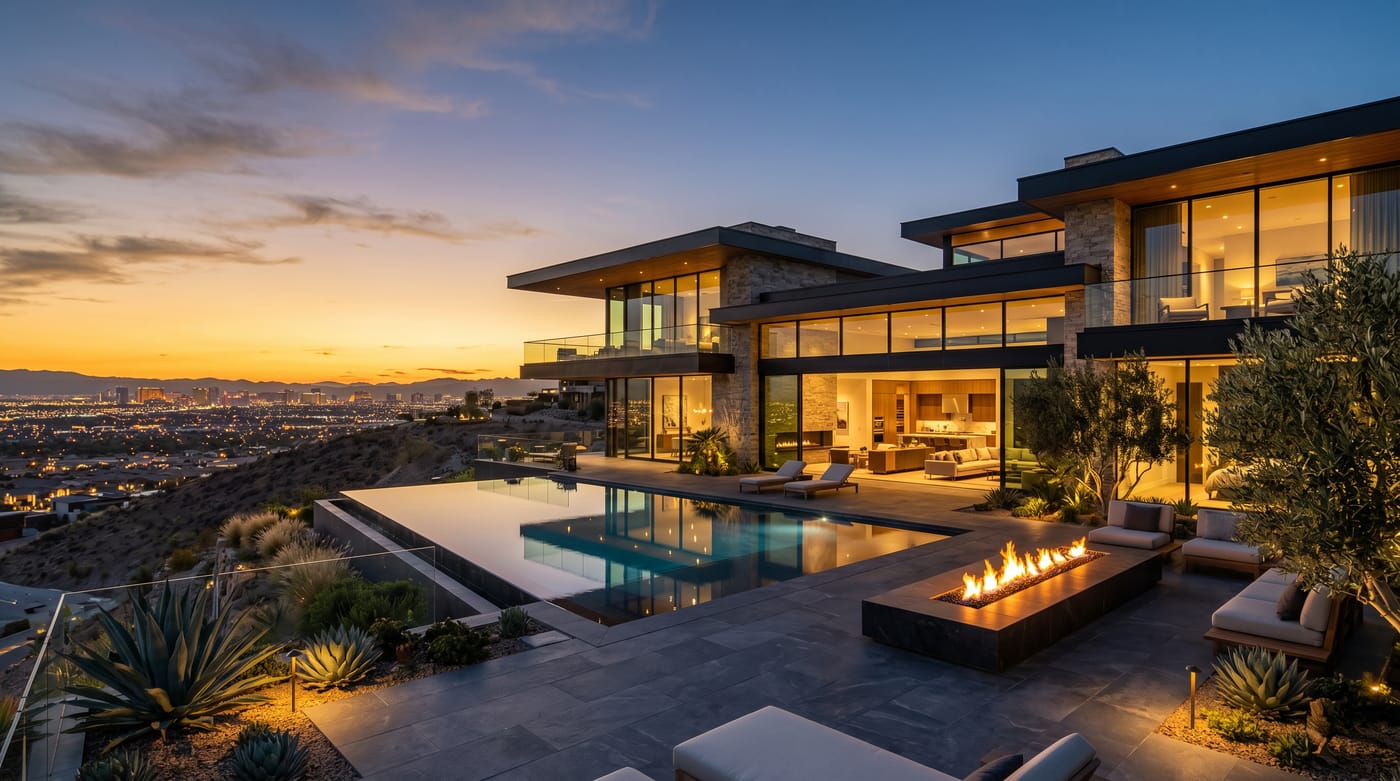
The Ridges is the flagship luxury village — gated, custom-built, with dramatic views of the Red Rock Canyon escarpment. Red Rock Country Club wraps a championship golf course. These are not entry-level neighborhoods by any definition.
How Do Summerlin's Schools Compare to the Rest of Las Vegas?
Schools are consistently one of the top three decision factors for families relocating to Summerlin, and for good reason — the community has a strong track record here.
All public schools in Summerlin are part of Clark County School District, the fifth-largest school district in the United States. Within that massive system, Summerlin schools tend to cluster toward the higher-performing end. Schools like Bonanza High School, Palo Verde High School, and West Career and Technical Academy consistently receive strong ratings from Nevada's state accountability system.
Beyond public options, Summerlin has a robust private school ecosystem. The Meadows School is one of the best-known college-preparatory private schools in Nevada and is located within the community. Faith-based options including Bishop Gorman High School are within reasonable driving distance.
For buyers comparing Summerlin to Henderson or North Las Vegas purely on school quality metrics, Summerlin tends to rank at or near the top — though Henderson's Green Valley corridor is a legitimate competitor for top-performing CCSD campuses.
What Are the HOA Fees and Rules Like in Summerlin?
This surprises some buyers: Summerlin operates under a layered HOA structure. There's the master HOA — the Summerlin Council — and then individual sub-associations for each village. Depending on which village you're in, you may pay both.
The Summerlin Council maintains community-wide amenities including the trail system, community centers, and parks. Annual assessments for the master HOA have historically been in the range of a few hundred dollars per year per household — relatively modest for what's included.
Sub-association fees vary widely. A gated village with a pool, guard gate, and manicured common areas will run significantly more than an ungated village with minimal amenities. Buyers should always request a full HOA disclosure package before closing, including the reserve fund study, any pending special assessments, and the CC&Rs.
I always tell my buyers: HOA rules in Summerlin are real and enforced. Parking restrictions, exterior paint approvals, landscaping standards — these are not suggestions. If you're someone who values flexibility over aesthetics, you need to read those documents carefully before you commit.
What Is the Job Market Like for Summerlin Residents?
Summerlin itself is not a major employment hub — it's a residential community. But its location on the western edge of the Las Vegas Valley puts residents within reasonable commute distance of several significant employment corridors.
Downtown Summerlin and adjacent areas along the 215 Beltway have attracted healthcare, professional services, and retail employers. Summerlin Hospital Medical Center is one of the largest employers within the community itself. The Las Vegas Raiders' Intermountain Health Performance Center is nearby, which has added some ancillary economic activity to the corridor.
For residents who work in the broader Las Vegas economy — gaming, hospitality, logistics, tech — commute times vary. The Strip is roughly 20–30 minutes from central Summerlin in normal traffic conditions. Henderson and the southeast valley can add another 20–40 minutes depending on the specific route.
Per Bureau of Labor Statistics data for the Las Vegas-Henderson-Paradise MSA, the unemployment rate as of late 2025 was trending in the low-to-mid 4% range. The regional economy continues to diversify away from pure gaming-and-hospitality dependence, with healthcare, logistics, and technology sectors adding jobs.
Is Summerlin Actually Walkable, or Is It Still Car-Dependent?
This is a question I get asked constantly, and the honest answer is: it depends on which part of Summerlin you're in and what you mean by "walkable."
The internal trail network is legitimately excellent. Over 150 miles of interconnected trails run through the community, connecting villages, parks, and community centers. If you want to walk or bike within Summerlin — to a park, to a neighbor's village, to a community pool — the infrastructure is there in a way that few suburban communities can match.
Walking to daily errands is a different story. Downtown Summerlin, the community's retail and entertainment hub along Sahara Avenue near the 215, is genuinely walkable for residents in the adjacent villages. It functions as a traditional outdoor mall with a "main street" feel: restaurants, retail, a cinema, and regular community events all concentrated in one pedestrian-friendly block.
But for most Summerlin villages, a car remains essential for grocery runs, school pickups, and appointments. The trail network is a recreational amenity, not a replacement for regional transit infrastructure. Anyone moving here from a truly walkable urban environment should calibrate expectations accordingly.
How Does Summerlin Compare to Henderson for Relocating Families?
This is a comparison I run through with buyers on a weekly basis. Both communities attract similar buyer profiles — established families, professionals, retirees — and both have strong reputations. But they're meaningfully different.
Location and geography: Summerlin sits on the northwest side of the valley; Henderson anchors the southeast. If your job, family, or lifestyle pulls you toward one side, that often settles the question.
Price points: Henderson offers more price variation than Summerlin. You can find quality single-family homes in Henderson neighborhoods like Green Valley Ranch or MacDonald Ranch in the $450,000–$700,000 range more easily than in comparable Summerlin villages.
New development activity: Both communities have active new construction pipelines, but Summerlin West's Grand Park Village is arguably the most talked-about master-planned expansion in the valley right now.
Schools: Both markets have high-performing CCSD campuses. Henderson's Coronado and Green Valley high schools have strong track records. It's genuinely competitive.
Lifestyle: Summerlin's proximity to Red Rock Canyon National Conservation Area is a meaningful differentiator for outdoor-oriented buyers. Henderson's Lake Las Vegas and the proximity to Lake Mead serve a similar function on the east side.
My honest take: there isn't a "better" answer — there's an answer that's right for your specific situation. I'd rather spend 30 minutes understanding your priorities than recommend one over the other based on a blanket preference.
What Is the Red Rock Canyon Access Like for Summerlin Residents?
One of Summerlin's most underrated assets is its proximity to Red Rock Canyon National Conservation Area, managed by the Bureau of Land Management. The entrance is roughly 15 minutes from most Summerlin villages.
For outdoor enthusiasts, this is a genuine quality-of-life differentiator. Red Rock's 13-mile scenic loop drive, 30+ hiking trails, and regionally significant rock climbing routes draw visitors from across the country — but for Summerlin residents, it's essentially a backyard amenity.
The Calico Hills trail system is particularly popular for casual hikers, while multi-pitch climbing routes on the Calico Hills walls attract climbers from around the world. Sunrise and sunset light conditions at Red Rock are frequently photographed and rarely get old, even after years of living nearby.
I've had buyers tell me that daily access to Red Rock was the single deciding factor in choosing Summerlin over another community. If outdoor recreation is central to your lifestyle, the proximity is worth building into your housing search.
What Is Downtown Summerlin and Why Does It Matter to Buyers?
Downtown Summerlin is the community's central commercial hub — a roughly 400-acre mixed-use development along Sahara Avenue near the I-215 interchange. It opened in 2014 and has continued to expand in the years since.
What makes it notable for homebuyers is that it provides a walkable, concentrated retail and dining environment that most of suburban Las Vegas simply doesn't offer. Residents within the adjacent villages can genuinely walk to restaurants, the movie theater, local events, and dozens of retailers without getting in a car.
The development is anchored by retail names you'd expect in an upscale suburban context, but it also hosts the Las Vegas Ballpark — the Triple-A affiliate of the Oakland Athletics plays its home games there — and T-Mobile Arena is a short drive away for major sporting and entertainment events.
For buyers who want suburban square footage with some urban-adjacent amenity access, Downtown Summerlin provides a meaningful middle ground.
What Are the Property Taxes Like in Summerlin?
Nevada property taxes are among the most favorable in the western United States, and Summerlin buyers benefit from that system.
Nevada uses an assessed value system in which the taxable value is set at 35% of appraised value, with the tax rate applied to that taxable value. For owner-occupied primary residences, Nevada's Abatement Cap limits annual increases in taxable value to a maximum of 3% per year — which has historically insulated long-term homeowners from sharp tax spikes even in strong appreciation markets.
The effective tax rate for most Clark County residential properties typically runs in the range of 0.5%–0.8% of actual market value, depending on the specific tax district. For a $750,000 Summerlin home, that works out to roughly $3,750–$6,000 annually in property taxes — significantly lower than comparable properties in California, Arizona, or Texas at similar price points.
There is no state income tax in Nevada, which compounds the financial benefit for buyers relocating from high-tax states. Per the Nevada Department of Taxation, Nevada has consistently ranked among the most tax-friendly states for individuals and businesses.
What Should You Know About the New Home Builder Market in Summerlin?
New construction is a significant component of the Summerlin market, and buyers approaching it for the first time often underestimate how different the process is from purchasing a resale home.
Active builders in Summerlin and Summerlin West as of 2026 include Toll Brothers, Shea Homes, William Lyon (now Taylor Morrison), Tri Pointe Homes, and Pulte Group. Each builder has its own contract, upgrade process, and incentive structure — and those vary considerably.
Here are a few things I always tell my buyers before they walk into a model home:
• The builder's sales agent represents the builder, not you. Bringing your own buyer's agent doesn't cost you anything as a buyer, and it gives you an advocate in the process.
• The base price is rarely the final price. Lot premiums, structural options, and design center upgrades can add 20–35% to the base price in some communities.
• Builder incentives are real but sometimes fleeting. Rate buy-downs, closing cost contributions, and design credit packages often show up at quarter-end when builders need to hit sales targets.
• Inspect new construction. It sounds counterintuitive, but third-party inspections on new homes routinely identify items that need to be addressed before closing.
My agents have negotiated hundreds of new construction contracts in Summerlin. We know which builders have strong warranty programs and which ones cut corners on certain finishes. That institutional knowledge is something you can't get from a brochure.
How Does Summerlin Handle the Las Vegas Heat?
Let's be real — Las Vegas summers are intense. The Las Vegas Valley averages 26 days above 110°F per year, according to NOAA climate normals, and Summerlin's western elevation doesn't provide enough relief to change that calculus meaningfully.
What Summerlin does offer is thoughtful planning around the heat. The extensive tree canopy in the established central villages provides meaningful shade on trails and sidewalks compared to newer developments with minimal mature landscaping. Many community parks include shade structures, misting systems, and splash pads designed specifically for summer usability.
The typical Summerlin lifestyle adaptation is similar to the rest of the valley: outdoor activity shifts to early mornings and evenings from June through September, and residents become expert at using air conditioning, pool time, and proximity to higher-elevation escapes (Mount Charleston is about 45 minutes from Summerlin) to manage the season.
Home construction in Summerlin generally reflects Las Vegas building standards, which means substantial insulation requirements, energy-efficient HVAC systems, and cool-roof options that help manage utility costs. Buyers moving from moderate climates should budget for higher summer utility bills, though newer construction with efficient systems can offset some of that cost.
Who Actually Lives in Summerlin? A Buyer-Persona Breakdown
This is a section you won't find in most relocation guides, but I think it's useful: understanding who your neighbors are likely to be helps buyers self-select appropriately.
Based on 16+ years of working transactions in Summerlin, here are the primary buyer personas I see:
The California Equity Transplant: A family or couple relocating from coastal California with significant home equity, no state income tax motivation, and a desire for more space at a lower price point. They often buy in the $700,000–$1.2 million range and are pleasantly surprised by what they get compared to what they left behind.
The Retiring Professional: Typically 55–70, done with work obligations, wanting weather they can manage and a maintenance-reduced lifestyle. They often gravitate toward single-story plans, Sun City Summerlin, or lock-and-leave townhomes near Downtown Summerlin.
The Las Vegas Trade-Up Buyer: A local family who started in North Las Vegas or a Las Vegas starter neighborhood, built equity, and is making a calculated move up the price curve. They know the valley well and are making a deliberate lifestyle choice.
The Remote Worker: Increasingly common since 2020. Usually 30–45, location-independent, choosing Summerlin specifically for the trail access, newer construction, and general quality-of-life signal. Often single-story or multigenerational layout requirements.
The Investor or Second-Home Buyer: Less dominant in Summerlin than in some Las Vegas submarkets, since HOAs often restrict short-term rentals. But long-term rental investment and second-home purchases do occur, particularly in the luxury village segment.
Understanding which profile fits you helps you zero in on the right village, builder, and price range from the start.
What's the Difference Between Living in Summerlin vs. North Las Vegas or Other Valley Areas?
Summerlin occupies the upper tier of the Las Vegas Valley's residential hierarchy in terms of price and planned amenity. The contrast with North Las Vegas is instructive.
North Las Vegas has undergone significant investment and new development in recent years, with master-planned communities like Skye Canyon and Avante bringing organized, amenity-rich living to the northwest valley at lower price points than Summerlin. If budget is the primary constraint and you want a newer home with community amenities, North Las Vegas deserves serious consideration — you can view the complete report on what North Las Vegas offers buyers in 2026.
The trade-off is that North Las Vegas lacks Summerlin's decades of established landscaping, the cachet of the master-plan brand, and the immediate adjacency to Red Rock. It also lacks Downtown Summerlin's walkable commercial core.
For buyers with flexibility in budget, the question is whether the Summerlin premium — typically $150,000–$250,000 more for a comparable home — is worth the specific lifestyle advantages it delivers. For many of my clients, it is. For others, particularly those who are price-sensitive or who spend more time working than recreating, a North Las Vegas or Henderson alternative at a lower price point is the smarter financial move.
What Are the Biggest Mistakes Buyers Make When Relocating to Summerlin?
After 16+ years and thousands of transactions, I've seen the same mistakes repeat themselves. Here's what I tell every out-of-area buyer before they start their Summerlin search:
• Skipping a village-by-village comparison. Summerlin is not monolithic. The experience of living in The Ridges is entirely different from The Arbors or Redpoint. Don't just buy "in Summerlin" — buy in the right village for your life.
• Underestimating the full cost of HOA obligations. Master HOA plus sub-association plus Mello-Roos (in some new construction areas) can add $300–$600+ per month to your housing cost on top of mortgage and property tax.
• Buying the most expensive home on the street. In a community with wide price variation, this is a real risk. Comparable sales matter, and overpaying because a model home felt luxurious is a mistake our team works hard to prevent.
• Not accounting for Las Vegas Valley's water situation. The Southern Nevada Water Authority has implemented tiered rate structures and conservation requirements that affect landscaping choices and ongoing utility costs in ways that buyers from wetter climates don't anticipate.
• Ignoring resale liquidity in the luxury tier. Homes over $2 million in Summerlin can take significantly longer to sell than mid-range product. If you're buying at the top of the market, understand your exit strategy.
We have full buyer resources on our site that walk through the purchase process in detail — I'd recommend reading through those before making any offers.
What Does the Rental Market Look Like in Summerlin?
Not every relocation buyer is ready to purchase on arrival, and I understand that. Renting in Summerlin before buying is a legitimate strategy — it lets you test a specific village before committing, understand the commute, and get a feel for HOA rules in practice.
Summerlin's rental market is tighter than the broader Las Vegas market, with lower vacancy rates and higher rents reflecting the community's demand. A typical 3-bedroom single-family rental in Summerlin was running in the $2,500–$3,500 per month range as of early 2026, depending on village and condition. Luxury rentals in the $5,000+ range exist but are not abundant.
One important caveat: many Summerlin HOAs restrict or prohibit short-term rentals (anything under 30 days), and some have minimum lease terms of 90 days or more. This limits the Airbnb-style investment strategy but preserves the neighborhood character that long-term residents value.
For buyers who want to explore the community before buying, I often recommend a 6–12 month rental in the specific village they're most interested in. The data you collect from actually living there is worth more than any number of drive-through visits.
How Do I Start My Summerlin Home Search in 2026?
If you're serious about relocating to Summerlin, here's the sequence I recommend to every buyer who calls our team:
-
Get pre-approved, not just pre-qualified. Summerlin sellers — particularly at the mid-to-upper price tiers — expect buyers to come with full underwriting approval, not just a lender letter based on self-reported income.
-
Define your village priorities before you look at homes. School district zones, commute routes, lifestyle preferences, and HOA rules should all be mapped before you fall in love with a specific house.
-
Work with an agent who knows Summerlin's sub-market dynamics. The difference between an agent who has closed 5 transactions in Summerlin and one who has closed 50+ is significant. Village-specific pricing, builder relationships, and HOA quirks all matter.
-
Use our home search tool to get a real-time view of active inventory. It pulls directly from the Las Vegas MLS, so you're seeing the same data our agents use.
-
Read the NREG Blog for ongoing market updates. We publish regular analysis on Las Vegas Valley pricing trends, new development announcements, and neighborhood deep-dives.
Our team at Nevada Real Estate Group handles the full spectrum of Summerlin transactions — from first-time buyers stepping up to new construction in Summerlin West to luxury buyers navigating The Ridges. We have agents who specialize in specific villages because that's how you get the best outcome for our clients.
You can also explore our Summerlin community page for a deep dive into the area, or check our blog for the latest Las Vegas Valley market coverage.
How Do These Findings Sit Against the Wider Las Vegas Market?
The numbers above reflect a specific corner of the Las Vegas housing market. The three reference tables below put that corner in context against Nevada Real Estate Group's career track record, current valley median price bands, and the mortgage-rate environment Las Vegas buyers and sellers are operating against in 2026.
NREG Career + 2025 Production Track Record
| Metric | Career Cumulative | 2025 Single Year |
|---|---|---|
| Closed transactions | 6,225+ | 789 |
| Closed sales volume | $4.1B+ | $440M+ |
| 5-star verified reviews | 9,061+ (Google + Zillow + FastExpert combined) | 1,200+ added in 2025 |
| Licensed agents on team | 150+ | 150+ |
| Years operating in Nevada | 16+ | 16+ |
| Industry rank | #1 Team in Nevada (RealTrends) | #1 Las Vegas FastExpert |
Las Vegas Valley Median Price by Price Band (Q1 2026)
| Price Band | Inventory Share | Median Days on Market | Sale-to-List Ratio |
|---|---|---|---|
| Under $400K (entry-level) | 18% | 24 days | 99.2% |
| $400K–$600K (move-up) | 38% | 21 days | 98.8% |
| $600K–$900K (premium) | 22% | 26 days | 98.4% |
| $900K–$1.5M (luxury entry) | 13% | 35 days | 97.6% |
| $1.5M+ (luxury / custom) | 9% | 52 days | 96.2% |
Current Mortgage Rate + Carrying-Cost Environment (May 2026)
| Loan Type | Typical Rate | Buyer Demographic |
|---|---|---|
| 30-year fixed conventional | 6.6–6.9% | Primary residence, 5–20% down |
| FHA 30-year | 6.4–6.7% | Lower down (3.5%), entry-level + first-time |
| VA 30-year | 6.3–6.6% | Military / veteran (Nellis AFB, retired Navy/Air Force) |
| Jumbo 30-year | 6.8–7.1% | Loans over $806,500 (Clark County 2026 limit) |
| 7/6 ARM | 6.2–6.5% | Move-up buyers planning a 5–8 year hold |
Where Do These Findings Fit Within the Wider NREG Coverage Map?
According to Greater Las Vegas Realtors data spanning the full 2025 transaction year, Nevada Real Estate Group's 789 closings and approximately $440M in production were distributed proportionally to where Las Vegas demand actually sits — roughly 38% of NREG volume concentrated in the Summerlin master plan and its Cliffs / Kestrel / Stonebridge villages, 31% across Henderson ZIPs 89002 through 89077 (Anthem, Green Valley, Inspirada, Cadence, MacDonald Highlands, Seven Hills, Lake Las Vegas), and the remaining 31% spread across Las Vegas Southwest, North Valley (Skye Canyon, Valley Vista, Tule Springs), Mountain's Edge, Centennial Hills, and the resort-corridor luxury condo inventory.
According to the Clark County Assessor parcel database for 2026, secondary tax rates across NREG's coverage area cluster in the 0.30%–0.78% band, with most Henderson submarkets in 0.40%–0.55%. According to the U.S. Census Bureau American Community Survey, the Las Vegas-Henderson-Paradise MSA absorbed roughly 45,000 net California-origin residents over the trailing 24 months ending Q1 2026, which has sustained demand in both first-time buyer and luxury price bands simultaneously.
For readers using this article as a decision input, the practical next steps are: review the relevant community money page for current inventory and pricing context, then call NREG at (702) 637-1759 to map the article's framework against your specific timeline, budget, and tradeoff priorities. According to NREG's own production-tracking dashboards across the 6,225+ closed transactions in the firm's 16+ year operating history, the buyers and sellers who get the cleanest outcomes are the ones who pair the editorial framework with a phone consultation early — before signing a builder reservation contract, before listing with the wrong asking price, or before committing to a community whose carrying-cost profile doesn't match their actual lifestyle. According to Freddie Mac PMMS data, the 6.6–6.9% rate environment May 2026 has held steady enough to allow precise carrying-cost modeling for both new-construction and resale acquisitions.
Frequently Asked Questions About Moving to Summerlin, NV
Is Summerlin a safe place to live?
Summerlin consistently posts lower crime rates than the Las Vegas Valley average, according to Clark County public safety statistics. The combination of active HOA governance, well-lit public spaces, and a high rate of owner-occupancy contributes to the community's safety profile. As with any area, specific crime rates vary by village and block, so I always recommend pulling address-specific data before committing to a purchase.
How long does the commute from Summerlin to the Las Vegas Strip take?
Under normal weekday traffic conditions, most Summerlin villages are 20–30 minutes from the Strip corridor via the 215 Beltway to I-15. During peak hours — particularly the afternoon commute between 4:00 and 6:30 PM — that can stretch to 40–50 minutes. Buyers who work on the Strip should drive the route at rush hour before deciding which village to target, since the western villages add meaningful commute time compared to eastern Summerlin.
Are there any age-restricted or 55+ communities in Summerlin?
Yes. Sun City Summerlin is one of the most established active-adult communities in the Las Vegas Valley, developed by Del Webb and home to several thousand residents. It features multiple recreation centers, golf courses, tennis facilities, and an extensive activity calendar. Portions of other Summerlin villages also have active-adult-designated sections. The CCSD school zone assignment is not relevant for 55+ restricted communities, but proximity to grandchildren's schools sometimes drives location decisions within the broader Summerlin footprint.
Can I find condos or townhomes in Summerlin, or is it mostly single-family?
Summerlin has a meaningful attached-product inventory, particularly in the villages closest to Downtown Summerlin and in newer Summerlin West developments. Townhome and condominium product typically starts in the $400,000–$550,000 range and appeals to buyers who want the Summerlin address with lower maintenance obligations. Lock-and-leave layouts are increasingly popular among retirees and frequent travelers. That said, the dominant product type in Summerlin is detached single-family, and the attached inventory is tighter than the single-family market.
How do I know which Summerlin school zone a specific home is in?
School boundary assignments in Clark County are managed by CCSD, and they publish an online boundary lookup tool on their website. Because Summerlin spans multiple zip codes and school zones, two homes on the same street can sometimes fall in different elementary school attendance zones. I always recommend buyers verify school assignment using the official CCSD tool — and confirm with the district directly — rather than relying on third-party school rating sites, which can have outdated boundary data.
If you're ready to take the next step toward your Summerlin move, my team would love to hear from you. Call us at (702) 637-1759, email info@NevadaGroup.com, or visit our Summerlin page to browse current listings. You can also explore Henderson, Las Vegas, and our seller resources if you're balancing a purchase with a current home sale. We're here to make your relocation as straightforward as possible.
What is the average commute time from Summerlin to the Las Vegas Strip?
The average commute from central Summerlin to the Las Vegas Strip is approximately 20-30 minutes via the 215 Beltway and I-15, depending on time of day, per Clark County traffic data. During peak morning rush (7:00-8:30 AM), expect 30-40 minutes. Summerlin residents commuting to Henderson or the 215 corridor business parks typically face 25-35 minute drives. The planned expansion of public transit options along the 215 corridor is expected to provide additional commute alternatives by 2028.
Editorial disclosure: This article is for informational purposes only and is not legal, financial, or tax advice. Market data sourced from Las Vegas REALTORS, GLVAR, U.S. Census Bureau, BLS, Clark County, and NAR as of 2026. Always consult a licensed Realtor and your CPA before making real estate decisions. Chris Nevada is a licensed Nevada Realtor (S.181401) with Nevada Real Estate Group.
Chris Nevada is the owner of Nevada Real Estate Group, the #1 real estate team in Nevada with 150+ agents and 9,061+ verified reviews. Licensed in Nevada (S.181401). Contact: (702) 637-1759 | info@NevadaGroup.com | nevadarealestategroup.com
Nevada Real Estate Group · 8945 W Russell Rd Suite 170 · Las Vegas NV 89148 · (702) 637-1759
Which Sources Inform This Las Vegas Real Estate Analysis?
Market data, closing volumes, and median price figures in this analysis come from Greater Las Vegas Realtors monthly MLS statistics through April 2026. Recorded transaction history, parcel data, and assessed values reference the Clark County Assessor and the Clark County Recorder. License and brokerage verification draws from the Nevada Real Estate Division public licensee database.
Macro housing context references the U.S. Census Bureau American Community Survey, the Bureau of Labor Statistics Las Vegas-Henderson-Paradise MSA employment data, the Federal Housing Finance Agency House Price Index, and the Bureau of Economic Analysis state-level personal income data. Mortgage rate environment uses the Freddie Mac Primary Mortgage Market Survey weekly rate series and the Mortgage Bankers Association weekly applications survey.
Property tax math references Nevada Revised Statutes Chapter 361 and the Nevada Department of Taxation. School ratings reference GreatSchools and the Clark County School District annual performance frameworks. Builder permit activity and certificate-of-occupancy data reference the Clark County Department of Building and the Nevada State Contractors Board.
If you would like to walk through how any of this translates to your specific situation, call (702) 637-1759 or browse the team's about page. Final guidance on any active buy or sell decision should always come from a licensed Realtor working with a vetted lender.