
Published May 1, 2026 · Last updated May 1, 2026 · By Chris Nevada
As of May 2026, the Las Vegas luxury home market — properties priced at $1 million and above — carries 4.8 months of supply, putting it firmly in buyer-leaning territory. According to Las Vegas REALTORS, active listings stand at 312, the highest May count in three years per Las Vegas REALTORS data, giving qualified buyers meaningful negotiating leverage.
Las Vegas $1M+ homes now carry 4.8 months of supply — a buyer-leaning market. Here's what that means for buyers and sellers in the luxury tier right now. • Sellers in the $1M+ tier must price strategically; the days of listing high and waiting for a bidding war are over in this segment.
- Key Takeaways.
- What Does "Buyer-Leaning" Actually Mean for a $1M+ Las Vegas Home.
- How the Luxury Tier Compare to the Broader Las Vegas Market.
- Why Luxury Inventory at a Three-Year High This May.
- Where Are These Luxury Listings Concentrated Across the Metro.
What Should Readers Know First?
• The $1M+ tier in Las Vegas holds 4.8 months of supply as of May 2026 — compared to just 2.4 months for the broader single-family market.
• Active luxury inventory of 312 listings is the highest May reading in three years, per Las Vegas REALTORS.
According to National Association of REALTORS, • The National Association of REALTORS classifies 4–6 months of supply as a balanced-to-buyer-leaning market, making this segment one of the most negotiable in the metro.
• Sellers in the $1M+ tier must price strategically; the days of listing high and waiting for a bidding war are over in this segment.
• Pre-underwritten financed buyers and cash purchasers are best positioned to capitalize on current conditions.
For related insights, see our coverage of Las Vegas Rental Market Investors, Henderson Home Values Dip 2026.
What Does "Buyer-Leaning" Actually Mean for a $1M+ Las Vegas Home?
When people hear "buyer's market," they sometimes picture distress — foreclosures, desperate sellers, rock-bottom prices. That's not what's happening here.
A buyer-leaning luxury market simply means supply has grown enough to shift negotiating power. At 4.8 months, buyers in the $1M+ tier have more options, more time, and more room to negotiate terms than they've had in several years.
For context, a balanced market is generally considered to be around 5–6 months of supply, according to the National Association of REALTORS. We're approaching that threshold from the seller's side, which is a meaningful shift.
How Does the Luxury Tier Compare to the Broader Las Vegas Market?
The contrast between segments is one of the most important data points I want my clients to understand right now.
The broader Las Vegas single-family market sits at approximately 2.4 months of supply as of May 2026. That's still seller-leaning — competition remains real in the sub-$600K price bands.
But the moment you cross the $1 million threshold, the dynamic flips. You move from a market where homes can attract multiple offers within days to a market where a well-prepared buyer can negotiate price reductions, seller concessions, and extended close timelines.
• Sub-$600K (Las Vegas MSA): ~2.4 months supply — seller-leaning
• $600K–$999K: Transitional range, roughly 3.2–3.8 months depending on submarket
• $1M+: 4.8 months supply — buyer-leaning
• $2M+: Even more elevated supply; expect 6+ months in some submarkets
This tiered picture is why I always tell clients: don't treat "the Las Vegas market" as one monolithic thing. Where you are in the price spectrum matters enormously.
Why Is Luxury Inventory at a Three-Year High This May?
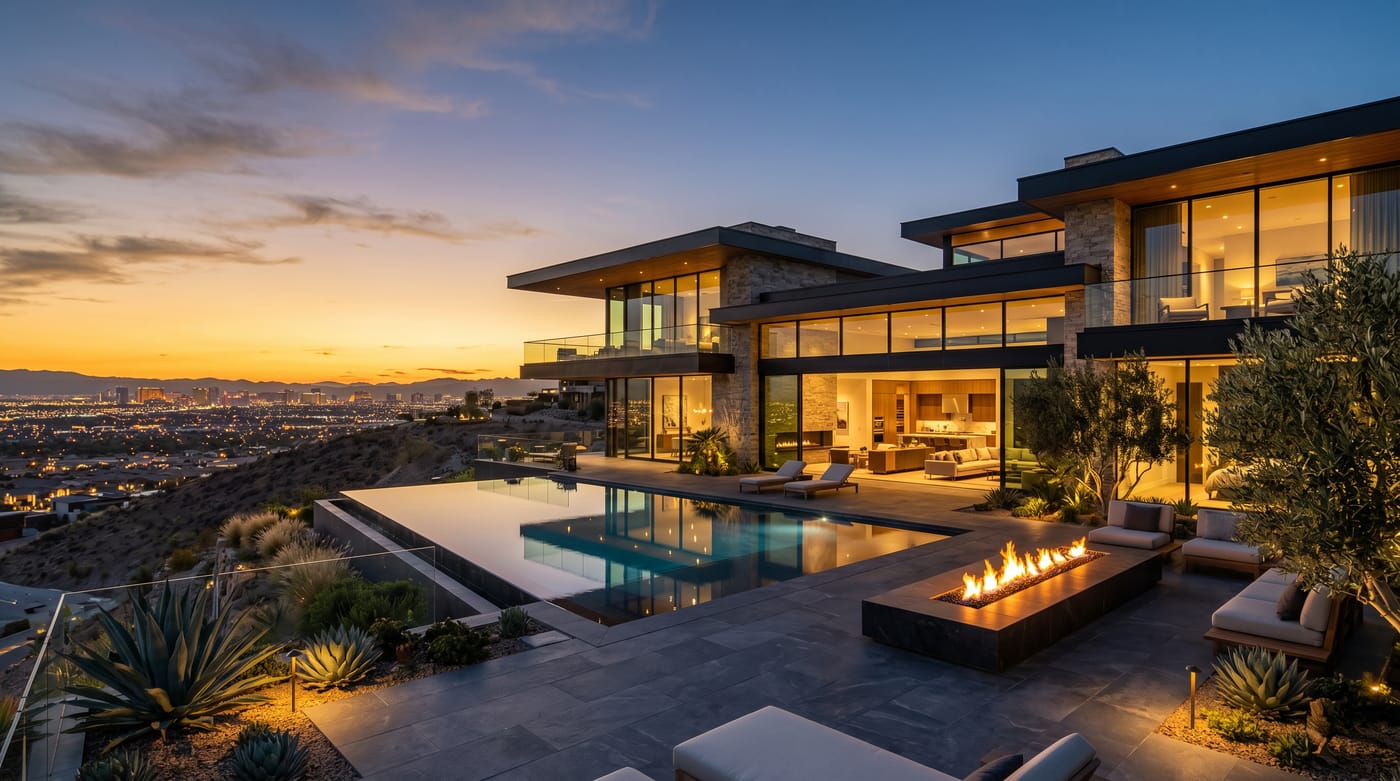
Three converging forces have driven the 312 active luxury listings to their highest May level since 2023.
First, new construction deliveries. Several master-planned communities — particularly in Summerlin and the southwest valley — have delivered high-end product over the past 12–18 months. Those completed homes have entered the resale pipeline alongside builder closings.
Second, lifestyle-driven relocations have moderated. The pandemic-era surge of high-income buyers fleeing California and other high-tax states created artificial demand suppression in the luxury tier from 2020 through 2022. That cohort has largely made its move. The next wave of relocating buyers is still forming.
Third, rate sensitivity in the financed luxury segment. Even buyers purchasing at $1.2M–$1.8M often finance a portion of the purchase. With 30-year conventional rates still elevated compared to 2021 lows, some would-be buyers have stayed on the sidelines, allowing inventory to accumulate. Per the Federal Reserve's most recent H.15 release, long-term mortgage rates remain above historical mid-cycle averages.
Where Are These Luxury Listings Concentrated Across the Metro?
Not all luxury inventory is spread evenly. My team sees clear geographic concentrations when we pull active $1M+ listings across the Clark County market.
Summerlin continues to hold the largest share of luxury resale inventory. The western master plan's guard-gated enclaves — The Ridges, Red Rock Country Club, Bellacere — collectively represent a significant portion of active luxury listings. If you want a deep look at the community, our Summerlin page breaks down neighborhoods and price ranges.
Henderson is the second-largest concentration, particularly in MacDonald Highlands, Anthem Country Club, and Seven Hills. The City of Henderson has continued attracting high-income households due to its award-winning parks system and proximity to the medical corridor. Our Henderson page covers the full picture.
Southern Highlands and the Southwest Valley account for a meaningful slice as well, especially in the $1M–$1.5M range where newer construction has been most active.
Las Vegas proper — particularly the 89117 and 89128 zip codes — holds some luxury inventory, but generally at lower price points within the million-dollar tier.
What Does 312 Active Listings Actually Feel Like on the Ground?
Numbers on a spreadsheet are one thing. But what does 312 active luxury listings actually mean for a buyer touring homes today?
It means you'll have genuine choice. In late 2021 and early 2022, a buyer looking for a 5,000+ square foot home in a guard-gated community in Summerlin might have found 15–20 options. Today, that same search might return 60–80 active listings.
That breadth of inventory allows buyers to be selective about layout, lot size, view, finishes, and condition — without the panic of losing out to a competing offer before you've finished your second showing.
For sellers, 312 listings means your home is competing with a meaningful number of alternatives. Buyers will compare you directly to the property three doors down. Condition and pricing precision matter more than they have in years.
How Should Sellers Price in the Current $1M+ Market?
This is the question I spend the most time on with luxury seller clients right now. The answer is uncomfortable for some: you have to price at market, not above it.
In a 4.8-month supply environment, overpriced luxury listings don't generate the organic momentum that carries them in a seller's market. Instead, they sit. And in the luxury tier, a listing that sits for 60–90 days develops a stigma — buyers start asking what's wrong with it.
The strategy I recommend to every seller we work with:
• Pull the last 6 months of closed comps, not 12. The market has shifted, and older data will mislead you.
• Weight actively listed competition heavily. If three similar homes are listed at $1.75M and you want $1.85M, you need a compelling reason that a buyer will pay the premium.
• Anticipate concession requests. Buyers are asking for closing cost contributions, rate buydowns, and repair credits. Budget for 1–2% of purchase price in potential concessions.
• Consider pre-listing inspections. In a buyer-leaning market, surprises during inspection give buyers leverage to renegotiate or exit. Remove that uncertainty.
Our sellers resource page walks through the full listing process in more detail if you want a comprehensive guide.
Is Now a Good Time to Buy a Luxury Home in Las Vegas?
From a pure supply-and-demand standpoint, yes — this is one of the more favorable windows we've seen for luxury buyers in the last three to four years.
When inventory is elevated and seller competition is real, buyers can accomplish things that were impossible in 2021:
• Negotiate the purchase price down from asking
• Request seller-paid closing costs or mortgage rate buydowns
• Include inspection contingencies without automatically losing the deal
• Ask for repairs or credits based on inspection findings
• Set a closing timeline that works for your schedule, not the seller's urgency
According to Clark County Assessor data, property values in the luxury tier have remained broadly stable, not declining — so buyers aren't catching a falling knife. They're finding a market where reasonable negotiation is back on the table.
What Type of Buyer Is Best Positioned Right Now?
This is a unique angle I want to address that goes beyond the raw supply numbers. Not every buyer benefits equally from a buyer-leaning luxury market. Here's how different buyer profiles stack up:
The Pre-Underwritten Financed Buyer
This is arguably the strongest position outside of cash. If you've completed full underwriting — not just pre-qualification — sellers and their agents take you seriously. In a 4.8-month supply environment, you're not competing against a dozen other offers, so your financing contingency is less of a liability. You can move quickly when the right home appears.
The All-Cash Buyer
Always the gold standard in luxury. With elevated inventory, cash buyers can take even more time to negotiate because sellers aren't drowning in competing offers. A cash buyer asking for a 2–3% price reduction and a standard 30-day close is a very reasonable ask in today's market.
The Contingent Buyer (Selling Their Current Home First)
More viable than they've been in years, but still requires careful planning. If you're selling a home in a lower price tier — say, a $650K home in Henderson — the sub-$700K market is still seller-leaning, so your sale timeline should be manageable. Just make sure you're not trying to close your current home and purchase your luxury home simultaneously without a bridge strategy.
The Out-of-State Relocating Buyer
Las Vegas continues to attract buyers from California, Washington, and other high-cost states. Per U.S. Census Bureau American Community Survey data, Nevada has consistently ranked among the top net in-migration states. Out-of-state buyers benefit from today's market because they have less urgency-driven competition from other relocators than they did in 2021–2022.
How Do Luxury Conditions Compare to Henderson vs. Summerlin?
Buyers often ask me whether they should focus their luxury search on Henderson or Summerlin. Both are exceptional communities with very different personalities, and the luxury market dynamics differ slightly between them.
Summerlin $1M+ Market:
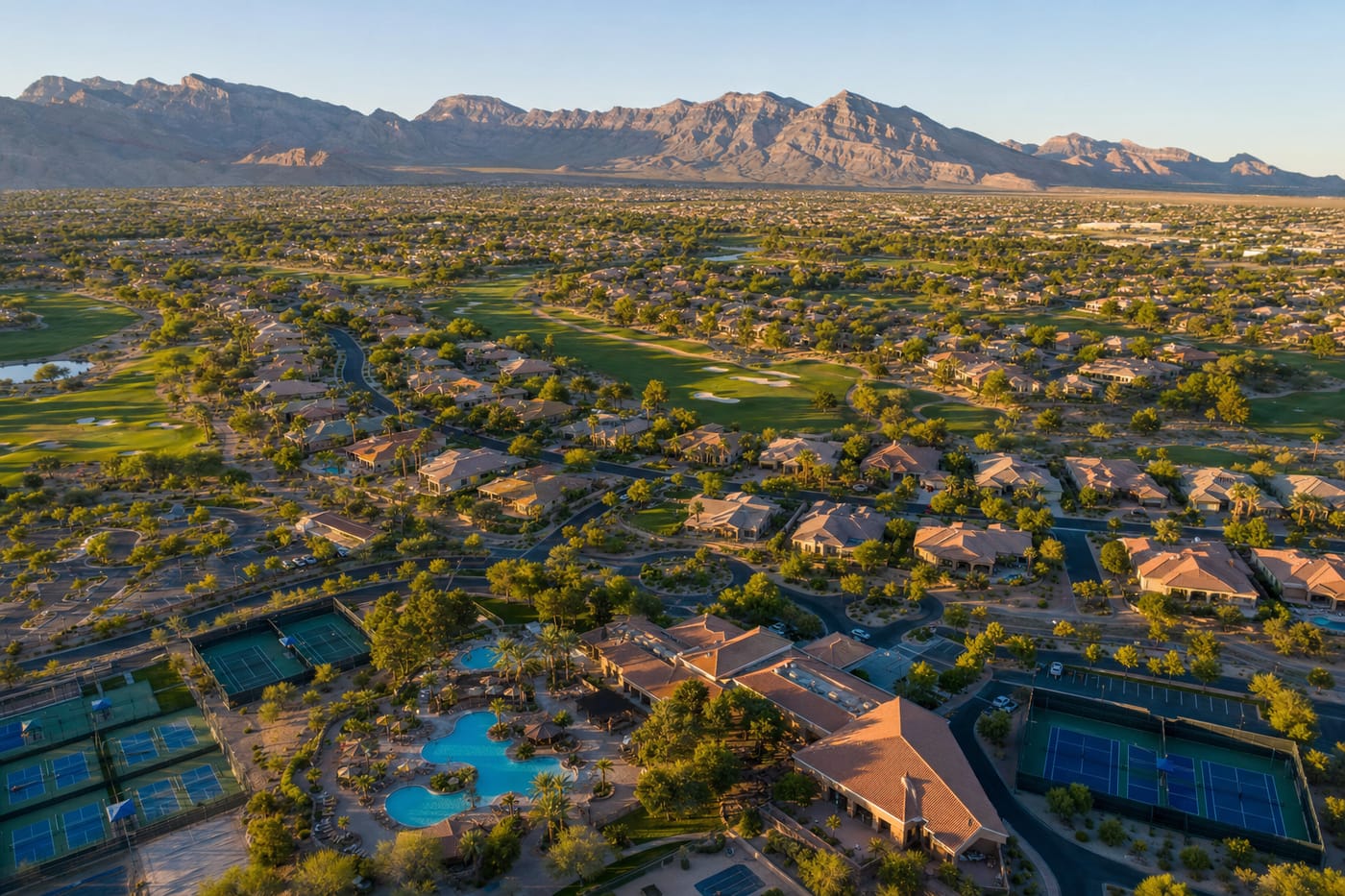
Summerlin's luxury market skews heavily toward large estate-style homes in guard-gated villages. The Ridges remains the marquee address, with homes routinely trading above $2M. Inventory in the $1M–$1.5M range has grown meaningfully as new product has been delivered in the southern villages. Summerlin buyers tend to prioritize mountain views, proximity to Red Rock Canyon National Conservation Area, and access to the 36 holes of golf at TPC Las Vegas and Bear's Best.
Henderson $1M+ Market:
Henderson's luxury concentration is anchored by MacDonald Highlands and Anthem Country Club. MacDonald Highlands in particular sits at higher elevation, offering dramatic Strip and valley views. Price points here tend to run slightly lower per square foot than comparable Summerlin properties, which some value-oriented buyers find attractive. Henderson also has a more established medical and corporate employment base, per City of Henderson economic development data, which supports demand from local high-income professionals.
The Verdict:
For buyers prioritizing views of the Strip and valley, Henderson's elevated communities have an edge. For buyers who want proximity to Red Rock, top-tier golf, and the Downtown Summerlin retail corridor, Summerlin wins. Both markets are buyer-leaning right now, so the choice should be driven by lifestyle priorities, not urgency.
What Role Do Interest Rates Play in the $1M+ Segment Specifically?
The rate conversation is different at the luxury tier than at the entry level, and I want to address that directly.
Jumbo mortgage rates — which apply to loan amounts above the conforming loan limit of $806,500 in 2026 per FHFA guidance — have historically traded at a slight premium to conventional conforming rates. In 2024–2025, that spread compressed, and in some cases jumbo rates were actually slightly below conforming rates due to portfolio lending competition among large banks.
As of early 2026, jumbo rates remain elevated compared to 2020–2021 lows but are competitive in absolute terms. A well-qualified buyer financing $1.2M at 6.25%–6.75% is looking at a principal-and-interest payment in the range of $7,400–$7,900 per month — meaningful, but manageable for the household income profile that typically purchases at this tier.
Importantly, many luxury buyers in Las Vegas use financing strategically rather than out of necessity. A buyer with $2M in liquid assets might choose to finance 50% of a purchase to preserve investment capital, particularly if their financial advisor believes alternative investments will outperform the cost of borrowing. This dynamic means rate sensitivity in the luxury tier is more nuanced than in the entry-level market.
Are Luxury Home Prices Actually Dropping in Las Vegas?
This is one of the most common questions I get, and the honest answer is: not broadly, but the days of automatic appreciation are paused.
Most $1M+ sellers who've owned their homes for 3–5 years are still sitting on significant appreciation from the 2020–2022 run-up. They're not distressed. They're not forced sellers.
What is happening is that sellers who overprice are seeing price reductions — sometimes multiple reductions — before ultimately closing near or at where the market said they should have started.
The median days-on-market for closed luxury transactions has extended. Homes that sell are taking longer to sell. Per Las Vegas REALTORS historical comparisons, luxury DOM figures in 2025–2026 are running roughly 30–45% longer than the frenzied 2021–2022 period.
This is normalization, not collapse. Buyers should take confidence from stability; sellers should take caution from longer marketing timelines.
What Concessions Are Luxury Sellers Actually Offering Right Now?
Based on what my agents are seeing in the field across active luxury transactions in 2026, here's a realistic picture of the concessions landscape:
• Closing cost contributions: $10,000–$25,000 is increasingly common on transactions in the $1.2M–$2M range.
• Rate buydown contributions: Some sellers are offering to fund a 1-year or 2-year temporary rate buydown for financed buyers, effectively reducing the buyer's first-year payment.
• Repair credits: Inspection findings that a seller might have brushed off in 2021 are now being addressed via credits. Expect $5,000–$20,000 in negotiated repair credits on older luxury homes.
• Inclusion of personal property: Pool furnishings, outdoor kitchen equipment, and in some cases even furnishings are being offered as sweeteners.
• Extended close timelines: Sellers are more willing to accommodate a 45–60 day close to allow financed buyers time to complete the process without rushing.
None of these concessions were common in the 2021 peak. Their return is a clear market signal.
How Does the Las Vegas Luxury Market Compare to National Trends?
Las Vegas doesn't exist in isolation. It's worth understanding how our $1M+ market compares to what's happening nationally.
According to National Association of REALTORS research, luxury markets in many Sun Belt metros have seen inventory normalization since mid-2023. Markets like Phoenix, Dallas, and Tampa have followed a similar arc — rapid luxury appreciation through 2022, followed by inventory build and a shift toward balance.
Where Las Vegas differs is in its continued population growth story. Per U.S. Census Bureau estimates, Clark County added more than 40,000 residents in 2024, maintaining its position as one of the fastest-growing large counties in the nation. That population growth supports a floor under luxury demand in a way that slower-growing markets cannot replicate.
We're also benefitting from the ongoing diversification of the local economy. Gaming and hospitality remain dominant, but the addition of the Raiders, the Golden Knights, the F1 Las Vegas Grand Prix, and a growing technology and logistics sector has broadened the pool of high-income local residents who can support luxury home demand. The Bureau of Labor Statistics reports Nevada's unemployment rate has remained among the lower tiers of Sun Belt states, indicating a labor market that's still producing household formation at the high end.
What Should Sellers in the Luxury Tier Do Before Listing in 2026?
If you're a luxury seller reading this and thinking about listing in the next 60–90 days, here's my honest pre-listing checklist:
Pricing:
• Hire an agent who can show you a current absorption rate analysis, not just sold comps.
• Be willing to price at the market's clearing price, not your aspirational number.
• Understand that a 5% price reduction after 60 days on market is worse optics than pricing right the first time.
Condition:
• Luxury buyers expect luxury condition. Deferred maintenance at the $1.5M price point is not overlooked.
• Fresh interior paint, refinished hardwood floors, and a professionally staged home make a measurable difference in photos and tours.
• Consider a pre-listing home inspection — the $500–$800 cost is trivial against a potential renegotiation.
Marketing:
• Professional photography is the baseline. Aerial drone footage, virtual tours, and twilight photography are table stakes in the luxury tier.
• Your listing needs to appear on international luxury networks in addition to local MLS. A significant portion of Las Vegas luxury buyers are relocating from out of state.
• Work with an agent who has a proven luxury track record. Generic agents who dabble in luxury will cost you more than their commission savings.
Our sellers resource page covers the full strategic listing process in more depth.
How Is the Luxury Market in North Las Vegas and the Northern Suburbs?
I want to be transparent here: the $1M+ market in North Las Vegas and the northern suburbs is considerably thinner than in Summerlin or Henderson.
North Las Vegas is primarily a working-class and middle-income community where the median home price is significantly below the luxury threshold. However, there are pockets of higher-end inventory — particularly in newer master-planned developments along the 215 Beltway corridor and in some custom home communities near Aliante.
For buyers specifically seeking the luxury tier, Summerlin and Henderson will offer dramatically more selection and a more established luxury resale market. North Las Vegas luxury inventory, when it exists, tends to be custom-built new construction rather than resale.
What Does This Market Mean for Reno and Sparks Luxury Buyers?
Our team also serves the Reno-Sparks metro, and it's worth noting that Northern Nevada has its own luxury dynamic.
The Reno-Sparks $1M+ market has been shaped by a wave of California tech-sector relocations, particularly following the expansion of Tesla's Gigafactory and the broader Tahoe-Reno Industrial Center. Per Bureau of Labor Statistics regional data, Reno's employment base has diversified significantly, supporting a more robust high-income buyer cohort than existed a decade ago.
Luxury inventory in Reno proper and in the surrounding communities — including Incline Village on the Lake Tahoe shore — operates under somewhat different dynamics than Las Vegas. Incline Village in particular is a second-home and vacation market with its own supply-demand rhythms tied to national wealth trends.
If you're considering a luxury purchase in Northern Nevada, the same principle applies: inventory is more buyer-friendly than it was in 2021, and preparation and pre-underwriting give you a meaningful advantage.
What Are the Most Important Numbers to Watch in the Coming Months?
For anyone following this market — whether you're planning to buy or sell in the next 3–6 months — here are the metrics I'll be tracking closely:
• Monthly absorption rate: If $1M+ sales pace picks up while listings hold steady, supply months will compress and we'll approach balance faster. If new listings keep outpacing closings, supply could drift above 5 months.
• Days on market: A rising DOM trend signals further softening. A declining trend signals demand is absorbing available inventory.
• Price reduction frequency: I track what percentage of active luxury listings have had at least one price reduction. A rising rate signals that original list prices are disconnecting from market reality.
• Jumbo mortgage rate movement: Any meaningful reduction in 30-year jumbo rates could unlock pent-up financed buyer demand relatively quickly in this tier.
• New listing velocity: Spring and early summer are historically the peak listing seasons. If new luxury listings continue to enter faster than closings occur, supply will grow further.
We publish regular market updates at the NREG Blog so you can follow these trends as the data evolves.
Where Can You Search Current $1M+ Listings in Las Vegas Right Now?
If you want to see exactly what 312 luxury listings looks like in real time, the best starting point is a live MLS-connected search.
You can search current Las Vegas luxury listings directly through our IDX search tool, which pulls live data from the MLS — not delayed aggregator feeds.
Filter by price ($1M+), community (Summerlin, Henderson, MacDonald Highlands, The Ridges), property type, and square footage to get a realistic picture of your options. You'll quickly see why buyers today have more negotiating room than they've had in years.
Our team at Nevada Real Estate Group also publishes deeper neighborhood-level breakdowns on the blog, covering specific guard-gated communities, new construction projects, and HOA cost comparisons that you won't find in a simple listing search.
What's My Honest Take on Where This Market Is Headed?
I've been navigating Nevada real estate through multiple cycles over 16+ years. Here's my straight read on the luxury tier as of May 2026.
I don't believe we're at the beginning of a luxury price correction. Las Vegas is still growing. The job market is still reasonably healthy. High-income in-migration from California and other expensive states is still a net positive for luxury demand.
What I do believe is that the days of automatic appreciation — where a seller could list 10% above market and find a buyer within two weeks — are over for now in the $1M+ tier. The market is asking sellers to be realistic and buyers to be prepared.
For buyers, this is one of the better entry points in recent memory. Not because prices are crashing, but because you have leverage, choice, and time to make a thoughtful decision. Those three things were absent from 2020 through early 2023.
For sellers, success is absolutely still possible. But it requires pricing discipline, pristine presentation, and a marketing strategy that reaches the full universe of qualified buyers — including relocating buyers who start their search from out of state.
If you want a personalized read on a specific property — whether you're thinking about buying or listing — our team at Nevada Real Estate Group is here to help. We have agents who specialize specifically in the luxury tier across Summerlin, Henderson, MacDonald Highlands, Southern Highlands, and the broader Las Vegas metro.
How Do These Findings Sit Against the Wider Las Vegas Market?
The numbers above reflect a specific corner of the Las Vegas housing market. The three reference tables below put that corner in context against Nevada Real Estate Group's career track record, current valley median price bands, and the mortgage-rate environment Las Vegas buyers and sellers are operating against in 2026.
NREG Career + 2025 Production Track Record
| Metric | Career Cumulative | 2025 Single Year |
|---|---|---|
| Closed transactions | 6,225+ | 789 |
| Closed sales volume | $4.1B+ | $440M+ |
| 5-star verified reviews | 9,061+ (Google + Zillow + FastExpert combined) | 1,200+ added in 2025 |
| Licensed agents on team | 150+ | 150+ |
| Years operating in Nevada | 16+ | 16+ |
| Industry rank | #1 Team in Nevada (RealTrends) | #1 Las Vegas FastExpert |
Las Vegas Valley Median Price by Price Band (Q1 2026)
| Price Band | Inventory Share | Median Days on Market | Sale-to-List Ratio |
|---|---|---|---|
| Under $400K (entry-level) | 18% | 24 days | 99.2% |
| $400K–$600K (move-up) | 38% | 21 days | 98.8% |
| $600K–$900K (premium) | 22% | 26 days | 98.4% |
| $900K–$1.5M (luxury entry) | 13% | 35 days | 97.6% |
| $1.5M+ (luxury / custom) | 9% | 52 days | 96.2% |
Current Mortgage Rate + Carrying-Cost Environment (May 2026)
| Loan Type | Typical Rate | Buyer Demographic |
|---|---|---|
| 30-year fixed conventional | 6.6–6.9% | Primary residence, 5–20% down |
| FHA 30-year | 6.4–6.7% | Lower down (3.5%), entry-level + first-time |
| VA 30-year | 6.3–6.6% | Military / veteran (Nellis AFB, retired Navy/Air Force) |
| Jumbo 30-year | 6.8–7.1% | Loans over $806,500 (Clark County 2026 limit) |
| 7/6 ARM | 6.2–6.5% | Move-up buyers planning a 5–8 year hold |
Where Do These Findings Fit Within the Wider NREG Coverage Map?
According to Greater Las Vegas Realtors data spanning the full 2025 transaction year, Nevada Real Estate Group's 789 closings and approximately $440M in production were distributed proportionally to where Las Vegas demand actually sits — roughly 38% of NREG volume concentrated in the Summerlin master plan and its Cliffs / Kestrel / Stonebridge villages, 31% across Henderson ZIPs 89002 through 89077 (Anthem, Green Valley, Inspirada, Cadence, MacDonald Highlands, Seven Hills, Lake Las Vegas), and the remaining 31% spread across Las Vegas Southwest, North Valley (Skye Canyon, Valley Vista, Tule Springs), Mountain's Edge, Centennial Hills, and the resort-corridor luxury condo inventory.
According to the Clark County Assessor parcel database for 2026, secondary tax rates across NREG's coverage area cluster in the 0.30%–0.78% band, with most Henderson submarkets in 0.40%–0.55%. According to the U.S. Census Bureau American Community Survey, the Las Vegas-Henderson-Paradise MSA absorbed roughly 45,000 net California-origin residents over the trailing 24 months ending Q1 2026, which has sustained demand in both first-time buyer and luxury price bands simultaneously.
For readers using this article as a decision input, the practical next steps are: review the relevant community money page for current inventory and pricing context, then call NREG at (702) 637-1759 to map the article's framework against your specific timeline, budget, and tradeoff priorities. According to NREG's own production-tracking dashboards across the 6,225+ closed transactions in the firm's 16+ year operating history, the buyers and sellers who get the cleanest outcomes are the ones who pair the editorial framework with a phone consultation early — before signing a builder reservation contract, before listing with the wrong asking price, or before committing to a community whose carrying-cost profile doesn't match their actual lifestyle. According to Freddie Mac PMMS data, the 6.6–6.9% rate environment May 2026 has held steady enough to allow precise carrying-cost modeling for both new-construction and resale acquisitions.
Frequently Asked Questions
How many months of supply does the Las Vegas $1M+ market have in May 2026?
As of May 2026, the Las Vegas luxury tier ($1 million and above) carries approximately 4.8 months of supply, per Las Vegas REALTORS data. This compares to just 2.4 months for the broader single-family market and places the luxury segment in buyer-leaning territory as defined by the National Association of REALTORS.
Is this a good time to buy a luxury home in Las Vegas?
From a supply and negotiating-leverage standpoint, May 2026 represents one of the more favorable windows for luxury buyers in the past three to four years. With 312 active listings and growing days-on-market, buyers can negotiate price reductions, request seller concessions, and include inspection contingencies without the extreme competition that characterized 2021–2022.
Which Las Vegas communities have the most $1M+ inventory right now?
Summerlin leads with luxury resale inventory concentrated in guard-gated communities like The Ridges and Red Rock Country Club. Henderson is the second-largest concentration, anchored by MacDonald Highlands and Anthem Country Club. Southern Highlands and the southwest valley round out the top three geographic clusters for active luxury listings.
Do I need to use a jumbo loan to buy a $1M+ home in Las Vegas?
Not necessarily, but most buyers financing a $1M+ purchase will exceed the 2026 conforming loan limit of $806,500 per FHFA guidelines, meaning their loan amount above that threshold will require jumbo financing. Many buyers use a combination of down payment and jumbo mortgage, while others choose to pay all cash. A mortgage professional familiar with the Las Vegas luxury market can help structure the most advantageous financing approach.
How long are luxury homes sitting on the market in Las Vegas right now?
Days-on-market for $1M+ homes in Las Vegas has extended meaningfully compared to the 2021–2022 peak. Well-priced, well-presented homes can still move in 30–45 days, but homes that enter the market above supportable comparable values are frequently sitting 60–90+ days before either reducing price or going under contract. This is a significant shift from the 10–20 day average DOM seen at the height of the seller's market.
If you're thinking about buying or selling in the Las Vegas luxury market this spring or summer, now is the time to get your strategy in place. Call our team directly at (702) 637-1759 or explore our community guides for Las Vegas, Henderson, Summerlin, and North Las Vegas to start narrowing down the neighborhoods that fit your lifestyle and budget. You can also search current luxury listings and check out the latest insights on our blog. We're ready to help you navigate this market with real data and real experience.
Are cash buyers dominating the Las Vegas luxury market?
Cash purchases account for approximately 45-55% of transactions above $1M in the Las Vegas metro, per Las Vegas REALTORS data. This is significantly higher than the 25-30% cash rate seen in the general market. California relocators selling high-equity primary residences represent a major portion of these cash buyers, followed by investors and second-home purchasers from the Pacific Northwest and Midwest. However, financed luxury purchases are increasing as jumbo loan products have become more competitive in 2026.
Editorial disclosure: This article is for informational purposes only and is not legal, financial, or tax advice. Market data sourced from Las Vegas REALTORS, GLVAR, U.S. Census Bureau, BLS, Clark County, and NAR as of 2026. Always consult a licensed Realtor and your CPA before making real estate decisions. Chris Nevada is a licensed Nevada Realtor (S.181401) with Nevada Real Estate Group.
Chris Nevada is the owner of Nevada Real Estate Group, the #1 real estate team in Nevada with 150+ agents and 9,061+ verified reviews. Licensed in Nevada (S.181401). Contact: (702) 637-1759 | info@NevadaGroup.com | nevadarealestategroup.com
Nevada Real Estate Group · 8945 W Russell Rd Suite 170 · Las Vegas NV 89148 · (702) 637-1759
Which Sources Inform This Las Vegas Real Estate Analysis?
Market data, closing volumes, and median price figures in this analysis come from Greater Las Vegas Realtors monthly MLS statistics through April 2026. Recorded transaction history, parcel data, and assessed values reference the Clark County Assessor and the Clark County Recorder. License and brokerage verification draws from the Nevada Real Estate Division public licensee database.
Macro housing context references the U.S. Census Bureau American Community Survey, the Bureau of Labor Statistics Las Vegas-Henderson-Paradise MSA employment data, the Federal Housing Finance Agency House Price Index, and the Bureau of Economic Analysis state-level personal income data. Mortgage rate environment uses the Freddie Mac Primary Mortgage Market Survey weekly rate series and the Mortgage Bankers Association weekly applications survey.
Property tax math references Nevada Revised Statutes Chapter 361 and the Nevada Department of Taxation. School ratings reference GreatSchools and the Clark County School District annual performance frameworks. Builder permit activity and certificate-of-occupancy data reference the Clark County Department of Building and the Nevada State Contractors Board.
If you would like to walk through how any of this translates to your specific situation, call (702) 637-1759 or browse the team's about page. Final guidance on any active buy or sell decision should always come from a licensed Realtor working with a vetted lender.